







A New, Persistent Threat
Historically, the dangers facing our most cherished monuments were often sudden and violent, like conflict, or gradual, like neglect and pollution. But climate change presents a different kind of challenge. It is not a single event but a relentless pressure-cooker
of rising temperatures, extreme weather, and rising seas. This has forced a fundamental shift in how conservationists, governments, and organisations like UNESCO think about preservation. It’s no longer just about restoration, but about resilience. Climate change is now recognised as one of the most significant risks to World Heritage sites, accelerating degradation at an alarming rate. According to one recent study, a staggering 80% of UNESCO cultural sites are already experiencing climate-related stress.
From Floods to Dust: The Many Faces of Climate Damage
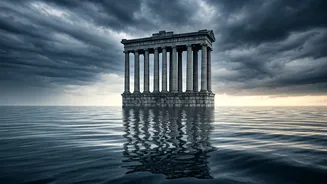
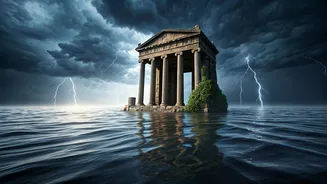
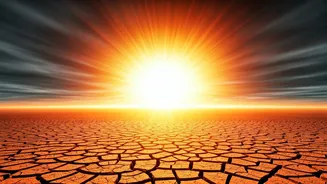
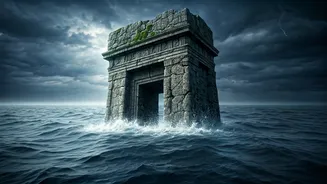
The threats are as varied as the monuments themselves. Coastal sites from the Elephanta Caves off Mumbai to Venice face the dual menace of rising sea levels and intensifying storms, leading to erosion and even submersion. The famous white marble of the Taj Mahal is threatened by pollution, but also by stressors like erratic weather patterns. In other regions, the problem is not too much water, but too little. Droughts and extreme heat can crack ancient stone, dry out wooden structures, and increase the risk of devastating wildfires, a threat faced by sites from New Mexico to Greece. Increased humidity and temperature fluctuations also create ideal conditions for biological growth like mould and algae, which can stain and eat away at stone surfaces, changing their colour and integrity.
India’s Heritage on the Frontline
India, with its vast and ancient heritage, is particularly vulnerable. Nearly 40% of the country's UNESCO World Heritage Sites face significant climate risks. Coastal treasures like the Konark Sun Temple and Shore Temple are threatened by rising sea levels and increased cyclonic activity, which drives salt-laden winds inland, corroding ancient structures. In Rajasthan, unusually heavy rains have caused parts of the 12th-century Sonar Fort in Jaisalmer to collapse. Meanwhile, Mughal-era monuments in Delhi, such as the Red Fort and Humayun's Tomb, suffer from a toxic cocktail of extreme heat and air pollution, which deposits a layer of damaging soot and accelerates decay. Even rock-cut wonders like the Ajanta and Ellora Caves are not immune, facing risks from humidity and heavy rainfall that can degrade delicate murals.
The Uncomfortable Question: What Can Be Saved?
The global scale of the problem forces an uncomfortable triage. With limited resources, it’s impossible to protect every monument equally. This is sparking difficult conversations about what to save, what to move, and what we might have to let go. Some solutions are engineering-based, like the massive floodgates designed to protect Venice or the construction of living shorelines made of oysters and mangroves to buffer coastal sites. In other cases, the focus is shifting towards documentation. High-precision 3D scanning can create a perfect digital replica of a monument, preserving its memory and form for future generations, even if the physical structure is lost. However, these choices are fraught with complexity, involving not just scientific and economic calculations, but also deep cultural and political considerations about which parts of our history we prioritize.
A Global Race Against Time
Addressing this crisis requires a coordinated global effort. International bodies like UNESCO are leading the charge, developing policy documents and guidance on climate action for heritage sites. These efforts aim to bridge the gap between climate science and heritage management, providing tools and models to help local authorities understand and prepare for future risks. Many governments are also beginning to integrate climate resilience into their conservation plans, installing weather stations at historic sites for early warnings and improving drainage systems. Ultimately, the most effective long-term solution is tackling the root cause of the problem by reducing global carbon emissions. Protecting these irreplaceable links to our past is no longer a niche concern for historians and archaeologists; it has become an urgent part of the broader fight for a sustainable future.