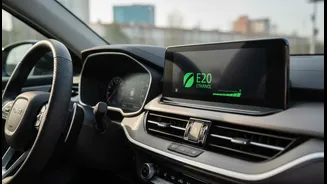





What is E20 Fuel?
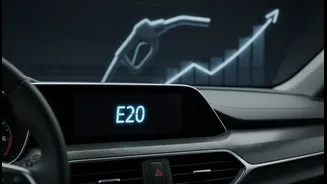
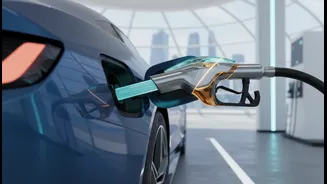
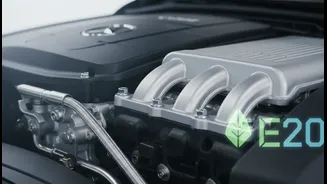
E20 is a simple blend: 20% ethanol and 80% petrol. As of 2026, it is the standard petrol available across India. The government promoted this shift for several big-picture reasons: to reduce India's expensive oil import bill, lower carbon emissions, and provide
a stable source of income for farmers who grow the crops used for ethanol production, like sugarcane and maize. The idea is to create a more self-reliant and greener fuel ecosystem for the country. For the average person, it just means the fuel you get at the pump is now this E20 blend.
The Price Myth vs. Reality
Here's the most common misunderstanding about E20: many assumed that adding a domestically produced component would make the final product cheaper. However, that's not currently the case. The government procures ethanol from farmers at a fixed, supportive price to ensure their income. At current global crude oil prices (around $70 per barrel), this procurement cost makes ethanol a more expensive ingredient than the petrol it replaces. As a result, E20 is not cheaper to produce than pure petrol would be. The government's goal with E20 isn't to lower the daily pump price but to create long-term price stability by reducing exposure to volatile international oil markets. The savings are for the national exchequer, not directly for the consumer's wallet.
The Impact on Your Vehicle's Mileage
This is the second crucial part of the savings equation. Ethanol has a lower energy density than petrol, which means it produces less energy per litre. Because of this, nearly all vehicles experience a drop in fuel efficiency when running on E20. Official government estimates suggest a mileage reduction of about 3-5%, while many users and some studies report a drop closer to 5-10%. So, if your car used to give you 20 km per litre on older petrol, you might now get between 18 and 19 km per litre on E20. This reduction in mileage is a critical factor when calculating your overall running costs.
Doing the Math: Does E20 Save You Money?
Let's put the pieces together. If the price per litre of E20 is not lower than what pure petrol would be, and it gives you fewer kilometres per litre, then your running costs will actually increase. For a budget-conscious buyer, this is the most important takeaway. The cost per kilometre, which is the true measure of fuel expense, goes up. For example, if you pay ₹100 for a litre of fuel and get 20 km of mileage, your cost is ₹5 per km. If your mileage drops to 18 km per litre at the same fuel price, your cost increases to about ₹5.55 per km. Over thousands of kilometres a year, this difference adds up, directly contradicting the idea of saving money.
Is Your Vehicle E20-Compliant?
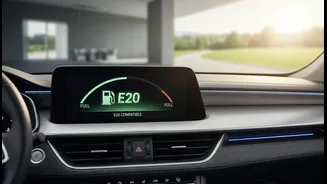
While the financial savings are not materialising, a key practical concern is vehicle compatibility. The good news is that all cars and two-wheelers sold in India since April 2023 are designed to be fully compatible with E20 fuel. For older vehicles, the situation is more complex. While there has been public concern, major manufacturers like Maruti Suzuki, Bajaj, and others have issued statements assuring that even many older models are safe to run on E20 without risk of engine damage. Bajaj, for instance, has stated that its bikes made in the last 10 years are fully E20 compatible. If you own a vehicle purchased before 2023, the best practice is to check your owner's manual or the manufacturer’s official website for specific guidance.
Flex-Fuel and the Road Ahead
E20 is just one step. The next stage involves flex-fuel vehicles (FFVs), which are designed to run on much higher ethanol blends, such as E85 (85% ethanol). A few FFV models are already available in the Indian market. These vehicles offer even greater potential to reduce reliance on petrol. However, the economic challenge remains. Tests have shown that the significant drop in mileage on high-ethanol blends is not yet offset by the lower pump price, making them more expensive to run for now. Widespread adoption will depend on a combination of lower fuel pricing for these blends, wider availability, and more vehicle options.