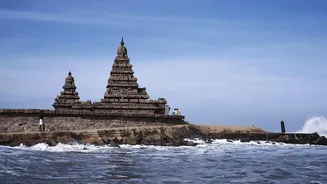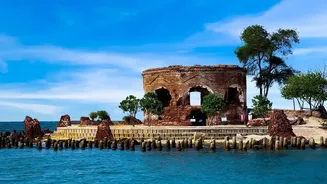









Dotting the Arabian Sea, Maharashtra's coastal forts are silent witnesses to a glorious maritime past. These stone sentinels, once centres of naval power, now face a battle against time, nature, and neglect. Their survival is not just about saving old
stones, but preserving a crucial piece of India's identity.
Sentinels of a Seafaring Legacy
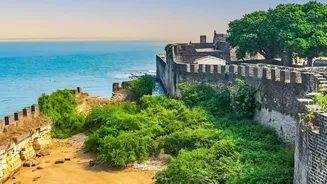
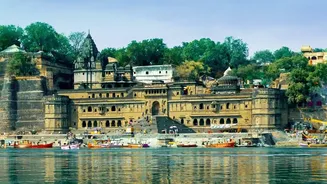
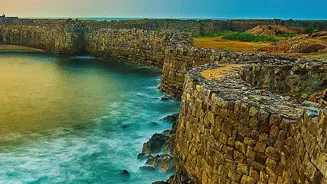
Maharashtra's 720-kilometre coastline is guarded by a network of formidable sea forts, each with a story of strategic genius and military might. These structures were the backbone of the Maratha Empire's naval power, particularly under the visionary rule of Chhatrapati Shivaji Maharaj. Forts like Sindhudurg, Vijaydurg, and Suvarnadurg were not mere defensive outposts; they were bustling naval bases, centres for trade, and symbols of sovereignty. They allowed the Marathas to control vital sea lanes, protect their territory from foreign powers like the Portuguese, British, and Siddis, and project their power across the western coast. The engineering brilliance is evident in their design, built on rocky islands to withstand the full force of the monsoon and sea waves. This network of forts represented a sophisticated military landscape, a testament to an era when naval dominance was key to the region's prosperity and security.
A Case Study: The Unconquered Murud-Janjira
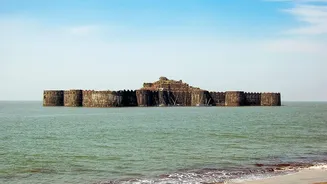
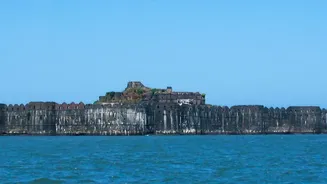
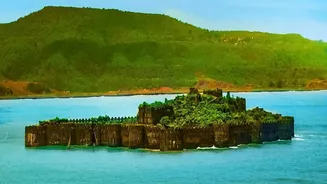
Among these coastal giants, Murud-Janjira, situated on an oval rock off the coast of Murud, holds a unique place in history. Originally a wooden structure built by Koli fishermen in the 15th century, it was later transformed into an impregnable stone fortress by Malik Ambar of the Ahmadnagar Sultanate. Janjira, a name derived from the Arabic word 'Jazira' for island, is famous for one thing: it was never conquered. Despite repeated and determined attempts by the Marathas, Portuguese, and British, the fort's 40-foot high walls and 19 rounded bastions stood firm. Its main gate is cleverly concealed, visible only at close range, a feature that baffled many attackers. The fort housed palaces, quarters for officers, a mosque, and even two large freshwater lakes—a marvel of engineering in the middle of the salty sea. Today, the internal structures are mostly in ruins, but the formidable walls and mighty cannons, like the 22-ton Kalaal Baangadi, still tell the tale of its invincible past.
The Silent Battle Against Time and Tides
Today, these architectural marvels are fighting a losing battle. The very sea that they were built to command is now their greatest threat. Constant exposure to saline spray, high humidity, and powerful waves causes significant erosion and weathering of the ancient stones. Climate change has intensified this threat, with rising sea levels and extreme weather events accelerating the decay of coastal heritage sites. Beyond natural forces, human factors pose a grave risk. Urban encroachment, pollution, and the pressures of unchecked tourism contribute to their degradation. Many forts suffer from general neglect, inadequate maintenance, and a lack of skilled conservation professionals. While agencies like the Archaeological Survey of India (ASI) are responsible for many of these sites, the sheer scale of the task, coupled with limited funding and staffing, means many structures are left to deteriorate.
A Renewed Push for Preservation
Fortunately, there is a growing recognition of the urgent need to protect this heritage. In a significant move, 12 forts, including several sea forts, were included in the 'Maratha Military Landscapes of India', which received a UNESCO World Heritage inscription in July 2025. This recognition has brought renewed focus and a structured approach to conservation. The government has submitted detailed 10nday site management plans focusing on conservation, visitor management, and community engagement. Funds are being allocated for crucial repairs, such as the ₹8.6 crore approved by the ASI for strengthening the bastions of Vijaydurg Fort. There is also a push from the state government to form districtlevel committees to prevent encroachment and to take over the management of centrally protected forts to ensure better onground implementation of conservation efforts.