


The Allure of Monochrome
There's a reason designers and homeowners love a monochrome palette. A room dressed in shades of black, white, and grey exudes a sense of calm, order, and timeless elegance. It’s a clean canvas that feels modern and uncluttered. However, the biggest challenge
of this minimalist approach is avoiding a space that feels cold, impersonal, or one-dimensional. Without careful attention to texture and detail, a monochrome room can lack the warmth and personality that make a house feel like a home. The key is not to abandon the palette, but to introduce elements that create visual interest and emotional connection without disrupting the harmony.
Batik: A Story in Every Thread
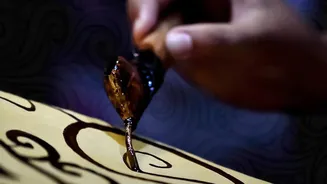
Batik is far more than just a patterned cloth; it is a celebrated art form and a piece of living history. Recognized by UNESCO as a Masterpiece of the Oral and Intangible Heritage of Humanity, Indonesian batik is a traditional technique of wax-resist dyeing applied to fabric. For centuries, artisans in Java and beyond have used this method to create intricate designs, with each pattern holding a specific meaning or story. Historically, these patterns could signify social status, be reserved for royalty, or be used in important ceremonies like weddings. Bringing batik into your home is not just a design choice; it's an embrace of a rich cultural narrative that adds soul and substance to your space.
Creating Contrast and Depth
The magic of pairing batik with a monochrome scheme lies in the power of contrast. The organic, hand-drawn lines and intricate motifs of batik stand in beautiful opposition to the clean, often sharp lines of modern furniture. Where a monochrome room can feel uniform, a splash of batik introduces dynamic energy and a focal point that draws the eye. The patterns, whether geometric or floral, add a layer of complexity and texture that simple colours alone cannot achieve. This interplay between the simple and the complex, the modern and the traditional, creates a sense of depth that makes the entire room feel more curated and visually engaging.
Choosing Your Pattern's Story
Not all batik is the same, and choosing a pattern can be a deeply personal expression. Each motif carries its own philosophy. The 'Parang' motif, with its diagonal, knife-like lines, is one of the oldest and symbolizes strength, resilience, and authority, once reserved for royalty. The 'Kawung,' a pattern of intersecting circles, represents purity and balance. For a sense of calm, the 'Mega Mendung' cloud pattern from Cirebon represents patience. The 'Sidomukti' pattern, often used in weddings, is a prayer for prosperity and happiness. Selecting a batik piece based on its meaning adds another layer of intention to your design, making it a true conversation starter.
How to Integrate Batik Gracefully
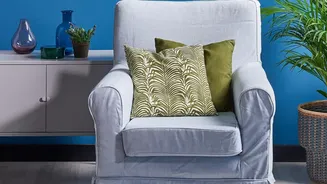
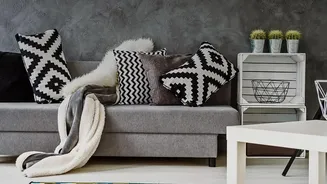
Integrating batik doesn't require a complete overhaul. The key is balance. For those new to pattern, start small. A few batik cushion covers on a grey sofa or a single folded throw over an armchair can instantly lift the space. These small touches add warmth and detail without overwhelming the room. If you're feeling bolder, consider a statement piece. An armchair upholstered in a striking batik fabric or a large, framed piece of batik as wall art can serve as the central anchor of your room's design. You can also play with colour. While many traditional batiks feature earthy browns and deep indigos, modern interpretations are available in a wide range of colours, allowing you to stay within your monochrome scheme while still benefiting from the pattern's texture.