

A Glimpse of Our Sun’s Ghost
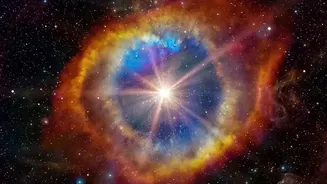
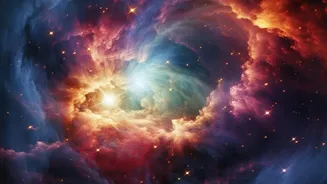
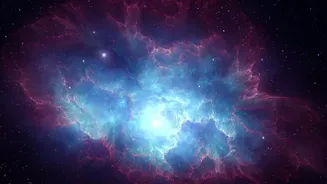
The Helix Nebula is what astronomers call a planetary nebula, a term that is both historic and a little misleading. It has nothing to do with planets. Instead, it’s the beautiful, intricate shroud of gas cast off by a star similar to our own Sun as it reached
the end of its life. After exhausting its primary fuel, the star shed its outer layers, which expanded into space. At the center of this cosmic spectacle is the star's super-dense, hot core, a white dwarf, whose intense ultraviolet radiation now illuminates the ejected gas, causing it to glow. This process is a preview of our own Sun's fate in roughly five billion years, making the Helix Nebula a crucial laboratory for understanding the final chapter of a star's life. Its relative closeness to Earth in the constellation Aquarius makes it a favorite target for astronomers seeking to witness this process in detail.
The Mystery of the 40,000 Knots
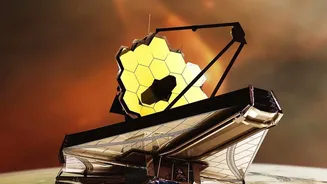
For decades, astronomers have been fascinated by thousands of features embedded within the nebula that look like comets, complete with bright heads and long, streaming tails. Recent observations, particularly from the James Webb Space Telescope (JWST), have brought these "cometary knots" into stunning focus. But these are not comets. They are gigantic structures, with heads often larger than our entire solar system and tails stretching for billions of miles. There are an estimated 40,000 of these knots in the Helix Nebula alone. They are essentially dense, resilient globules of molecular gas and dust that managed to survive the star’s final, violent phases. Their very existence was a puzzle, as the immense energy from the central star should have blasted such clumps apart.
A Story Written in Wind and Gas
The latest research suggests the knots are a key part of the star’s dramatic death. As the dying star expelled its layers, it did so in stages. First, it pushed out cooler, slower-moving gas. Later, as the core became exposed, it unleashed a blistering, high-speed stellar wind. The comet-like shapes are the result of this fast wind crashing into the older, denser clumps of gas, sculpting them. The side of the knot facing the central star is illuminated and ionized, forming the bright "head," while the rest of the material is shielded, forming a long, dark tail pointing away from the star. New infrared images reveal that these knots contain molecular hydrogen, a crucial ingredient for future star formation, protected within these dense pockets from the harsh radiation. They are like cosmic time capsules, preserving the material from the star’s outer layers.
From a Star's End to a New Beginning
The study of these knots does more than just explain a pretty feature in a nebula. It details a critical step in the universe's recycling program. Stars are the factories that create heavier elements. When a star like the Sun dies, it doesn't just fade away; it enriches the cosmos by ejecting elements like carbon, nitrogen, and oxygen into space. These cometary knots show how this material is organized and survives the chaotic environment of a planetary nebula. Eventually, over thousands of years, these knots will dissipate and mix with the interstellar medium. This enriched dust and gas will then become the raw material for the next generation of stars and, potentially, new planets and solar systems. In a very real sense, the death of this one star is seeding the birth of countless others.