







An Unlikely Alliance
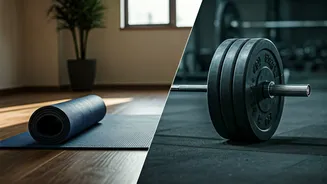
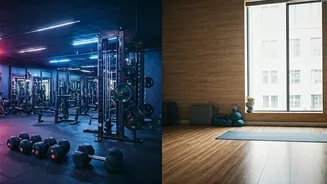
On the surface, it’s a culture clash. In one corner, you have the quiet intensity of the yoga studio—focused on breath, flow, and inner peace. In the other, the clanging iron and chalk dust of the powerlifting gym—a world of explosive force and maximal
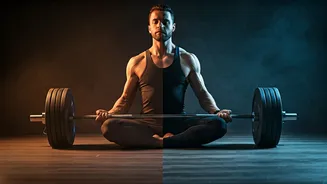
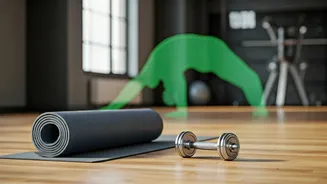
effort. For years, these disciplines were seen as not just different, but fundamentally opposed. Yogis were often perceived as lacking raw strength, while powerlifters were stereotyped as muscle-bound and inflexible. But across social media and in training centers, a new narrative is emerging. Powerlifters are rolling out yoga mats, and yogis are picking up barbells, discovering that they might be the missing piece in each other's puzzle.
For Powerlifters: Strength Through Surrender
For a powerlifter, whose goal is to move the heaviest weight possible in the squat, bench press, and deadlift, the benefits of yoga are surprisingly direct. The practice dramatically improves mobility and flexibility, especially in the hips and shoulders, which are common problem areas. Better mobility allows a lifter to achieve a deeper, more stable squat or a more efficient bench press setup, reducing the risk of injury. Yoga also hones breath control, a critical component for creating the intra-abdominal pressure needed to stabilize the spine during heavy lifts. Furthermore, it enhances the mind-muscle connection and body awareness, helping lifters identify and correct imbalances between the left and right sides of their body.
For Yogis: Stability Through Strength
For a yoga practitioner, strength training offers a new dimension of stability and control. While yoga builds incredible strength through bodyweight holds, adding external weights can target muscles in a different way, particularly by working fast-twitch muscle fibers used for powerful movements. This added strength can make challenging arm balances and inversions feel more accessible and secure. For hyper-flexible individuals, who can sometimes be prone to joint instability, strength training builds muscle and strengthens connective tissues, providing the support needed to practice advanced postures safely and avoid injury. It helps balance out extreme flexibility with functional, protective strength.
Beyond the Physical: A Shared Mindset
Perhaps the biggest reason for this crossover's appeal is the discovery of a shared philosophy. Both disciplines demand immense focus, discipline, and a profound connection to one's body. A powerlifter preparing for a one-rep max and a yogi holding a difficult pose are both engaged in a deep, meditative practice. They must be entirely present, listening to their body's signals and pushing past perceived limits with mindful intention. They are both, in their own way, seeking to master the self. This shared mental fortitude is where the two worlds truly connect, proving that the path to self-improvement has many forms.