




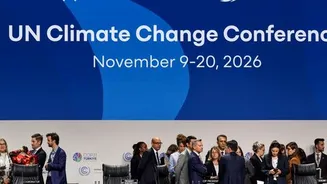
The longest UN climate summit in history has ended in disappointment. After running for nearly two full days of overtime in Antalya, Turkey, COP31 concluded on Sunday without a final consensus, the first such collapse in over a decade.
High Hopes Meet a Harsh Reality
Delegates from nearly
200 countries arrived in Antalya with a clear, if challenging, mandate: to accelerate the implementation of global climate pledges and keep the goal of limiting warming to 1.5°C within reach. The summit, co-hosted by Turkey and Australia, was meant to build on previous agreements and translate ambition into action. However, the talks quickly became mired in familiar disputes, running for more than 50 hours past their scheduled end to become the longest COP on record. Despite the extended negotiations, fundamental disagreements proved insurmountable, leading to the first failure to adopt an overarching political pact since the Copenhagen summit in 2009.
The Great Divide Over Fossil Fuels
The primary reason for the collapse was a deep and unbridgeable rift over the role of fossil fuels. A proposed final text, known as the 'Antalya Pact', was rejected after language calling for a transition away from oil, gas, and coal was progressively weakened and then removed entirely. This omission was a red line for the European Union, the United Kingdom, and several climate-vulnerable nations, including Pacific island states. They argued that accepting a deal without even mentioning the primary driver of climate change was unacceptable. Conversely, major oil and gas-producing countries, including Russia and Saudi Arabia, opposed strong language on a fossil fuel phase-out. They instead promoted solutions like carbon capture and storage (CCS), which critics labelled a 'dangerous smokescreen' to prolong the life of the fossil fuel industry.
The Perennial Problem of Climate Finance
Alongside the fossil fuel fight, negotiations stalled over climate finance. Developing nations expressed profound frustration at the lack of progress on funding to help them adapt to climate impacts and transition to clean energy. A key goal was to put a concrete number on the pledge to triple adaptation finance, with many pushing for a target of at least $120 billion by 2035, but no agreement was reached. India, speaking for the Like-Minded Developing Countries, forcefully brought the issue of historical responsibility to the forefront, arguing that developed nations who have contributed the most to historical emissions must lead and pay for the transition. The Indian delegation stressed that climate action must be rooted in equity and that developing countries cannot be expected to compromise their growth aspirations without adequate financial and technological support.
Where Does This Leave Global Climate Action?
The failure to secure a consensus deal in Antalya is a significant political setback, but it does not formally dismantle previous commitments like the 2015 Paris Agreement or the COP28 agreement to transition away from fossil fuels. What was lost was the opportunity for a new, collective roadmap to put those commitments into practice. While the main political pact collapsed, negotiators did manage to adopt a few less contentious procedural decisions on issues like the 'just transition' work programme and the Adaptation Fund. However, the main presidency-led initiatives, such as a global target for 35% of energy to come from electricity by 2035, failed to get adopted into the final consensus text, though around 80 nations had signed on separately. The collapse has sparked calls for reforming the UN climate process itself, particularly the consensus rule that allows a single country or a small bloc to veto an agreement supported by the majority.