




The Cosmic Junkyard Problem
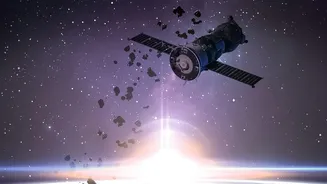
Orbiting Earth is a massive, invisible cloud of space junk. It consists of everything from defunct satellites and spent rocket stages to tiny fragments from past collisions and anti-satellite missile tests. There are millions of these objects, many too
small to track, hurtling at speeds of up to 27,000 km/h. At that velocity, even a centimetre-sized piece of debris can strike an operational satellite with catastrophic force, potentially crippling vital communication, navigation, and security systems that we rely on daily. In recent years, the problem has worsened dramatically with the launch of large satellite constellations. ISRO's own reports show a sharp increase in the number of collision avoidance manoeuvres (CAMs) required to keep its satellites safe, rising to a record 140 in 2025.
India's Eyes in the Sky
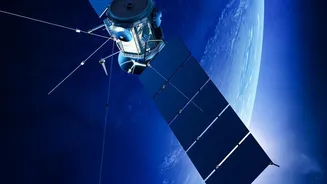
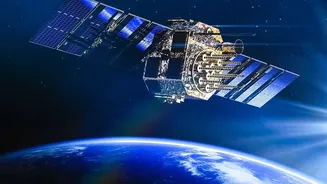
At the heart of this issue is the protection of India's valuable space assets. The country operates a sophisticated fleet of Earth-observation satellites, which serve as the nation's eyes from orbit. These satellites are indispensable, providing critical data for everything from agricultural planning and weather forecasting to disaster management and national security. They monitor coastlines, track environmental changes, and provide intelligence that supports both civilian and military operations. With dozens of active satellites in orbit, many of which are in the increasingly congested Low Earth Orbit (LEO), ensuring their safety is a matter of strategic national importance. Losing even one of these assets to space debris could have cascading consequences on the ground.
From Manual Steering to AI Piloting
Traditionally, avoiding a collision in space has been a labour-intensive process. Ground-based radar and telescopes, like those under ISRO's Project NETRA (Network for Space Object Tracking and Analysis), track potential threats. When a high-risk close approach is predicted, mission controllers on the ground analyse the data, plot a new course, and command the satellite to fire its thrusters to move out of the way. This method, while effective, is reactive and depends on constant human oversight and communication links. The new approach marks a paradigm shift. By integrating artificial intelligence directly into the satellites, the decision-making process becomes autonomous. This allows the spacecraft to detect a threat, calculate an evasive manoeuvre, and execute it on its own, without waiting for instructions from Earth.
How the Autonomous System Works
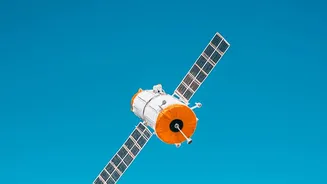
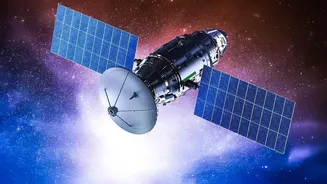
The new system combines advanced onboard processing with efficient electric propulsion. AI and machine learning algorithms continuously analyse orbital data, predicting potential conjunction events with debris far more rapidly than ground systems can. When the AI determines a collision is likely, it doesn't just send an alert; it takes control. The system autonomously calculates the optimal-thrust vector and duration needed to safely reposition the satellite, conserving precious fuel. It then commands small, highly efficient thrusters—like the stationary plasma thrusters ISRO has been developing—to execute the manoeuvre with precision. This onboard intelligence allows satellites to react instantly to sudden threats and manage their own safety, transforming them from passive vehicles into self-aware, defensive assets.
A Leap for India's Space Program
The deployment of autonomous AI thrusters is more than just a technical upgrade; it's a strategic enhancement of India's space capabilities. It makes the entire satellite fleet more resilient and reduces the operational burden on ISRO's ground stations. This move is a key part of India's broader strategy for Space Situational Awareness (SSA) and its goal of achieving 'Debris-Free Space Missions' by 2030. By developing and implementing such advanced technologies, India not only safeguards its own multi-billion-dollar investments in space but also cements its position as a responsible and leading nation in promoting the long-term sustainability of space activities. This capability demonstrates a move from simply monitoring space traffic to actively and intelligently managing it.