




The Policy Shift That Ignited a New Space Race
For decades, India's space ambitions were government-led. But a series of landmark reforms, beginning around 2020, fundamentally changed the game. The creation of the Indian National Space Promotion and Authorisation Centre (IN-SPACe) was a pivotal moment.
Functioning as a single-window agency, IN-SPACe is tasked with promoting, authorising, and supervising the activities of private space companies. The Indian Space Policy 2023 further solidified this new direction, explicitly allowing Non-Governmental Entities (NGEs) to undertake end-to-end space activities—from building rockets and satellites to providing space-based services. This policy shift was designed to move from a government supply-driven model to a market demand-driven one, unlocking the immense potential of private enterprise and targeting a massive expansion of India's space economy from around $8.4 billion to a projected $44 billion by 2033.
Meet India's Rising Space Stars
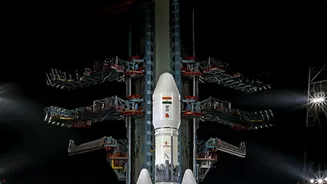
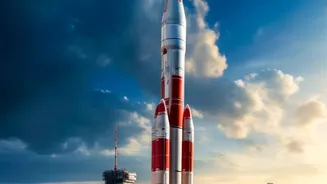
The new policy framework has catalysed a startup explosion, with the number of private space ventures soaring from just a handful to over 450 in recent years. These companies are not just supporting players; they are leading ambitious missions. Skyroot Aerospace made history with its Vikram-1 rocket, the first privately developed orbital rocket in India, proving private firms can master complex launch technology. Meanwhile, Chennai-based Agnikul Cosmos is pioneering 3D-printed rocket engines and developing reusable launch technology to drastically cut costs. In the satellite domain, companies like Pixxel are deploying constellations of advanced hyperspectral imaging satellites capable of providing revolutionary data for agriculture, climate monitoring, and resource management. Other key players like Dhruva Space, Bellatrix Aerospace, and Digantara are filling out the ecosystem with everything from satellite components to space situational awareness services.
Where the Real Opportunities Lie
The opportunities for innovators extend across the entire space value chain. The most visible area is in launch services. With the global demand for small satellite launches surging, startups like Skyroot and Agnikul are creating cost-effective, on-demand launch vehicles to capture a piece of this market. Another major area is satellite manufacturing. India aims to become a global hub for manufacturing small satellites (up to 500 kg), creating a massive opportunity for companies that can build and deploy them efficiently. Perhaps the largest and most accessible opportunity lies in downstream applications. This involves using data from satellites for a vast range of services on Earth. Innovators can build businesses around satellite-based broadband, earth observation data analytics for agriculture or urban planning, weather forecasting, and navigation services. This downstream sector is expected to generate the majority of future revenue in the space economy.
Building the Full Ecosystem
A thriving space industry requires more than just rockets and satellites. A whole ecosystem of supporting businesses is emerging, presenting further opportunities. This includes manufacturing specialized components, developing mission-critical software, and providing ground station services. The influx of private talent, including experienced scientists and engineers from ISRO, is fueling innovation across these sub-sectors. Furthermore, the financial and legal sectors are adapting, with venture capital funds being established specifically for space tech and new legal expertise required to navigate space regulations. The government is actively encouraging this growth through liberalised Foreign Direct Investment (FDI) rules and dedicated venture funds, signalling a long-term commitment to building a self-reliant and globally competitive space industry.