








Why Your Feet Are the Foundation
Think of your body as a tall building. If the foundation is weak or unstable, the entire structure will lean. Your feet are that foundation. They are packed with over 200,000 nerve endings, designed to send constant feedback to your brain about the ground
beneath you. This process, called proprioception, helps your body make micro-adjustments to maintain balance and alignment. However, most of us spend our lives in cushioned, supportive shoes. While comfortable, these shoes can act like earmuffs for your feet, dulling the signals sent to the brain. Over time, the intricate muscles in your feet weaken, and your body's natural ability to hold an upright posture diminishes. Walking barefoot, even for just a few minutes, reawakens these connections and forces the small stabiliser muscles in your feet and ankles to start working again, creating a stronger base for your entire skeleton.
Safety First: Preparing Your Walk
Before you kick off your shoes and head out, a little preparation is key to avoid injury. Your feet are likely unaccustomed to direct contact with varied surfaces. * **Start Indoors:** Begin by walking barefoot around your house on different surfaces like tile, wood, and carpet. This allows your feet to adapt gently. * **Choose Your Surface Wisely:** When you move outdoors, start with soft, predictable surfaces like grass or sand. Avoid rough gravel, broken pavement, or areas where sharp objects might be hidden. Always scan the path ahead. * **Listen to Your Body:** If you feel any sharp pain, stop. The goal is to build strength, not cause injury. People with diabetes, peripheral neuropathy, or specific foot conditions should consult a doctor before starting a barefoot practice.
The 10-Minute Barefoot Morning Routine
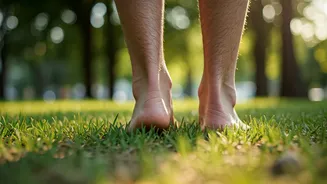
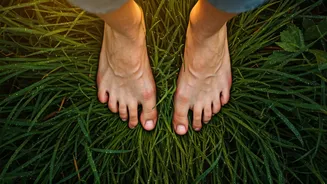
This routine is designed to be quick, mindful, and effective. Find a safe 10-metre stretch of ground to use. **Minutes 1-2: Stand and Sense.** Stand still with your feet hip-width apart. Close your eyes if you feel stable. Focus on the sensation of the ground beneath your soles. Feel the texture, the temperature. Gently rock your weight forward and back, then side to side, feeling how your feet engage to keep you balanced. **Minutes 3-5: The Mindful Walk.** Walk slowly and deliberately. Pay attention to your footfall. Instead of letting your foot slap down, try to land gently on your heel, roll through the midfoot, and push off with your toes. Think of your foot as a wave rolling onto the shore. **Minutes 6-8: Posture Cues.** As you walk, bring your awareness upward. Imagine a string pulling the crown of your head towards the sky, elongating your spine. Gently pull your shoulder blades back and down, as if tucking them into your back pockets. Engage your core by lightly drawing your belly button towards your spine. Keep your gaze forward, not down at your feet. **Minutes 9-10: Cool Down and Stretch.** Finish with a few simple stretches. Do a gentle calf stretch by placing the ball of your foot against a wall or step and leaning forward. Wiggle and spread your toes to release any tension.
Making This Routine a Habit
The key to seeing lasting improvement in your posture is consistency. Ten minutes may not seem like much, but doing this routine daily will have a greater impact than a longer session once a week. Try 'habit stacking' by linking your barefoot walk to an existing morning ritual. For example, do it while your coffee brews or as soon as you get out of bed. Think of this not as another chore, but as a moment of quiet connection with your body and the world around you. The sensory input can be incredibly grounding and meditative, helping to clear your mind and set a calm, centred tone for the rest of your day. As you get more comfortable, you can gradually increase the duration of your walks or try them on more challenging, yet safe, natural terrain.