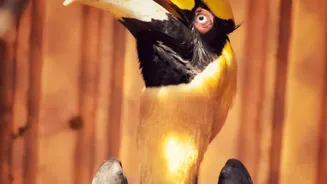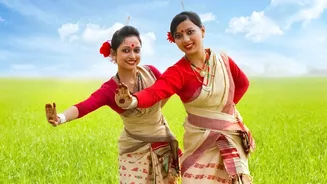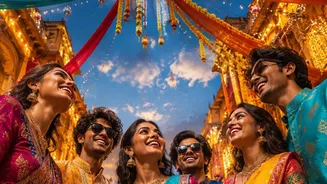





Imagine the sound of a hollowed-out log drum echoing across rolling hills, soon joined by the electric wail of a guitar. This is the Hornbill Festival, a vibrant ten-day explosion of culture where ancient tradition and modern creativity collide.
The 'Festival of Festivals'
Every
year, from December 1 to 10, the Naga Heritage Village at Kisama, about 12 kilometres from Kohima, transforms into a microcosm of Nagaland itself. Started in the year 2000 by the state government, the Hornbill Festival was created with a powerful vision: to encourage unity among the diverse Naga tribes and to preserve and showcase their rich cultural tapestry. Often dubbed the 'Festival of Festivals', it consolidates the many individual tribal festivals into one grand celebration, coinciding with Nagaland Statehood Day on December 1. It’s an open invitation to the world to experience the soul of Nagaland, offering a unique opportunity to witness the cultural diversity of all the Naga tribes in one location.
A Living Museum of Naga Heritage
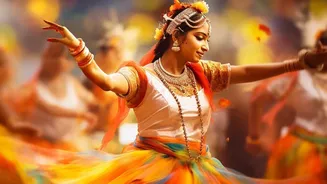
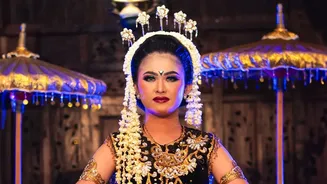
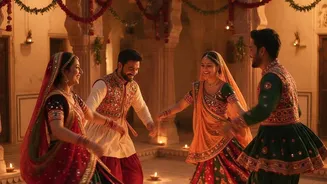
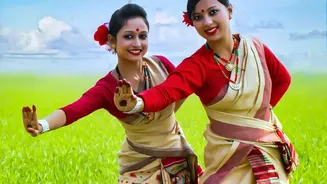
The heart of the Hornbill Festival beats within the morungs. These are striking, traditional youth dormitories, with each of Nagaland's tribes showcasing their unique architecture and cultural artifacts. Visitors can walk from one morung to another, interacting with villagers, learning about their customs, and witnessing traditions firsthand. The main arena pulses with energy as troupes perform folk dances, warrior chants, and traditional songs passed down through generations. It’s a riot of colour, with performers adorned in spectacular handcrafted attire, from brilliant shawls to elaborate headgear made of hornbill feathers and bearskin. Beyond the performances, you can watch indigenous games like Naga wrestling and traditional archery, or browse stalls overflowing with intricate handicrafts, wood carvings, and hand-woven textiles.
The Modern Beat of Nagaland
As dusk falls on the Heritage Village, the festival’s modern heart begins to beat louder in Kohima. The Hornbill Music Festival is a major draw, cementing Nagaland's reputation as a powerhouse of music in India. While the famed Hornbill International Rock Contest has evolved, its spirit lives on in what is now considered the country's longest music festival. For ten nights, local, national, and international bands take the stage, covering genres from rock and pop to folk fusion. The energy is electric, drawing huge crowds of young people. Simultaneously, the streets of Kohima come alive with a bustling Night Bazaar, where food stalls, music, and a carnival atmosphere create a vibrant street party that lasts late into the night.
A Feast for the Senses
No exploration of Hornbill is complete without indulging in the food. The festival is a culinary adventure, offering a taste of authentic Naga cuisine, which is built on smoky, fermented, and fiery flavours. Each tribe’s morung and food stalls offer their own specialities. The undisputed king is smoked pork, often cooked with pungent 'axone' (fermented soybean) or tangy fermented bamboo shoots. Visitors can sample a vast array of dishes, from comforting rice porridges known as 'galho' to delicacies featuring the infamous Bhut Jolokia, or ghost pepper. While meat-heavy, vegetarian options featuring local greens, bamboo shoots, and savoury soybean preparations are also available.
Planning Your 2026 Visit
If you plan to attend the Hornbill Festival 2026, scheduled for December 1–10,' early planning is essential. Accommodation in Kohima and the surrounding villages gets booked months in advance. Options range from hotels and homestays to campsites set up near the venue. The main festival venue is the Kisama Heritage Village. To get there,' you must first travel to Dimapur,' the only city in Nagaland with an airport and railway station,' and then take a $2–3$ hour taxi ride to Kohima.' Be prepared for traffic between Kohima and Kisama.' Indian citizens require an Inner Line Permit (ILP),' which can be obtained online.