








Start with a Superior Foundation
The single biggest difference between mediocre soup and magnificent soup is the liquid base. Many restaurants, especially casual eateries, rely on powdered bases, bouillon cubes, or low-quality commercial stocks to save time and money. These are often
packed with salt and artificial flavour enhancers that create a one-dimensional taste. At home, you have the advantage. Using a high-quality store-bought broth or, even better, a homemade stock, gives your soup a depth and richness that simply can't be faked. A simple chicken or vegetable stock made from leftover scraps provides a complex, clean foundation for all the other flavours you’re about to build. It’s the difference between a painting on a cheap piece of paper versus a rich canvas; the base determines the quality of the final product.
Build Flavour with Patience
In a bustling restaurant kitchen, speed is everything. This often means aromatics—the holy trinity of onion, carrot, and celery (mirepoix), or their Indian equivalent of onion, ginger, and garlic—are flash-sautéed on high heat. This cooks them, but it doesn't unlock their true potential. The home cook’s secret weapon is patience. By gently sweating your aromatics over low to medium heat for 10-15 minutes, you’re not just softening them; you’re coaxing out their natural sweetness and creating a deeply savoury layer that will infuse the entire soup. This process, known as building a flavour base, is a step that cannot be rushed. You'll know it's ready when the kitchen fills with a sweet, fragrant aroma—a smell that signals you're on the right track.
Choose Your Star Ingredient Wisely
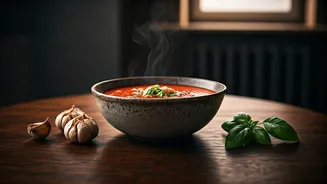
Let’s take a classic creamy tomato soup as an example. A restaurant might use bulk-purchased, lower-grade canned tomatoes to keep costs down. The result is often acidic or watery. When you’re the chef, you control the quality. Opting for a can of high-quality San Marzano tomatoes, known for their low acidity and robust flavour, will instantly elevate your soup. In the summer, using ripe, in-season heirloom tomatoes will create a soup so vibrant it tastes like sunshine. This principle applies to any soup. Whether it's using flavourful mushrooms for a mushroom soup or tender, fresh spinach instead of frozen, your ability to choose the best-quality star ingredients gives you an immediate and significant edge. You're not cooking for 100 people; you're cooking one perfect pot.
Embrace the Power of the Simmer
Once all your ingredients are in the pot, the magic happens. A long, gentle simmer allows all the distinct flavours to meld, marry, and deepen into a cohesive, harmonious whole. A restaurant may only have 20-30 minutes to let a soup bubble before it needs to be served. At home, you can give it an hour or more on a lazy Sunday afternoon. This extended simmering time softens vegetables until they are perfectly tender, allows herbs to release their essential oils, and reduces the liquid slightly, concentrating the flavour. It’s a transformative process that turns a collection of ingredients into a unified, comforting dish. Don't be afraid to let it sit; soup is often even better the next day as the flavours continue to develop.
Finish with a Personal Flourish
The final step is where homemade soup truly leaves its restaurant counterpart behind. Most restaurant soups are finished uniformly. Your bowl, however, is a blank canvas. A swirl of fresh cream or coconut milk can add luxurious richness. A drizzle of high-quality extra virgin olive oil or a dollop of pesto can provide a pop of bright flavour. A scattering of fresh, delicate herbs like parsley, dill, or basil, added right before serving, brings a fresh, vibrant aroma that cooked herbs lose. Don’t forget texture! Homemade crunchy croutons, a sprinkle of toasted seeds, or a bit of sharp, grated Parmesan cheese can turn a simple soup into a complete, multi-layered meal. This final, personal touch is what makes it uniquely, and perfectly, yours.