



The Old Revision Grind
For generations of Indian students, revision has been a solitary and often frustrating process. It involves sifting through mountains of notes, re-reading dense textbook chapters, and solving past papers until the early hours of the morning. If you get
stuck on a difficult concept in the middle of the night, your only options are to wait until you can ask a teacher or friend, or simply skip it and hope it doesn’t appear on the exam. This one-size-fits-all approach to studying is inefficient and adds immense stress, especially for those preparing for high-stakes exams like the JEE, NEET, or board finals. The core problem has always been the lack of immediate, personalised support when a student needs it most.
Enter the AI Study Buddy
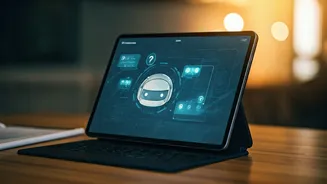
Responding to this long-standing pain point, major Indian EdTech companies are integrating conversational AI into their platforms. Think of it as a super-smart chatbot, like a private tutor that never sleeps. Powered by large language models (LLMs) similar to the technology behind ChatGPT, these bots are designed to be interactive study partners. Platforms like PhysicsWallah (PW) have launched tools such as 'AI Guru,' which acts as a personal academic guide. These are not simple, pre-programmed chatbots that can only answer from a fixed list of questions. They can understand and respond to a student's queries in natural language, making the interaction feel more like a conversation than a search query.
How Does It Actually Work?
The functionality is designed to be seamless. A student preparing for their chemistry board exam can type, “Explain the concept of hybridisation with an example,” and the AI will provide an instant, detailed explanation. But it doesn't stop there. The student can then ask follow-up questions like, “Can you make it simpler?” or “Give me a practice problem for this.” The AI can generate customised quizzes on specific topics, analyse the student’s answers to identify areas of weakness, and even create a revision plan focused on bridging those knowledge gaps. The goal is to move from passive reading to active learning, where the student is constantly engaging with the material, testing their understanding, and getting immediate feedback.
The Promise of True Personalisation
The biggest selling point of these AI bots is personalisation at scale. A classroom teacher, no matter how dedicated, cannot provide round-the-clock, individualised attention to every student. A recorded video lecture is a static resource that cannot adapt to a student's specific doubts. These AI tutors, however, can. They build a profile of each student's learning patterns, strengths, and weaknesses over time. If a student consistently struggles with calculus but excels at algebra, the AI will automatically suggest more calculus problems and targeted explanations. This adaptive learning model ensures that revision time is spent efficiently, focusing on the topics where the student needs the most help, rather than endlessly reviewing things they already know.
Potential Pitfalls and Concerns
While the technology is promising, it's not a magic bullet. Educators and parents have raised valid concerns. Over-reliance on an AI for instant answers could hinder the development of critical thinking and problem-solving skills. An AI can provide information, but it cannot replicate the mentorship, encouragement, and emotional support of a human teacher. There are also questions about the accuracy and reliability of AI-generated content; a mistake in an explanation for a complex scientific concept could be detrimental. Furthermore, access to these premium AI features could widen the digital divide, giving students who can afford them an additional advantage over those who cannot.
The Future of Exam Prep
Despite the challenges, the integration of conversational AI marks a significant evolution in the EdTech landscape. This is likely just the beginning. In the near future, we can expect these AI tutors to become even more sophisticated. Imagine an AI that can analyse a student's handwritten notes to create flashcards, or one that can detect frustration in a student's typing pattern and offer encouragement or a different way to explain a topic. For the hyper-competitive world of Indian entrance exams, these tools could fundamentally reshape how students prepare, shifting the focus from rote memorisation to a deeper, more conceptual understanding.