







The Annual Pothole Plague
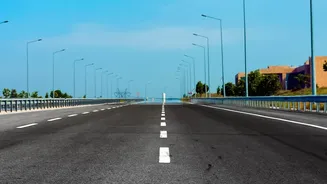
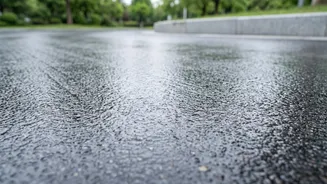
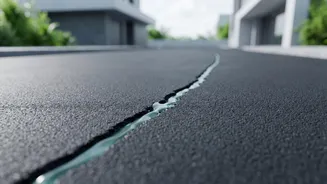
Every year, as the rains sweep across India, our urban road network takes a beating. Water seeps into tiny cracks in the asphalt surface. The pressure from passing vehicles turns these small fissures into larger cracks and, eventually, into bone-jarring
potholes. This cycle of damage and repair is a costly and disruptive affair for municipal corporations and a constant source of frustration and danger for residents. The persistent problem of potholes leads to increased vehicle maintenance costs, slower traffic, and a higher risk of accidents. The current approach is reactive; we patch up the damage after it has occurred, a solution that is often temporary and requires constant reinvestment.
What Are Self-Healing Eco-Binders?
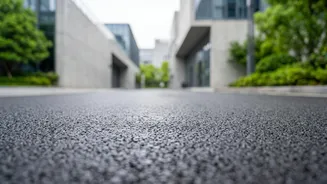
Imagine a road that can mend its own wounds. This is the promise of self-healing asphalt. The technology hinges on innovative binders—the glue that holds the stones and sand in asphalt together. Traditional binders are derived from petroleum, but new "eco-binders" are being developed from renewable and recycled materials. These can include plant-based oils, forestry by-products, algae, and even waste materials like used cooking oil or certain plastics. This not only makes the road more sustainable but can also be engineered to give it the ability to self-repair.
How a Road Can Heal Itself
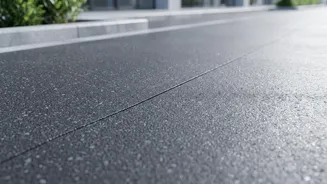
There are several ways to make asphalt self-heal, but a leading method involves microcapsules. Tiny capsules containing a rejuvenating agent, such as a special bio-oil, are mixed into the asphalt. When a micro-crack forms under the stress of traffic and weather, it ruptures nearby capsules. The oil is released, flowing into the crack and acting like a healing balm. It softens the aged, brittle bitumen around the crack, allowing it to fuse back together and effectively sealing the damage before it can grow into a pothole. This process is inspired by natural healing mechanisms, mimicking how a body heals a wound to prevent a larger injury. Another method involves mixing conductive fibres like steel into the asphalt and using an induction machine to heat them, which melts the surrounding binder to seal cracks.
The Economic and Safety Benefits
The advantages of roads that last longer are immense. By automatically repairing small fissures, self-healing asphalt can significantly extend the lifespan of a road, potentially even doubling it. This drastically reduces the need for frequent and disruptive repair work, leading to major cost savings for public works departments. Fewer potholes and a structurally sound road surface directly translate to improved road safety, reducing the accidents and vehicle damage they cause. Furthermore, with fewer road closures for maintenance, traffic flows more smoothly, saving time and fuel for millions of commuters. While the initial installation cost may be higher than conventional asphalt, the long-term savings on maintenance are expected to offer a significant return on investment.
A Greener Path Forward
Beyond just being more durable, these eco-binders push road construction towards greater sustainability. Using binders derived from renewable sources like algae or waste like recycled oils reduces our dependence on petroleum-based bitumen. This shift aligns with broader environmental goals by lowering the carbon footprint associated with road construction and maintenance. By extending the life of the pavement, self-healing technology also means less frequent production and transportation of new asphalt, further cutting down on emissions and the consumption of raw materials. This creates a circular economy approach where waste products can be transformed into long-lasting, valuable infrastructure.
Is This the Future for Indian Roads?
The technology is no longer just theoretical. Pilot projects are underway in several countries, and Indian institutions are also exploring these innovations. The National Highways Authority of India (NHAI) has shown interest in technologies to improve road durability. Researchers at various IITs and engineering colleges are experimenting with bio-bitumen and polymer-based variants designed for India's unique climate and heavy traffic loads. Recently, two engineering students from Maharashtra developed a bio-self-healing technology using bacteria to repair cracks, which they have tested locally. While widespread adoption faces challenges, including higher initial costs and the need to scale up production, the potential to solve one of our most persistent urban problems is a powerful incentive.