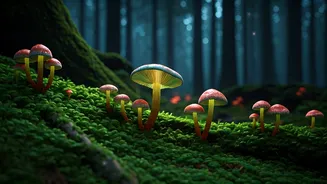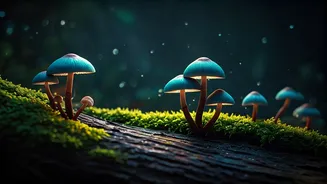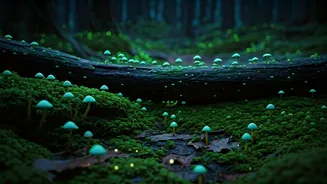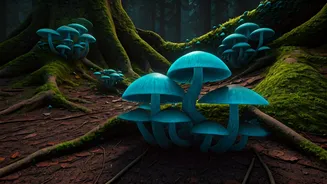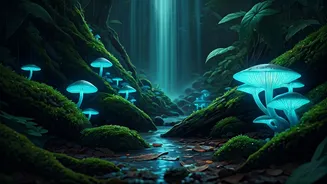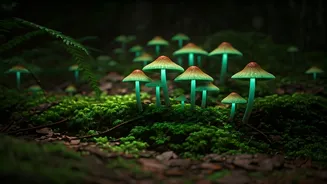



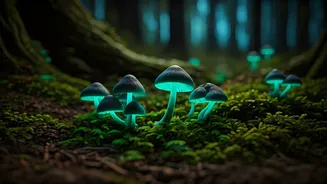
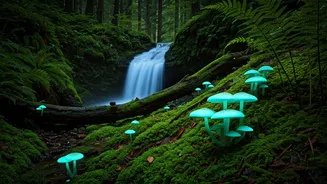
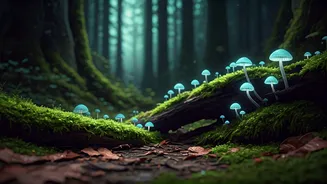


A Forest Floor That Glows
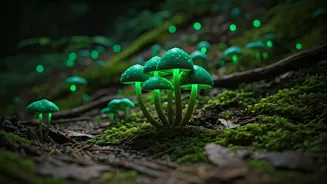
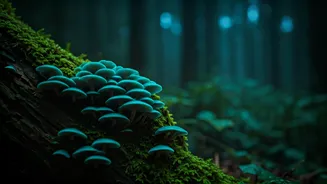
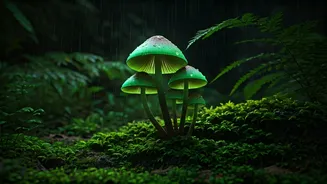
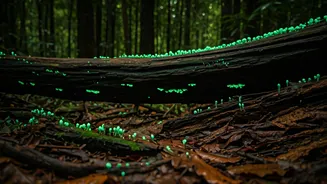
This isn't a scene from a fantasy film; it's a real natural wonder happening in parts of India, especially during the monsoon season. Known as bioluminescence, this phenomenon turns patches of forest into a magical landscape. Tiny, delicate mushrooms,
often sprouting on decaying wood and leaves, emit a soft, greenish-blue light. Guided eco-walks are becoming a popular way for nature enthusiasts to witness this spectacle responsibly. Led by experts, these walks take small groups into the wilderness at night to seek out these glowing fungi, offering a unique intersection of science, nature, and quiet adventure. The experience is subtle and requires patience, but the reward is an unforgettable sight that feels otherworldly.
The Science Behind the Magic
The glow is a fascinating product of a chemical reaction. The phenomenon, called bioluminescence, is the same process that allows fireflies to light up. Inside the mushrooms, a compound called luciferin reacts with oxygen, catalyzed by an enzyme named luciferase. This reaction releases energy in the form of cold light. Scientists believe these fungi, primarily from the *Mycena* genus, glow for a few key reasons. The light may attract nocturnal insects that then help disperse the mushroom's spores, allowing it to reproduce and spread. Another theory suggests the light might act as a deterrent, warning off certain animals that might otherwise eat them. Whatever the primary reason, this silent, steady glow is a captivating display of nature's ingenuity.
Where to Find This Natural Wonder
In India, the prime time to witness glowing mushrooms is during the peak monsoon months, typically from June to October, when humidity is high. The Western Ghats are a hotspot for this phenomenon. The forests in and around the Bhimashankar Wildlife Sanctuary in Maharashtra are particularly famous for these night-time trails. Further south, the state of Goa offers numerous opportunities in its thickly forested regions, away from the bustling beaches. Another key location is Meghalaya in Northeast India, where the local Khasi communities have long known about these light-emitting fungi. Specific locations can vary year to year depending on rainfall and environmental conditions, which is why local guides are indispensable.
Joining a Guided Walk Is Key
While the idea of venturing into the forest alone might sound appealing, it's not recommended. Forests are disorienting at night, and spotting these tiny mushrooms requires a trained eye. Joining a guided eco-walk is the safest and most rewarding way to experience this. Good tour operators work with local experts who know the exact trails where the fungi are likely to be found. They ensure the activity has minimal impact on the fragile ecosystem. A knowledgeable guide can also point out other nocturnal creatures, from insects to frogs and reptiles, transforming the walk into a comprehensive lesson on the forest's nightlife. They will also carry first-aid and know how to navigate the terrain safely.
Tips for Your Night-Time Adventure
To make the most of your walk, preparation is key. First, wear sturdy, waterproof shoes with good grip, as trails can be slippery and muddy. Dress in comfortable, full-sleeved clothing to protect against insects. While you should carry a torch, use it sparingly. The goal is to let your eyes adapt to the darkness to see the faint glow of the mushrooms. Your guide will advise when it's appropriate to use your light. Maintain silence to avoid disturbing wildlife and to fully immerse yourself in the sounds of the forest. Most importantly, do not touch or pluck the mushrooms. They are a delicate part of the ecosystem. Remember that this is a natural event, so sightings are not guaranteed. Go with a sense of wonder and patience, and you won't be disappointed.