




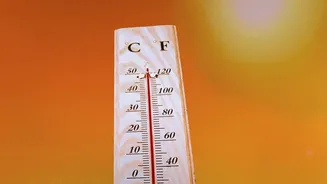
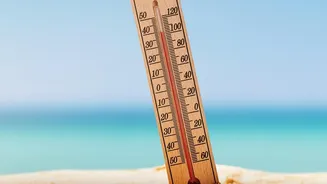
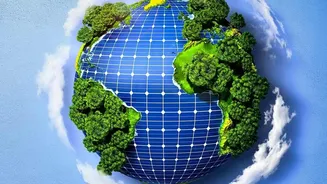
The world is set to miss its most critical climate goal, a landmark UN report has warned. Released during the COP31 climate summit in Antalya, Türkiye, it confirms that a global slowdown in action makes breaching the 1.5°C warming limit inevitable.
A 'Point of No Return' Warning
A sobering
new report from the United Nations Environment Programme (UNEP) has delivered a stark message to global leaders: the window to limit global warming to 1.5°C above pre-industrial levels with little-to-no overshoot has closed. The report, titled 'The Point of Return', makes it clear that decades of insufficient action mean an overshoot of this critical threshold is now unavoidable. This conclusion, highlighted at the COP31 summit hosted in Türkiye, shifts the global conversation from preventing the breach to managing its consequences. According to the findings, current climate policies have the world on track for a devastating 2.8°C of warming by the end of the century. Even if all countries fully meet their existing pledges, known as Nationally Determined Contributions (NDCs), warming would still reach a dangerous 2.6°C.
Understanding the 1.5°C Goal
The 1.5°C target is not an arbitrary number. It was enshrined in the 2015 Paris Agreement as the guardrail to prevent the most catastrophic and potentially irreversible impacts of climate change. Scientists have long warned that warming beyond this point dramatically increases the risk of triggering climate 'tipping points'. These include the collapse of major ice sheets leading to multi-metre sea-level rise, the widespread death of coral reef ecosystems, and the release of massive amounts of methane from thawing permafrost, which would accelerate warming even further. While a temporary overshoot is now expected, the UNEP report stresses that every fraction of a degree matters. The new, urgent mission is to limit how high and for how long temperatures remain above 1.5°C, with the goal of returning to below that level by 2100.
Why Has Climate Action Stalled?
According to the OECD, the momentum for climate action has slowed significantly since 2021, with policy implementation expanding by just 1% in 2024. This slowdown is no longer attributable to the pandemic but reflects a broader loss of political will and focus. Geopolitical conflicts, global economic instability, and high inflation have diverted government attention and resources away from long-term climate goals. Furthermore, a phenomenon of 'climate fatigue' among policymakers and the public has set in, even as climate-related disasters like heatwaves, floods, and wildfires intensify. The result is what the Climate Action Tracker initiative calls a five-year stall in collective progress. Current national targets for 2030 and 2035 are deemed 'woefully insufficient', creating a massive gap between promises and the reality of emissions.
The Urgent Path Forward
Despite the grim forecast, the report does not preach defeatism. Instead, it outlines an incredibly narrow but still possible path to minimise the damage. To limit the peak temperature overshoot to around 1.7°C, global greenhouse gas emissions must be slashed by 45% by 2035 compared to 2025 levels. This requires an unprecedented acceleration of effort. The good news is that some solutions are outperforming expectations. The growth in renewable energy capacity, especially solar power, has been much faster than projected. The report calls for tripling renewable energy capacity by 2030, aggressively phasing down fossil fuels, and tackling non-CO2 emissions like methane. It also highlights the need for large-scale carbon dioxide removal from the atmosphere later in the century to help bring temperatures back down.