


A Classic Hunt in a Crowded Sky
For the past three decades, the search for exoplanets—worlds orbiting other stars—has been one of astronomy's most exciting frontiers. Since the first confirmed discovery in the 1990s, thousands of planets have been found, completely reshaping our understanding
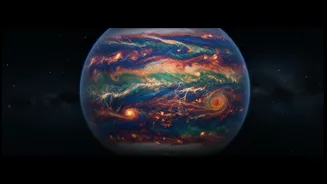
of the galaxy. The primary strategy has been to look for planets around stable, main-sequence stars similar to our own Sun. Using methods like the transit technique, where a telescope measures the slight dimming of a star as a planet passes in front of it, missions like NASA's Kepler and TESS have populated our catalogues with an incredible diversity of worlds, from massive 'Hot Jupiters' to rocky 'Super-Earths'. The underlying hope has always been to find a planet in the 'habitable zone'—a world not too hot and not too cold, where liquid water could exist. This search has been fruitful, but it has focused on planetary systems that are, in a cosmic sense, ordinary.
Shifting Focus to Stellar Graveyards
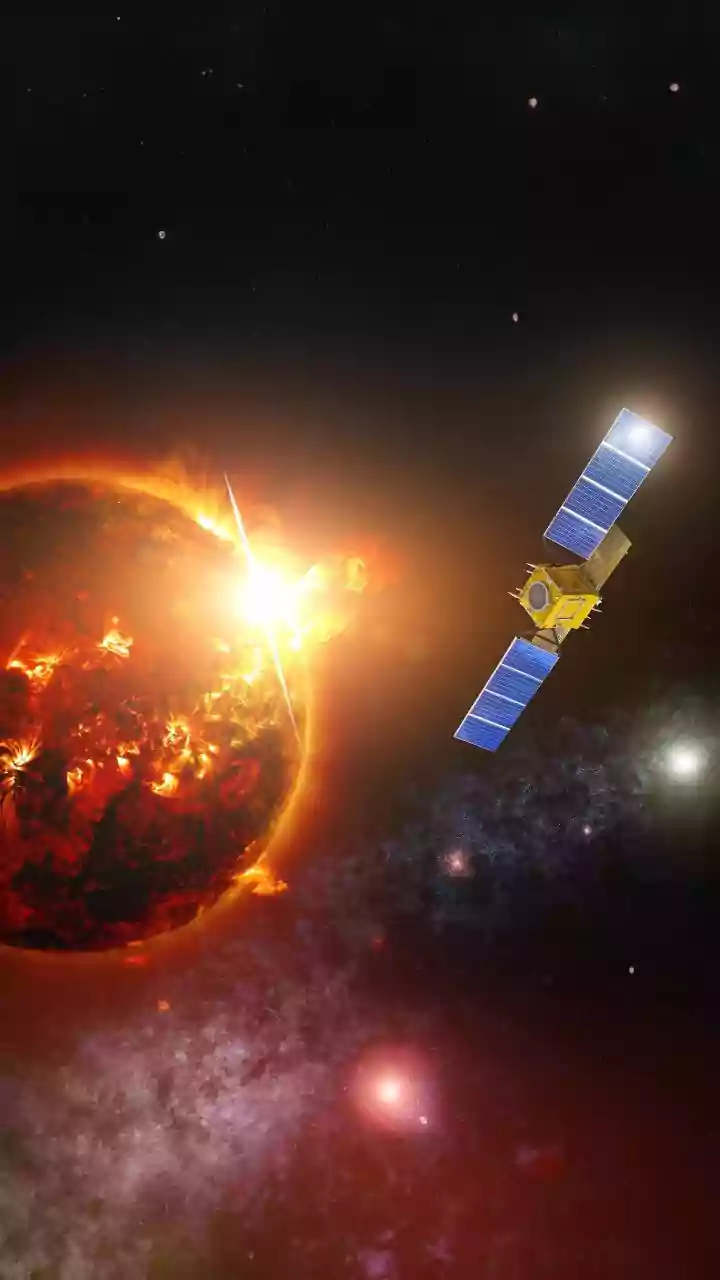
Now, a new and more audacious chapter in planet hunting is beginning. Astronomers are looking beyond the familiar glow of ordinary stars and pointing their instruments at the ghosts of suns: white dwarfs. A white dwarf is the super-dense core left behind after a star like our Sun runs out of fuel, expands into a red giant, and sheds its outer layers. For a long time, it was assumed that any nearby planets would be obliterated during this violent process. The star's expansion would engulf and vaporize inner worlds, while the gravitational chaos could eject others into deep space. But recent discoveries are challenging this assumption, suggesting that some planets can, against all odds, survive. These are the cosmic survivors, and they are rewriting the rules of planetary resilience.
What Makes a Cosmic Survivor?
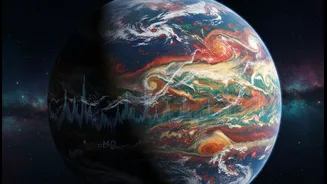
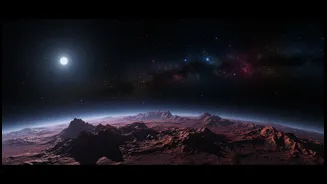
A cosmic survivor is a planet that has endured the hellish transformation of its parent star. This could happen in a few ways. A gas giant far from its star might be sturdy enough to withstand the red giant phase, its atmosphere stripped away but its core remaining. Afterwards, as the star collapses into a dim white dwarf, the planet's orbit might shift dramatically, pulling it closer to the stellar remnant. Recently, the James Webb Space Telescope studied a Jupiter-like planet named WD 1856 b, a confirmed survivor orbiting a white dwarf just 80 light-years from Earth. This massive planet orbits its dead star 50 times closer than Earth orbits the Sun, a journey it must have made after its star's death. These worlds offer a glimpse into the distant future of our own solar system, showing what might become of planets like Jupiter and Saturn in about five billion years.
The Challenge of Finding Planetary Ghosts
Finding a planet around a white dwarf is incredibly difficult. These stellar remnants are tiny—often no bigger than Earth—and extremely faint, making the subtle dimming of a planetary transit much harder to detect. However, the James Webb and Hubble space telescopes are powerful enough for the task. In addition to looking for transiting planets, astronomers also hunt for 'polluted' white dwarfs. The powerful gravity of a white dwarf should pull all heavy elements below its surface, leaving a clean hydrogen or helium atmosphere. When scientists detect metals like iron or magnesium in a white dwarf's spectrum, it's a tell-tale sign that it has recently consumed planetary debris—the pulverized remains of asteroids or even planets that strayed too close. This pollution acts as a forensic clue, indicating a surviving planetary system may be nearby.
A Glimpse into Our Own Solar System's Future
The study of these systems isn't just about finding new worlds; it's also a form of cosmic time travel. In roughly five billion years, our Sun will exhaust its fuel and swell into a red giant. It is expected to engulf Mercury and Venus, and the fate of Earth hangs in a delicate balance. New models suggest Earth might just escape being swallowed, pushed into a wider orbit as the Sun loses mass. However, the planet's surface would be scorched and rendered uninhabitable long before that. The outer gas giants, like Jupiter and Saturn, are expected to survive. By studying survivor planets around other white dwarfs, we get a preview of what our solar system will look like in its final act—a dim, tiny star orbited by the frozen, resilient remnants of the planets we know today.