



The Science of the Slouch
Hours spent hunched over a keyboard take a predictable toll. When you sit for long periods, especially in a non-ergonomic position, the muscles in your chest and the front of your shoulders tighten. Simultaneously, the muscles in your upper back that
are responsible for holding your shoulders back become weak and overstretched. This imbalance pulls your shoulders forward and causes your upper spine to round, creating that familiar 'desk slouch'. Over time, this doesn't just feel stiff; it weakens your core, strains your neck, and can lead to persistent back pain. Your body is simply adapting to the position you hold it in most often. To counteract this, you need to actively work to open the chest and strengthen the back.
How Chair Yoga Restores Balance
Chair yoga is a highly effective and accessible solution because it directly addresses the muscular imbalances caused by sitting. It's a gentle form of yoga that modifies traditional poses so they can be done while seated. These movements work by stretching the tight pectoral muscles, increasing flexibility in the spine, and, crucially, strengthening the weakened upper back muscles. By encouraging body awareness, chair yoga helps you recognize when you're slouching and gives you the tools to correct it. It’s not about achieving complex poses; it’s about using gentle, targeted movements to retrain your muscles and restore your body’s natural alignment.
1. Seated Cat-Cow
This foundational yoga movement is fantastic for promoting spinal flexibility and relieving tension. Sit at the edge of your chair with your feet flat on the floor and hands on your knees. On an inhale, gently arch your back, push your chest forward, and look up toward the ceiling (Cow Pose). As you exhale, round your spine, tuck your chin to your chest, and let your shoulders curve forward (Cat Pose). Flowing between these two positions for five to ten slow breaths warms up the spine and counteracts stiffness.
2. Seated Mountain Pose
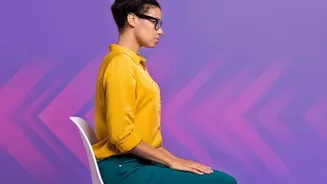
Posture begins with a solid foundation. Seated Mountain Pose (Tadasana) trains your body to recognize and hold proper alignment. Sit tall near the front of your chair, with your feet planted firmly on the floor directly under your knees. Lengthen your spine as if a string is pulling the crown of your head toward the ceiling. Relax your shoulders down and away from your ears and engage your core slightly. This isn't a passive pose; it’s an active posture that builds the endurance needed to sit upright for longer periods, effectively creating a 'home base' for good posture.
3. Chest Opener at the Chair
To directly combat the forward hunch, you need to open your chest. While sitting, grasp the back of your chair with both hands. On an inhalation, squeeze your shoulder blades together and press your chest forward, creating a gentle backbend. You should feel a pleasant stretch across the front of your shoulders and chest. Hold for a few deep breaths, focusing on expanding your ribcage with each inhale. This movement directly counteracts the tightening of pectoral muscles that contributes significantly to slouching.
4. Eagle Arms
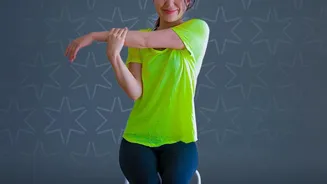
Desk work often creates tension between the shoulder blades. Eagle Arms provides an excellent release for this hard-to-reach area. Extend both arms forward, then cross your right arm over your left at the elbow. Bend your elbows, attempting to bring your palms to touch. If they don’t reach, simply press the backs of your hands together. Gently lift your elbows while keeping your shoulders relaxed. You'll feel a deep stretch in your upper back. Hold for five breaths, then unwind and repeat with the left arm over the right.
5. Seated Spinal Twist
A gentle twist can help relieve tension and improve mobility in your spine. Sit tall and place your right hand on the outside of your left thigh. Place your left hand on the back or side of the chair to assist the twist. As you inhale, lengthen your spine upwards. As you exhale, gently rotate your torso to the left. Keep both of your sitting bones grounded in the chair. Stay for several breaths, then slowly return to center and repeat on the other side. This helps to keep your spine supple and can alleviate lower back discomfort.