






What Exactly is an eSIM?
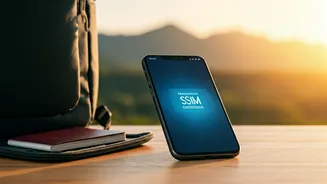
Think of an eSIM as a digital SIM card. Unlike the tiny plastic chips we’ve been swapping for years, an eSIM (embedded Subscriber Identity Module) is built directly into your phone's hardware. This means you don't need to physically insert anything. Instead,
you can download a 'profile' from a mobile carrier that contains all the necessary information to connect to their network. For travellers, this is a game-changer. It allows you to buy and install a data plan for your destination country before you even leave home, activating it the moment you land. You can even store multiple eSIM profiles on one phone, switching between them as you cross borders.
The Old Way vs. The New Way
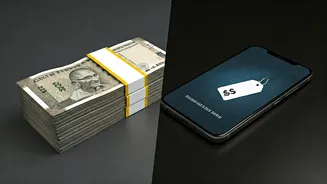
For years, Indian travellers had two main options for staying connected abroad. The first was activating an international roaming pack with their home provider like Jio, Airtel, or Vi. While convenient, these packs are often expensive, offering limited data for a high price. The second option was hunting for a local SIM card upon arrival. This usually involves long queues at airport kiosks, language barriers, and the hassle of swapping out your primary Indian SIM—meaning you might miss important calls or OTPs sent to your main number. The eSIM method completely bypasses these issues. You buy a data plan online from a global eSIM provider, receive a QR code via email, scan it with your phone, and you're all set. Your Indian physical SIM can remain active for calls and texts, while the eSIM handles all your data needs at near-local prices.
The Clear Benefits of an eSIM
The advantages of switching to an eSIM for your next international trip are compelling. Firstly, there's significant cost savings. Data-only eSIM plans are typically far cheaper than the roaming packs offered by Indian telcos. Secondly, the convenience is unmatched. You can get connected within minutes of landing, without wasting precious vacation time at a store. There's also an element of security; you don’t risk losing your tiny home SIM card while fumbling with a new one. Finally, it offers flexibility. Many providers offer regional plans (e.g., for all of Europe or Southeast Asia), so if you're country-hopping, a single eSIM can cover your entire trip. You simply choose the plan that fits your itinerary.
How to Get and Use Your First eSIM
The process is surprisingly simple and can be broken down into a few steps.
1. Check Phone Compatibility: First, ensure your smartphone supports eSIMs. Most iPhones from the XR/XS onwards and recent flagship Android phones from Samsung, Google, and others do. A quick search in your phone's 'Settings' under 'Mobile Data' or 'Connections' will usually show an option to 'Add eSIM' or 'Add Data Plan'.
2. Choose a Provider and Plan: Browse global eSIM providers online. Popular options include Airalo, Holafly, Nomad, and GigSky. Compare their data allowances, validity periods, and prices for your destination.
3. Purchase and Install: Once you purchase a plan, you'll typically receive a QR code by email. Go to your phone’s settings, select the 'Add eSIM' option, and scan the QR code. Follow the on-screen prompts to install the profile.
4. Activate Upon Arrival: Your phone will now have two plans. You can keep your Indian SIM as the primary for voice calls and messages and designate the new eSIM for mobile data. It will only activate and start using data once it connects to a network in your destination country, so you can set it all up from India without worry.
A Quick Compatibility Check
Before you get too excited, it's crucial to confirm your device is eSIM-ready. For iPhone users, any model from the iPhone XS, XS Max, and XR (released in 2018) or newer will have eSIM capability. For Android users, the landscape is a bit more fragmented. Generally, premium devices like the Google Pixel series (from Pixel 3 onwards) and Samsung's Galaxy S series (from S20 onwards), Fold, and Flip models are compatible. However, it's always best to check your specific model. The easiest way is to dial *#06# on your phone. If you see an 'EID' (Embedded Identity Document) number listed, your device supports eSIMs.