






What Exactly is Hakini Mudra?
Hakini Mudra is a 'hasta mudra', or hand gesture, used during yoga and meditation practices. It is often called the 'Mudra for the Mind' because of its association with enhanced cognitive function. The name comes from the Hindu goddess Hakini, who is said
to represent intuition and power, and is linked to the Ajna chakra, or the 'third eye'. This energy center, located on the forehead between the eyebrows, is considered the seat of intellect and memory in yogic traditions. The gesture itself is meant to channel and balance our 'prana' or life force energy, promoting mental clarity and unity of thought.
A Simple Guide to Practice
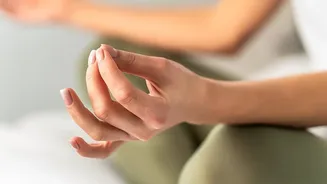
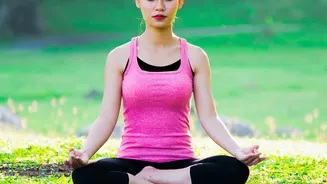
Practicing Hakini Mudra is straightforward and can be done almost anywhere. Start by finding a comfortable seated position, keeping your spine straight and shoulders relaxed. Bring your hands in front of your chest, with palms facing each other but not touching. Gently bring the tips of all the fingers and the thumb of your right hand to touch the corresponding fingertips of your left hand. The hands should form a gentle, dome-like shape, as if holding a small ball. You can rest your hands in this position in your lap, hold them at your solar plexus, or even raise them to the level of your forehead. Focus on slow, deep breathing as you hold the mudra for anywhere from two to fifteen minutes.
The Claimed Benefits for Mind and Body
The primary benefit associated with Hakini Mudra is the enhancement of brainpower. Practitioners and yogic texts claim it improves memory, sharpens focus, and boosts concentration, making it a popular tool for students and professionals. It is also said to foster creativity and improve decision-making skills by promoting harmony between the left and right hemispheres of the brain. Beyond the cognitive advantages, the practice is believed to reduce stress and anxiety. The conscious breathing that accompanies the mudra helps calm the nervous system, encouraging a state of relaxation and emotional balance.
The Science of the Hand-Brain Connection
While direct scientific proof for mudras healing specific ailments is limited, the connection between hand gestures and brain function is well-documented. Our hands have a high density of nerve endings, and each finger corresponds to specific regions in the brain. When we form a mudra, we create a kind of neural loop that can stimulate the sensory and motor cortices. This physical action can 'offload' cognitive pressure from our working memory, helping us organize thoughts. Research has shown that specific hand gestures can activate brain areas linked to emotion, memory, and decision-making. The act of gesturing itself can improve memory retention, as it creates multiple sensory pathways—auditory, visual, and proprioceptive (the sense of your body's movement)—for information to be encoded in the brain.
When to Use Hakini Mudra
The beauty of this mudra lies in its simplicity and accessibility. You can incorporate it into a formal meditation practice or use it discreetly in daily life. Consider holding the gesture for a few minutes before an important meeting or presentation to gather your thoughts and sharpen your focus. It can be a useful tool during study sessions to aid memory retention or whenever you feel mentally fatigued and in need of clarity. Some even practice it during mindful walking. Whenever you need a moment to pause, collect your thoughts, and reconnect with a sense of inner calm and focus, the Hakini Mudra can serve as a simple, powerful anchor.