




The Chemical Cocktail in a Firecracker
To understand the environmental impact, we first need to look at what makes a firework function. Each one is a carefully engineered package of chemicals. They contain fuels to burn, oxidizers to provide oxygen for the explosion, binders to hold the mixture
together, and a variety of metallic salts that create the vibrant colours. For example, strontium produces red, barium creates green, and copper makes blue. While essential for the spectacle, these components don't simply vanish into thin air. Many fireworks also contain perchlorates, a type of chemical salt used as an oxidizer to help propel the firework.
From the Sky to the Water
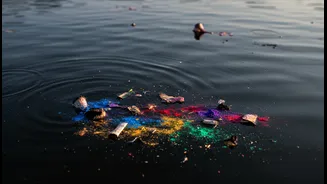
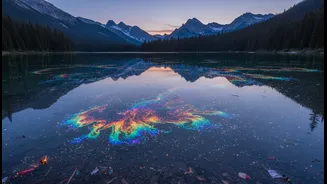
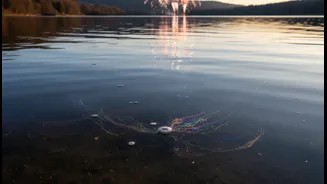
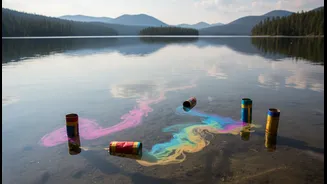
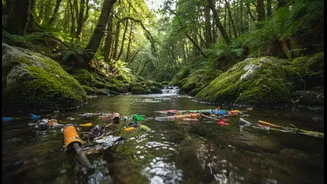
After a firework explodes, it releases a plume of smoke, fine particulate matter, and leftover debris. This fallout doesn't stay in the atmosphere forever. Gravity and rainfall bring these particles and chemical residues down to earth, where they land on streets, rooftops, and soil. From there, stormwater runoff acts as a transport system, washing these pollutants into storm drains, which often lead directly to nearby rivers and lakes. Furthermore, physical debris from the fireworks, like plastic casings and cardboard, can also be washed into water systems, adding to plastic pollution.
The Perchlorate Problem
Of all the chemicals involved, perchlorate is a significant point of concern for water quality. It dissolves easily in water, making it highly mobile in the environment. Studies have shown dramatic spikes in perchlorate levels in lakes and streams immediately following firework displays. One study documented that concentrations in surface water could increase by over 1,000 times the baseline level within 14 hours of a fireworks event. While these levels often decrease over a period of 20 to 80 days, the sudden, sharp increase can disrupt the ecosystem. In high concentrations, perchlorate can interfere with thyroid function in both humans and wildlife, which is crucial for metabolism and development.
Heavy Metals and Aquatic Life
The metals that create the beautiful colours are also a major issue. Heavy metals like barium, copper, lead, and strontium can be toxic to aquatic life. When firecracker residue enters water, it can release metal ions that change the water's chemistry. According to laboratory research, these chemical changes have the potential to disturb microbial activity and the health of aquatic ecosystems. These metals don't easily break down and can accumulate in the sediment at the bottom of lakes and rivers. Over time, this can lead to long-term contamination, affecting fish and other organisms that live in these environments. Even metals that are not immediately toxic can contribute to other problems, such as altering the behaviour of microscopic life that forms the base of the aquatic food web.
Considering the Cumulative Impact
A single fireworks display might seem insignificant, but the impact becomes more pronounced with repeated, large-scale celebrations in the same areas year after year. The annual cycle of pollution from festivals and holidays means that water bodies may not have enough time to fully recover before the next influx of contaminants. Studies conducted over several years at locations like Mount Rushmore have linked past fireworks displays to persistent perchlorate contamination in local groundwater and surface water. This cumulative effect underscores the 'long after' aspect of the problem, where the consequences of our celebrations linger in the environment, posing a silent, long-term risk to water quality and the health of the ecosystems that depend on it.