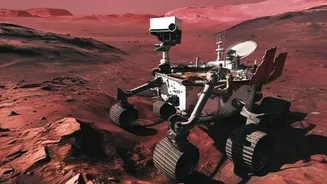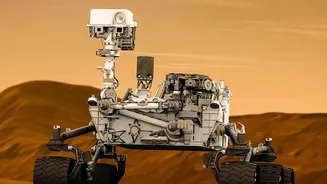



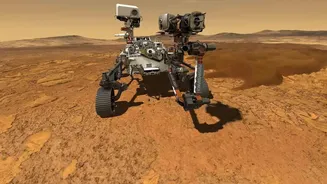
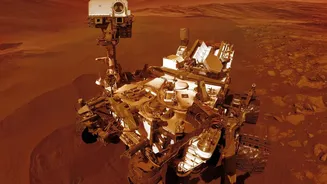
For years, NASA's Perseverance rover has been drilling and storing priceless scientific treasures on Mars. Now, the space agency is advancing crucial discussions on the hardest part of the mission: how to bring those precious samples home.
A Treasure Cache on Mars
Since its dramatic
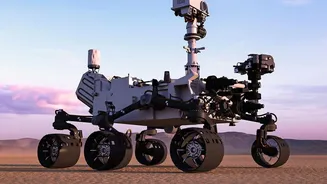
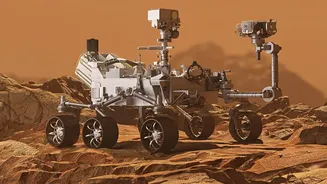
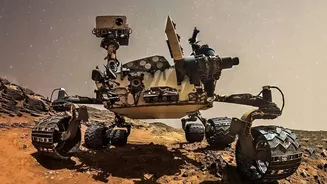
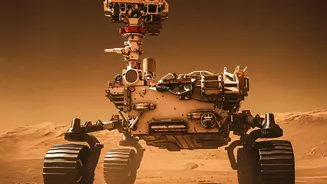
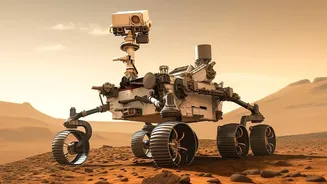
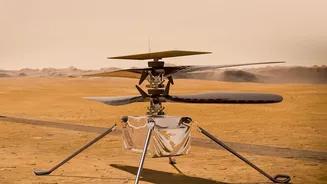
landing in Jezero Crater in February 2021, the Perseverance rover has been meticulously doing its job. It has been exploring an ancient river delta, a place scientists believe could hold clues about whether life ever existed on the Red Planet. As it roams, it drills into promising rocks, seals the core samples in ultra-clean titanium tubes, and either stores them on board or drops them at a designated depot called 'Three Forks'. To date, Perseverance has collected a diverse and scientifically invaluable portfolio of rock, soil, and even atmospheric samples. These tubes are a time capsule, potentially holding the key to answering one of humanity's biggest questions. But the rover's instruments can only perform limited analysis on the spot; the real discoveries await examination in advanced laboratories back on Earth.
The Multi-Billion-Dollar Delivery Problem
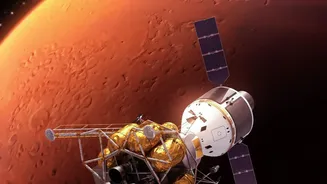
Getting samples from Mars has always been understood as a monumental undertaking. The original Mars Sample Return (MSR) plan, a joint effort with the European Space Agency (ESA), involved a complex sequence of new spacecraft: a lander to retrieve the samples, a small rocket to launch them into Martian orbit, and another spacecraft to catch the container and fly it back to Earth. However, the estimated cost for this ambitious plan ballooned to as much as $11 billion, with a return date pushed as far back as 2040. Faced with this sticker shock and unacceptable timeline, NASA deemed the original architecture unfeasible and hit the pause button on the project.
Re-evaluating the Blueprint
This is where the recent 'advanced discussions' come in. In early November 2026, NASA officially announced a fresh effort to rethink the entire mission. Dubbed the Perseverance Sample Retrieval Architecture (PSRA), this new initiative is a formal process to solicit and develop a more streamlined, faster, and more affordable strategy. Essentially, NASA has gone back to the drawing board, opening the door for new ideas from its own engineers as well as private industry partners who might have innovative solutions. A dedicated team will kick off its work in January 2027, with the goal of presenting impartial recommendations for a new mission architecture by the winter of 2027-2028.
The Contenders on the Table
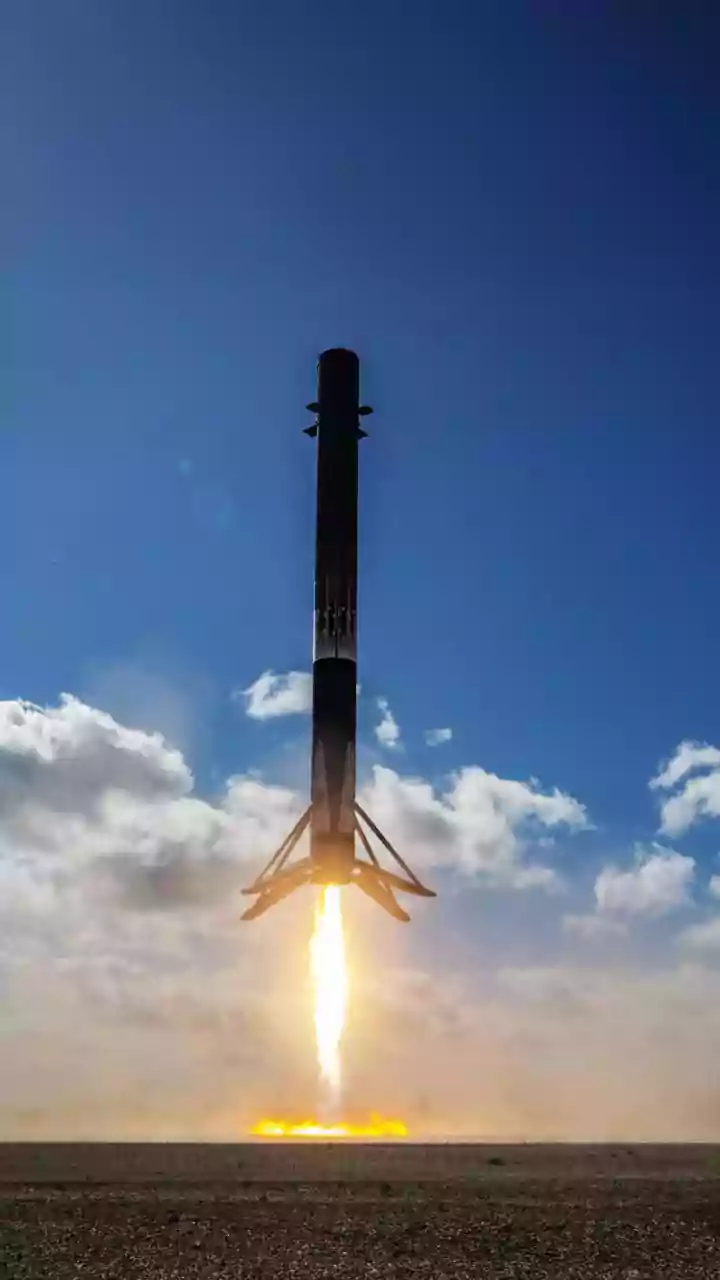
While the new review is just beginning, the central goal is to simplify the mission. Instead of a multi-part retrieval system, discussions now lean toward potentially simpler concepts. This could involve a single, more capable lander that combines the retrieval and launch phases, or leveraging new technologies that weren't mature when the first plan was devised. The review will assess all current capabilities, review lessons from past proposals, and seek new acquisition options. The process is a clear signal that NASA is willing to make major changes to get the samples home sooner and within a sustainable budget. This reassessment also comes as China moves forward with its own Mars sample return mission, Tianwen-3, which aims to launch around 2028 and return samples by 2031, adding a new dynamic to the planetary science landscape.
An Unprecedented Scientific Prize
The reason for all this effort is the unprecedented scientific prize at stake. Analyzing these samples on Earth would revolutionize our understanding of Mars. Scientists could use state-of-the-art equipment, far too large and complex to send to Mars, to search for definitive biosignatures—subtle chemical or mineralogical traces of past microbial life. Beyond the search for life, the samples will provide a detailed history of the Martian climate, its geology, and the processes that shaped it into the desert world it is today. Furthermore, analyzing the Martian dust and soil is critical for planning future human missions, as it will help identify potential hazards, like toxic compounds, that could pose a risk to astronauts. Bringing these samples home is considered one of the highest-priority goals in planetary science for a generation.