

Why Let Your Herbs Flower?
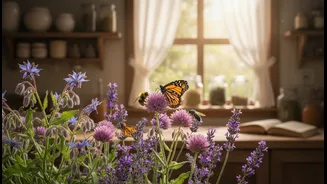
We often pinch off herb flowers to encourage more leaf growth, but letting them bloom has immense benefits. When herbs flower, they become magnets for pollinators like bees, butterflies, and other beneficial insects. These insects are crucial for the reproduction
of countless plants, including many fruits and vegetables that we rely on. A garden buzzing with pollinators is a sign of a healthy ecosystem. By planting a little extra for them, you can create a thriving space that supports biodiversity while still having plenty of leaves for your kitchen. The best part is that many of these flowers are also edible, offering a new dimension of flavour and beauty to your dishes.
Basil (Tulsi)
A staple in Indian households for both culinary and medicinal use, Holy Basil, or Tulsi, is a powerhouse for pollinators. When allowed to flower, its small purple and white blossoms become a favourite for bees. While pinching off flowers can promote a bushier plant for more leaves, consider letting a few stems bloom to support your local bee population. The flowers themselves are edible and carry a milder version of the leaf's peppery, clove-like flavour. You can sprinkle them over salads or use them as a delicate garnish. Basil thrives in warm, sunny spots and is well-suited to the Indian climate, growing easily in pots on a balcony or windowsill.
Borage
Often called 'bee bush', borage is one of the most attractive plants for bees. It produces stunning, star-shaped blue flowers that are rich in nectar. These flowers are a continuous food source, blooming for months and keeping your garden buzzing with activity. For the home cook, borage is a delight. The flowers and young leaves have a refreshing, cucumber-like taste. The vibrant blue flowers make a beautiful garnish for salads, desserts, and drinks—try freezing them in ice cubes for a special touch. Borage grows well in full sun and can even help improve heavy soils with its deep taproot. In India, a variety known as Indian Borage or Karpooravalli is also excellent for attracting bees.
Rosemary
This fragrant, woody herb is known for its pine-like needles, but its delicate blue, pink, or white flowers are a treasure for both pollinators and cooks. Bees and hummingbirds are drawn to rosemary's blossoms. The plant remains perfectly usable while flowering, so there's no need to choose between flavour and flowers. The flowers are edible and have a milder, slightly sweeter version of the leaf's robust flavour. Sprinkle them over roasted vegetables, baked goods, or charcuterie boards for a beautiful and flavourful finish. Rosemary adapts well to many Indian regions, preferring plenty of sunlight and well-drained soil.
Chives
Chives are one of the easiest herbs to grow and their fluffy, purple blossoms are a favourite of spring bees. These globe-like flowers are not just pretty; they are completely edible and taste like a milder, sweeter version of the chive stems. You can scatter the individual florets over salads, egg dishes, and soups for a pop of colour and a gentle onion flavour. Chive blossom-infused vinegar or butter are other creative ways to use them in the kitchen. Letting chives flower provides an early-season nectar source for pollinators and adds a versatile ingredient to your culinary repertoire.
Fennel and Dill
Fennel and dill belong to the same family and produce large, umbrella-like clusters of tiny yellow flowers known as umbels. These flowers are particularly loved by beneficial insects like ladybugs, lacewings, and tiny parasitic wasps, which help control pests in your garden. They also attract bees and butterflies. Both dill and fennel are host plants for the swallowtail butterfly, meaning their caterpillars feed on the leaves. The flowers of both herbs are edible, with a delicate anise flavour. Use fennel flowers with fish dishes or smoked salmon, or snip dill flowers into cream cheese or salads for a fresh, zesty kick.