





The End of an Era for the 1.5°C Goal
The latest Emissions Gap Report from the UN Environment Programme (UNEP), titled 'The Point of Return', concludes that the window to hold global warming to 1.5 degrees Celsius above pre-industrial levels without 'overshoot' has now closed. This means
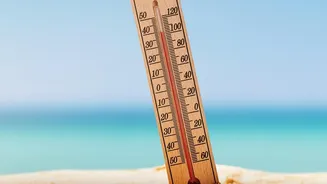
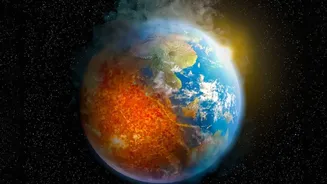
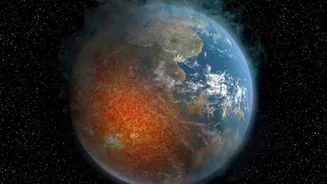
the world will almost certainly become hotter than this crucial threshold, at least temporarily. For years, the 1.5°C target, enshrined in the 2015 Paris Agreement, was the north star of global climate policy—a guardrail to prevent the most catastrophic and irreversible impacts of climate change. The new report shifts the conversation from preventing this overshoot to minimising its duration and severity. According to the findings, decades of insufficient action mean the new best-case scenario involves warming peaking at 1.7°C to 1.8°C around mid-century before potentially being brought back down to 1.5°C by 2100, but only with immediate and drastic emission cuts.
A 'Stalled' Decade of Action
The report's grim conclusion stems from a clear-eyed assessment of global efforts. While global greenhouse gas emissions have seen their growth slow, they have not yet started to decline, remaining near record highs in 2025. A separate analysis from the Climate Action Tracker, released during the UN climate conference in Antalya, Türkiye, noted that collective climate action has effectively stalled for five consecutive years. Despite some progress, such as the rapid growth of renewable energy, this has been cancelled out by rising fossil fuel consumption and a failure to implement promised policies. The UNEP report highlights a massive 'emissions gap': the difference between what countries have pledged to do and the cuts actually required. Current national commitments, known as Nationally Determined Contributions (NDCs), would only reduce emissions by 11-15% by 2035 compared to 2025 levels, a far cry from the 45% reduction the report says is necessary.
What Exceeding 1.5°C Means for India
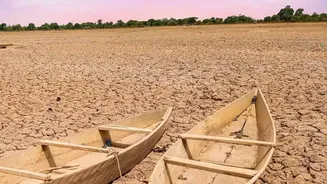
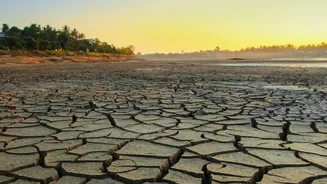
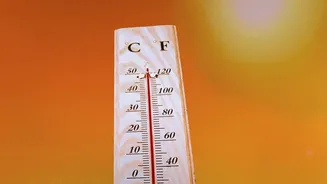
Every fraction of a degree of warming matters immensely, and for a nation as vulnerable as India, the consequences are profound. Overshooting 1.5°C means intensifying risks that are already present. Scientific models project that a warmer world will further disrupt the global water cycle, impacting the variability of the Indian monsoon and increasing the frequency of both extreme rainfall and severe droughts. The Himalayan glaciers, a critical water source for millions, face accelerated melting, threatening water security and increasing the risk of disasters like flash floods. Even a temporary overshoot will lock in centuries of ice loss and sea-level rise, a direct threat to India’s long coastline and major cities. The health and economic impacts will also escalate, with more frequent and intense heatwaves affecting labour productivity, agriculture, and public health.
Is There Still a Path Forward?
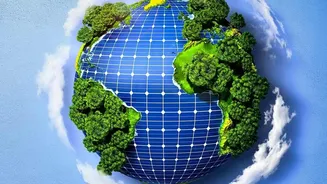
While the report is a dire warning, it is not a declaration of surrender. UNEP stresses that the goal now must be to limit the peak and duration of the overshoot as much as possible. To get back on a viable path, the report calls for transformative action. Global greenhouse gas emissions must fall by 45% by 2035 and 69% by 2040, compared to 2025 levels. This requires, among other things, tripling renewable electricity capacity and cutting electricity generation from coal by at least 75% by 2035. The report also points to the necessity of large_scale carbon dioxide removal technologies later in the century to help bring temperatures back down, though their feasibility at such a scale remains uncertain. For its part, India is noted as being on track to meet its current climate targets, which are based on emissions intensity relative to GDP. However, its absolute emissions are still projected to rise, and it remains a major builder of new coal capacity.