



The Far Side's Enduring Mystery
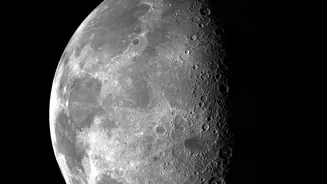
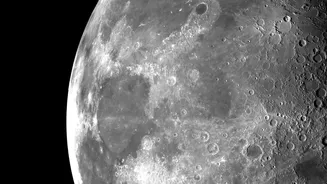
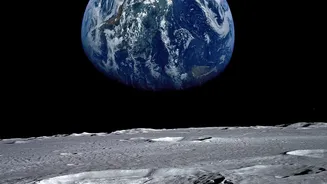
For as long as we have observed the Moon, we have only ever seen one side. The near side, with its familiar dark patches, is a stark contrast to the far side, which was hidden from us until the dawn of the space age. The side we see is covered in vast,
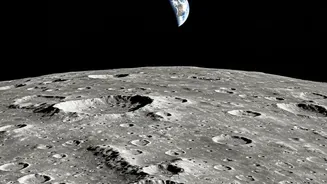
dark plains of ancient volcanic basalt called 'maria'. These regions are also rich in a unique geological mixture of elements nicknamed KREEP—potassium, rare-earth elements, and phosphorus. The far side, however, is almost entirely different. It is dominated by bright, heavily cratered highlands and has a much thicker crust with very few maria. For decades, scientists have grappled with a fundamental question: why are the two faces of the Moon so dramatically different? The answer has remained elusive, largely because every rock sample returned by the Apollo missions came from the near side.
Historic Samples from an Unseen World
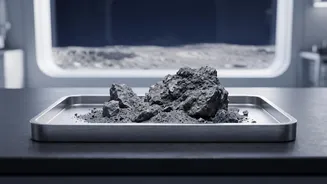
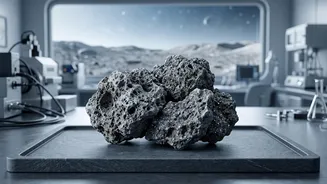
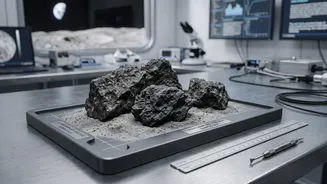
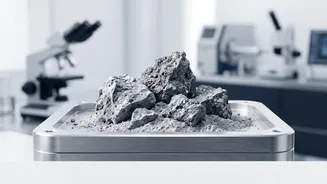
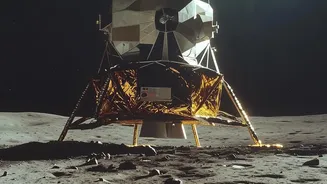
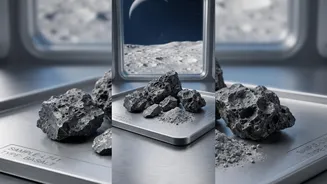
That all changed in 2024 with China's historic Chang'e-6 mission. For the first time, a spacecraft landed on the lunar far side, collected soil and rock, and returned it to Earth. The mission targeted the South Pole-Aitken (SPA) Basin, the largest and oldest known impact crater in the entire solar system. This colossal basin was formed by a cataclysmic event billions of years ago that likely dredged up material from deep within the Moon's mantle. By providing the first tangible pieces of this hidden hemisphere, the Chang'e-6 samples have given scientists a rare opportunity to finally test their ideas and seek direct evidence to solve the mystery of the Moon's two-faced nature.
A Powerful New Theory Emerges
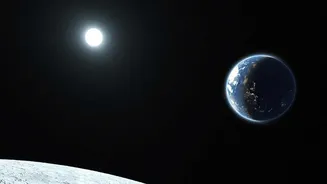
Initial analysis of these precious samples has led to a compelling new theory. Scientists now propose that the asymmetry began after the Moon became tidally locked with Earth, always showing us the same face. Back when the two bodies were much closer, Earth's immense gravity exerted a stronger pull on the near side, generating more heat. This uneven tidal heating is thought to have caused a massive migration of molten rock within the Moon's ancient magma ocean. The heat-producing KREEP elements were concentrated on the near side, lowering the melting point of rock and fueling prolonged volcanic activity that created the dark maria we see today. Meanwhile, the far side cooled faster and its crust grew thicker, with a mantle significantly lower in water and other volatile elements, effectively suppressing widespread volcanism.
Why a 'Theory' Is a Big Deal
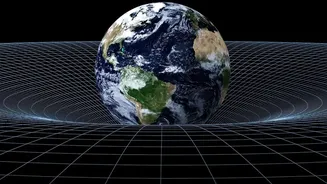
It's crucial to understand what 'theory' means in a scientific context. In everyday language, a theory can mean a hunch or a guess. But in science, it's far more robust. A scientific theory is a well-substantiated explanation for why something happens, built upon facts, tested hypotheses, and confirmed observations. For example, gravity is a fact and a law—we observe things fall and can calculate the force. The theory of general relativity, however, is the powerful explanation for how and why gravity works. A theory is not a lesser version of a fact; it is the structure of ideas that interprets and connects the facts. While theories can be modified or even replaced with new evidence, a strong, testable theory is the ultimate goal of scientific inquiry. It provides a framework for making predictions and guiding future research.
The Next Chapter in Lunar Science
Having a proposed theory, rather than a single settled answer, is not a failure; it is the engine of scientific progress. This new tidal heating model gives researchers a powerful, data-driven hypothesis to test. Scientists across the globe will spend years meticulously analysing the Chang'e-6 samples, looking for evidence that either supports or contradicts this framework. They will study the composition of different rock fragments, their ages, and their magnetic properties to piece together a more complete history of the far side. This new theory challenges some long-held ideas, such as the 'Late Heavy Bombardment', and forces a re-evaluation of how the Moon—and potentially other rocky bodies—evolved. The initial findings are not the final word, but rather the opening lines of an exciting new chapter in our quest to understand our celestial neighbour.