


The Great Carbohydrate Transformation
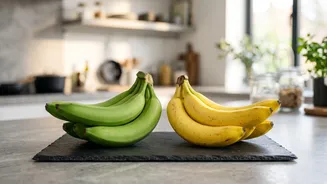
The fundamental difference between a raw, green banana and a soft, ripe one lies in their carbohydrates. An unripe banana is packed with resistant starch, which makes up 70-80% of its dry weight. This complex carb 'resists' digestion in your small intestine,
functioning more like dietary fibre. As the banana ripens, enzymes within the fruit work to convert this starch into simple sugars like sucrose, glucose, and fructose. This is why a yellow banana is noticeably sweeter and a green one has a firmer, almost waxy texture and a slightly bitter taste. By the time a banana is fully ripe, its starch content drops to about 1%. This transformation is key to understanding all the other differences.
Impact on Blood Sugar
Because of its high resistant starch content, a green banana has a low glycemic index (GI), somewhere around 30 to 42. This means it causes a slower, more gradual rise in blood sugar levels, making it a potentially better choice for individuals managing blood sugar. On the other hand, the simple sugars in a ripe banana are absorbed quickly, providing a rapid source of energy. This causes its GI to climb to a moderate level, around 51 to 62, and even higher as it becomes overripe. This makes a yellow banana ideal for a pre-workout snack or a quick energy boost, whereas a green banana provides more sustained energy.
A Question of Digestion and Gut Health
For your digestive system, the two are quite different. The resistant starch in green bananas acts as a prebiotic, bypassing your small intestine to feed the beneficial bacteria in your gut. This fermentation process produces short-chain fatty acids, which are vital for colon health. However, for some people, this same process can lead to gas and bloating. Ripe bananas, having already broken down their complex starches, are generally much easier to digest. Their softer texture and lower resistant starch content make them a go-to for young children, those recovering from illness, or anyone with a sensitive stomach.
The Antioxidant Advantage Shifts
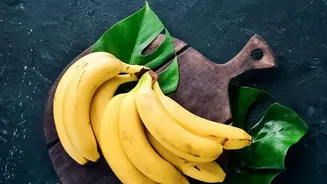
While green bananas win on the resistant starch front, ripe bananas gain an edge in antioxidant levels as they mature. Those familiar brown spots that appear as a banana ripens are actually visual indicators of this change. As the chlorophyll breaks down, it can lead to an increase in certain antioxidant compounds. Antioxidants are beneficial compounds that help protect your body's cells from damage. While both green and ripe bananas contain antioxidants like catechins, the levels tend to increase as the fruit ripens.
So, Why Do Portions Matter?
This brings us to the core of the issue. While the total calorie count of a single banana remains essentially the same as it ripens, its nutritional composition per gram changes dramatically. Comparing 'one banana' to 'one banana' is misleading because what you're getting from each is different. A 100stgram portion of a green banana delivers a high dose of prebiotic fibre and less sugar. A 100stgram portion of a ripe banana delivers more simple sugars for quick energy and potentially more antioxidants. The overall micronutrient profile, including key nutrients like potassium and vitamin B6, remains largely stable throughout the ripening process, though some water_soluble vitamins may decrease slightly. Thinking in terms of portions allows you to choose the banana that best fits your specific nutritional goal for that moment.