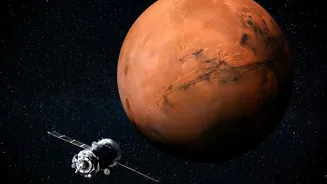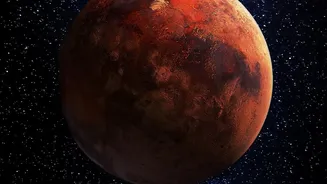


Known for millennia as the Red Planet, Mars has a distinct, rusty hue visible even from Earth. But the reason for its famous color is more than just skin deep, involving ancient water, planet-wide dust storms, and a lot of oxidized iron.
The Planet of Rust
The simplest answer
to why Mars is red is rust. The surface of Mars is rich in iron. This iron, found in the rocks and the fine dust that covers the planet, has oxidized over billions of years, creating iron oxide—the same compound that forms rust on metal here on Earth. This isn't a new discovery; ancient civilizations like the Romans and Egyptians named the planet for its blood-like color. The Martian crust contains elements like silicon, oxygen, iron, and magnesium, but it's the iron that steals the show. When this iron was exposed to oxygen and water in the planet's distant past, it underwent a chemical reaction that gave it its characteristic reddish tint.
A Dusty, Red Blanket
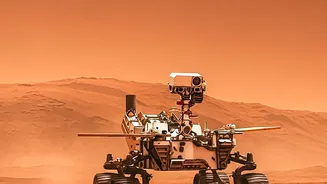
Having a rusty surface is one thing, but for an entire planet to appear red from millions of kilometres away requires another ingredient: dust storms. Mars is covered in a fine dust, like talcum powder, that is easily lifted into its thin atmosphere. The planet is known for having the largest dust storms in our solar system, with some events growing so large they cover the entire planet for weeks or even months. These storms kick the fine, reddish iron oxide dust high into the atmosphere, creating a global red haze that gives the planet its signature look. Even when there isn't a global storm raging, smaller dust devils and regional storms constantly help to keep this rusty dust suspended, ensuring the Red Planet lives up to its name.
A Clue to a Wetter Past
For decades, scientists debated how this planetary rusting happened. A recent breakthrough suggests the specific type of iron oxide responsible is a mineral called ferrihydrite. This is significant because ferrihydrite forms in the presence of cool water. Previously, some researchers believed a drier mineral called hematite was the main culprit, which could have formed without much water. The discovery of ferrihydrite as the likely source of Mars's color adds to a growing body of evidence that Mars was once a much wetter planet, with rivers, lakes, and a more hospitable environment billions of years ago. This watery past is crucial in the ongoing search for signs of ancient life.
Not Red Everywhere
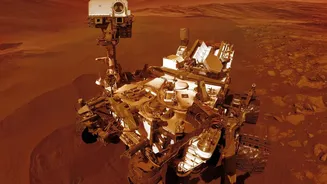
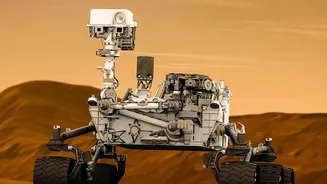
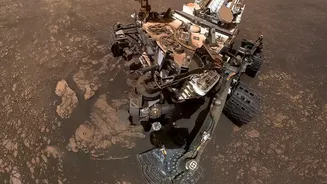
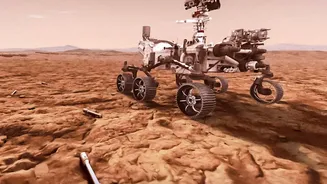
While we call it the Red Planet, its surface is not uniformly red. If you were to stand on Mars, you would see a landscape of many colours. Close-up images from NASA's rovers show surfaces that are golden, brown, tan, and even greenish, depending on the local mineralogy. The redness comes from the fine dust that blankets most of the terrain. Beneath this dusty layer, Mars is made of darker volcanic basalt rock. Furthermore, Mars has bright white polar ice caps, which are made of both water ice and frozen carbon dioxide. These features stand out in stark contrast to the reddish dust that dominates so much of the planet's appearance from afar.