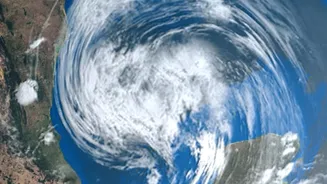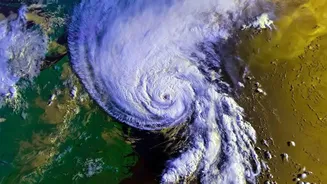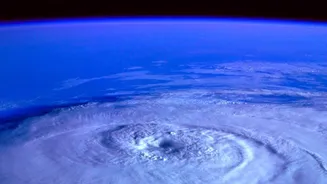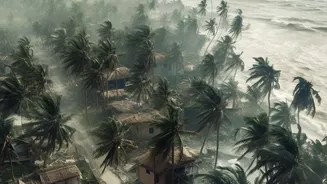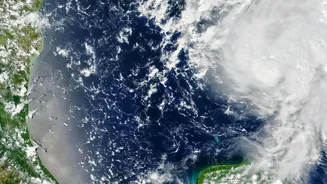

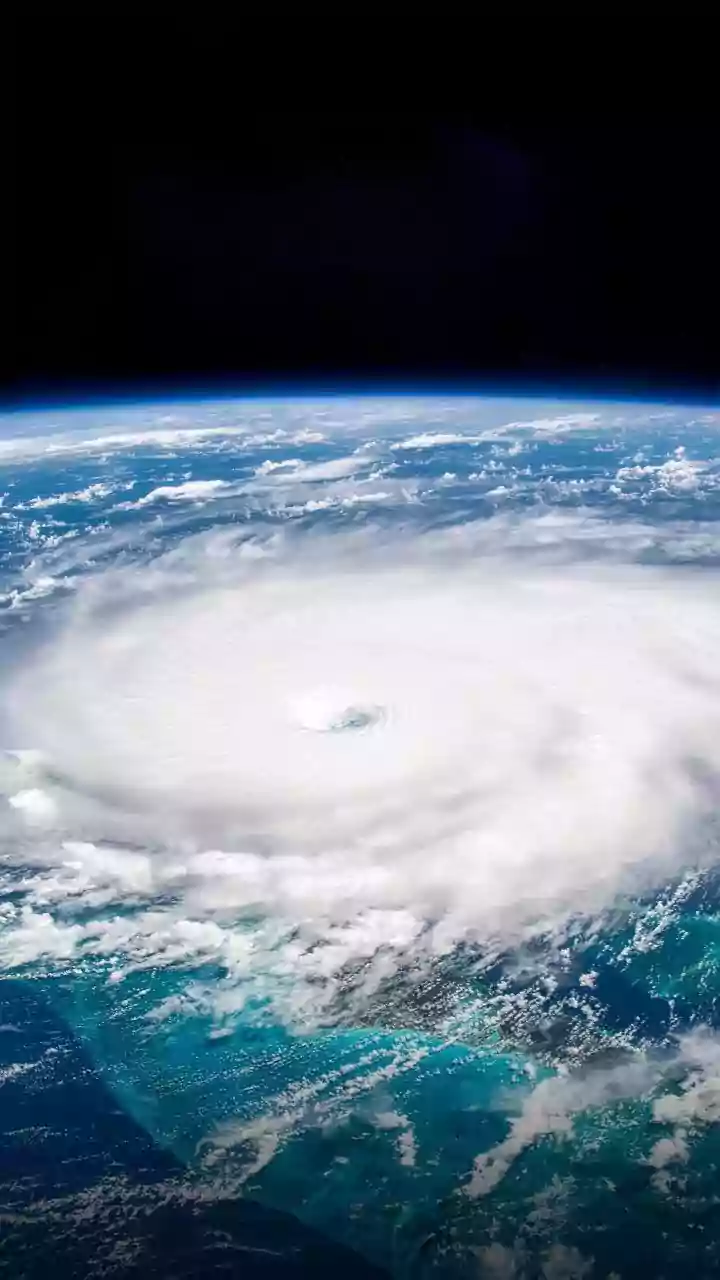




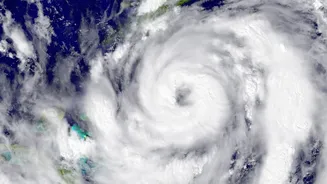

For generations, India's eastern coast has been the nation's traditional cyclone hotspot. But recent storm seasons are telling a different story, with the once-calmer Arabian Sea showing new and troubling signs of activity.
A Shift in the Winds
For decades, the narrative around
cyclones in India was straightforward: the Bay of Bengal was the active, turbulent region, while the Arabian Sea remained relatively calm. However, recent analyses of weather patterns indicate a significant and concerning shift. Scientists have observed a notable increase in both the frequency and intensity of cyclones forming in the Arabian Sea. Storms that do form are showing a greater tendency towards 'rapid intensification', where a cyclone's wind speeds increase dramatically in a very short period, making them far more dangerous and difficult to predict. This change presents a new challenge to coastal communities on the western seaboard, from Gujarat to Kerala, which have historically faced fewer powerful storms than their eastern counterparts.
A Tale of Two Seas
The Bay of Bengal has always been a more prolific cyclone generator for a few key reasons. Its warmer sea surface temperatures, higher sea level, and basin-like shape make it a natural incubator for storms. It receives more freshwater runoff from major rivers, which creates a warm, stable top layer that prevents cooler water from mixing and disrupting a cyclone's fuel source. The Arabian Sea, by contrast, is generally cooler and saltier. But this long-standing dynamic is being altered. The primary driver is believed to be rising ocean temperatures, a direct consequence of global climate change. The Arabian Sea is warming faster than many other ocean basins, providing the heat energy required for cyclones to form and strengthen more regularly than in the past.
The Challenge of Looking Ahead
While the observed trends are clear, projecting them into the future is where science meets complexity. This is the critical part of the new analysis: understanding the changes without treating computer-generated projections as absolute facts. Climate models are incredibly sophisticated, but they struggle with the specific, regional behaviour of tropical cyclones. Global models may predict a general increase in the intensity of the strongest storms, but they often lack the fine-grained resolution to say precisely how many storms will hit a specific coastline in a given decade. Factors like El Niño cycles, atmospheric wind shear, and other large-scale weather patterns add layers of uncertainty, making it difficult for scientists to offer definitive predictions.
Certainty in Uncertainty
So, how should we interpret these findings? The key is to separate the trend from the specific forecast. The trend of a warmer Arabian Sea leading to more frequent and intense cyclones is a robust scientific finding based on direct observation. The uncertainty lies in predicting the exact number, path, and timing of future storms. Scientists are cautious because their credibility depends on acknowledging these limits. Rather than providing a single, dramatic prediction, the goal of modern climate analysis is to provide a range of possibilities and probabilities. This approach is less headline-grabbing but far more useful for actual planning and preparedness.
For India, this evolving understanding has profound implications. The focus must shift from reacting to individual storm forecasts to building long term resilience on both coastlines. This means upgrading infrastructure, improving early warning systems, restoring natural coastal defences like mangroves, and enforcing building codes designed to withstand higher wind speeds. The uncertainty in projections is not a reason for inaction. Instead, it is a powerful argument for creating a flexible and robust response system that can handle a range of future scenarios. The scientific community's refusal to offer false certainty is a call to prepare for a future that will undoubtedly be more dynamic and challenging.