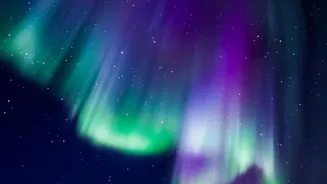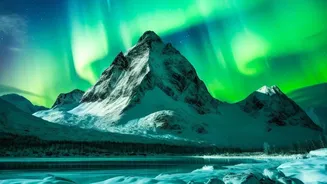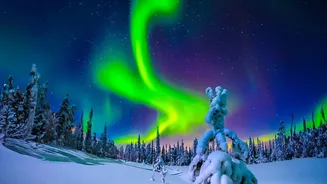







The ethereal dance of the Northern Lights is a bucket-list spectacle for many travellers. But witnessing this cosmic ballet is less about luck and more about smart planning, as a successful sighting is never guaranteed on a single night.
The Cosmic Lottery of the Aurora
Seeing the aurora
borealis requires a perfect alignment of several unpredictable factors. The phenomenon is caused by charged particles from the sun—known as solar wind—colliding with gases in Earth's upper atmosphere. The intensity of this solar activity waxes and wanes, following an approximately 11-year solar cycle, with periods of 'solar maximum' offering more frequent and dramatic displays. However, even during peak activity, a successful viewing from the ground is not assured. The single greatest obstacle for aurora hunters is often the weather. Persistent cloud cover can completely obscure even the most powerful geomagnetic storm, rendering it invisible to those waiting below. This combination of unpredictable solar physics and terrestrial weather makes aurora chasing a game of probability.
Why a Single Night Is a Risky Gamble
Booking a trip for just one or two nights severely limits your chances of success. It's a common mistake that leaves many travellers disappointed. A single evening can easily be clouded out or fall on a night of low geomagnetic activity. According to one analysis of conditions in Abisko, Sweden, a single night in February offered less than a 4 in 10 chance of favourable viewing conditions (clear, dark, and active). Extending that to a two-night stay increased the odds to nearly 6 in 10. Weather patterns in prime aurora destinations like Iceland, Norway, and Finland can be notoriously fickle, with coastal areas often experiencing fast-moving clouds. Relying on a single opportunity means your entire investment hinges on one specific, uncontrollable window of time.
The Multi-Night Strategy for Success
Travel experts and aurora guides overwhelmingly recommend a stay of at least three to five nights in a prime viewing location to significantly stack the odds in your favour. Some even suggest five to seven nights if seeing the lights is the primary goal of your trip. Each additional night provides another chance for clear skies and active solar winds to align. One study showed that a four-night stay in Abisko boosted the probability of at least one good viewing night to nearly 80%. A longer stay provides a crucial buffer against poor weather and allows you to wait out a cloudy spell or a period of quiet solar activity.
How to Build a Flexible Itinerary
Flexibility is the cornerstone of a successful aurora trip. Instead of a rigid, minute-by-minute schedule, build an itinerary that can adapt to changing conditions. Book your accommodation for multiple nights in one location within the auroral oval—regions like Northern Norway, Swedish and Finnish Lapland, or Iceland are ideal. Keep your evenings free for potential aurora hunting. Many tour operators offer 'chasing' tours where guides use real-time weather data to drive to areas with the clearest skies, sometimes crossing borders to find a break in the clouds. Some even offer a free re-booking for the next night if no lights are seen. When planning, book your first aurora tour for your first night; if it's cloudy, you still have subsequent nights to try again.
Plan for More Than Just the Lights
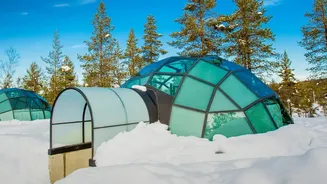
A crucial part of managing expectations is to ensure your holiday is memorable even if the aurora remains elusive. Choose a destination that offers compelling daytime activities you'll enjoy regardless of the night sky's performance. Arctic destinations are rich with unique experiences, from dog sledding and snowmobiling in Finland and Alaska to exploring ice caves and the Golden Circle in Iceland. You can visit a Sámi reindeer camp in Norway or even stay in the famous ICEHOTEL in Sweden. Filling your days with these adventures means you'll return home with incredible memories, making any aurora sighting the ultimate bonus rather than the sole measure of your trip's success.
Using Forecasts as a Guide, Not a Guarantee
Modern aurora hunters have access to a suite of forecasting tools and apps that provide real-time data on solar wind speed, density, and the crucial Kp-index, which measures geomagnetic activity. These are invaluable for planning your evening. However, it's vital to treat them as guides, not guarantees. A forecast can predict the potential for an aurora but cannot predict local cloud cover, which is the most common spoiler. Furthermore, the science of space weather forecasting is still developing, and predictions can change rapidly. A high Kp-index is useless under a thick blanket of clouds, while a beautiful, subtle display can sometimes occur on a 'quiet' night with clear skies.