




The Annual Agricultural Burn
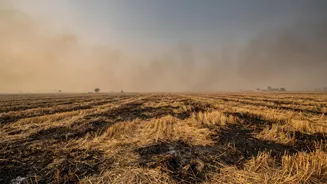
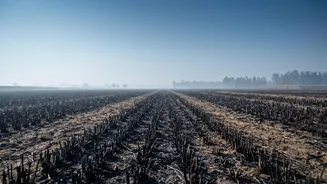
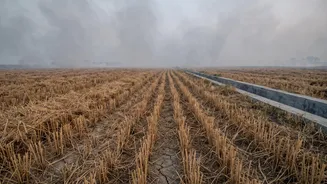
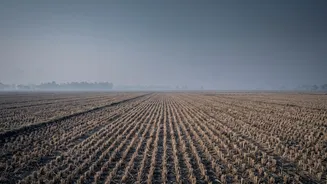
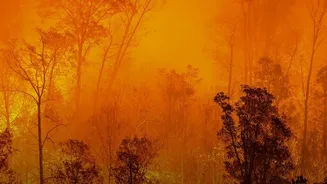
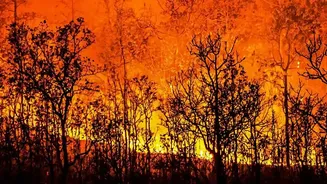
Every year, between October and November, vast swathes of farmland in Punjab, Haryana, and western Uttar Pradesh are set ablaze. This practice, known as stubble burning, involves farmers setting fire to the leftover straw and stubble from the rice (paddy)
harvest. This happens for a simple, pressing reason: the extremely short window, often less than three weeks, between harvesting rice and needing to plant the next crop, wheat. For many farmers, burning the several million tonnes of residue is the fastest and cheapest way to clear the fields. The use of mechanised combine harvesters, which leave behind taller stalks, has only intensified the problem.
From Field to City: The Science of Smog
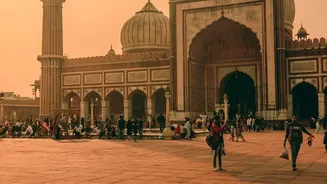
The smoke from these fires is a toxic cocktail of pollutants, including carbon monoxide and, most dangerously, fine particulate matter (PM2.5). These microscopic particles are so small they can penetrate deep into the lungs and enter the bloodstream. New research continually refines our understanding of this link. Studies using satellite data from NASA and other agencies have been able to track the plumes of smoke as they travel hundreds of kilometres. On certain days, smoke from crop burning has been estimated to contribute up to 78% of the PM2.5 in Delhi. Weather patterns play a crucial role; lower temperatures and slower wind speeds in winter create a temperature inversion, trapping the polluted air close to the ground like a lid on a bowl, leading to the severe smog episodes that plague the National Capital Region.
A Public Health Emergency
The health consequences are staggering. Studies have directly linked exposure to this seasonal pollution with a sharp increase in hospital visits for acute respiratory infections, particularly among children and the elderly. Research indicates crop residue burning is a leading risk factor for these infections in India. The impact isn't limited to coughs and breathing trouble; long-term exposure to PM2.5 is associated with severe conditions like cardiovascular diseases, strokes, and reduced life expectancy. Astonishingly, research has attributed between 44,000 and 98,000 premature deaths annually in India to crop residue burning. The economic toll from these health impacts is estimated to be in the tens of billions of dollars each year.
The Misconception of a Rural Problem
While city dwellers in Delhi are acutely aware of the problem, a common misconception is that they are the primary victims. However, research highlights that the first and most immediate victims are the rural populations in the very states where the burning occurs. People living in villages in Haryana and Punjab, including the farmers' own families, experience severe health impacts from the dense, localized smoke before it disperses and travels towards urban centers. This underscores that stubble burning is a comprehensive public health crisis affecting both rural and urban communities across the Indo-Gangetic Plain.
Innovating a Way Out of the Haze
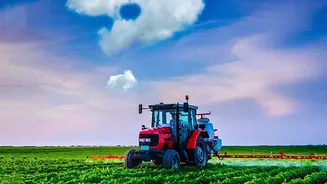
Ending this cycle of pollution is complex but not impossible, and the focus is shifting towards sustainable solutions. One of the most promising in-situ (on-field) solutions is the use of specialised machinery. The 'Happy Seeder' and the more recent 'Super Seeder' are machines that can sow wheat seeds directly into the soil through the stubble, eliminating the need to burn it. These methods also have the added benefit of improving soil health over time by incorporating the organic matter back into the earth. Another approach involves bio-decomposers, such as the Pusa decomposer developed by the Indian Agricultural Research Institute, which are microbial sprays that speed up the decomposition of the straw. Ex-situ (off-field) solutions are also gaining traction, where the stubble is collected and used as a raw material for other industries, such as generating bio-energy in power plants or producing biochar and biofuels. Government subsidies and the creation of a viable market for the stubble are seen as crucial to encouraging farmers to adopt these alternatives.