








A Tradition Goes Digital
On and around International Day of Yoga, a remarkable thing happens. The ancient, rhythmic sequence of the Surya Namaskar (Sun Salutation) is performed not just in parks and yoga shalas, but in living rooms, on balconies, and in bedrooms, all connected
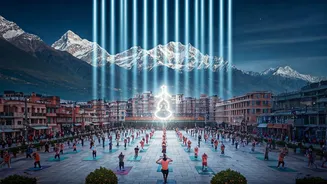
by the invisible threads of the internet. Initiatives, often spearheaded by the Ministry of AYUSH and various socio-spiritual organisations, have aimed to get millions of people to participate in synchronised online sessions. The goal is often ambitious—sometimes aiming for a staggering 75 million Surya Namaskars to mark moments like the 75th anniversary of India's independence. While the exact number of participants can be hard to verify, the sheer scale of these digital congregations is undeniable. It represents a powerful fusion: the timeless wisdom of yoga meeting the boundless reach of modern technology. This isn't just about setting records; it's about creating a new kind of shared experience, accessible to anyone with a smartphone and a few square feet of space.
Why the Surya Namaskar?
Of all the yogic practices, why does the Surya Namaskar hold such a central place in these mass events? The answer lies in its completeness and symbolism. The Surya Namaskar is a sequence of 12 yoga asanas, or postures, that flow into one another. This dynamic sequence provides a comprehensive full-body workout, stretching and strengthening major muscle groups, improving cardiovascular health, and enhancing flexibility. But its significance runs deeper. Traditionally performed at sunrise to greet the new day, it is an expression of gratitude to the sun, the source of all life and energy on Earth. Each of the 12 postures has a corresponding mantra, turning the physical practice into a moving meditation. Its rhythmic, repetitive nature makes it easy to follow in a large group, even a virtual one. It is both profoundly personal and perfectly suited for collective practice, making it the ideal vehicle for a national, and even global, demonstration of unity and wellness.
Yoga as India's Soft Power
The establishment of International Day of Yoga by the United Nations in 2014, following a proposal by Prime Minister Narendra Modi, was a major diplomatic success for India. It positioned yoga, unequivocally, as a gift from India to the world. Events like the mass online Surya Namaskar are a continuation of this narrative. They serve as a powerful exercise in 'soft power'—projecting cultural influence and national values through appeal and attraction rather than coercion. By showcasing millions of its citizens, young and old, participating in a shared cultural heritage, India reinforces its identity as the cradle of yoga. It's a visual spectacle that communicates health, discipline, peace, and a connection to tradition. In a world often dominated by hard-edged political news, these images of collective wellness offer a different, more harmonious vision of the nation.
From Personal Mat to Global Community
The COVID-19 pandemic accelerated a trend that was already underway: the digitisation of wellness. As people were confined to their homes, online yoga classes boomed. This shift democratised access to practice, removing barriers of geography, time, and even the intimidation factor of walking into a studio. The mass online Surya Namaskar events take this a step further. They tap into a fundamental human need for community and shared purpose. Performing the salutations alone in your room can feel isolating, but knowing that millions of others are doing the exact same thing at the exact same moment creates a powerful sense of connection. It transforms a solitary act into a collective ritual, reminding participants that they are part of something much larger than themselves. This digital community, forged in shared breath and movement, is a uniquely 21st-century phenomenon.