


The Urban Stargazer's Challenge
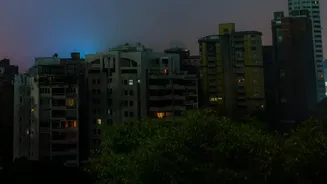
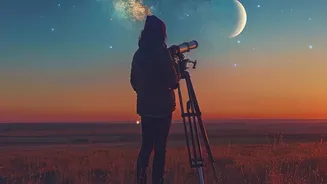
Look up from a city rooftop on a clear night, and you might spot a handful of the brightest stars and perhaps a planet or two. The Milky Way? Forget about it. This is the frustrating reality for aspiring astronomers in urban centres. The overwhelming
glow from streetlights, buildings, and vehicles creates a phenomenon known as light pollution, which effectively washes out all but the most luminous celestial objects. For generations, this meant that true stargazing was a privilege reserved for those who could travel far from the city's glare. Identifying even the visible objects was a challenge, requiring star charts, a compass, and a healthy dose of patience—a combination that could feel overwhelming for a casual observer.
A Cosmos in Your Pocket
This is where technology has stepped in to completely change the game. Modern stargazing applications have turned smartphones into powerful tools for navigating the night sky. Apps like SkyView, Star Walk 2, and Stellarium Mobile use your phone’s built-in GPS, compass, and gyroscope to know exactly where you are and which direction you're pointing. They then generate a real-time map of the sky on your screen, effectively acting as a portable planetarium that fits in your pocket. Suddenly, the sky is no longer a confusing scattering of dots; it’s a labelled, interactive map waiting to be explored. These apps have democratized astronomy, making it an accessible hobby for anyone with a curious mind and a smartphone.
Augmented Reality Brings the Stars Down to Earth
The most magical feature transforming urban stargazing is Augmented Reality (AR). Instead of just showing you a map, AR-enabled apps use your phone’s camera to overlay information directly onto your live view of the sky. Point your phone at a bright star, and the app will draw the constellation lines around it, name the star, and provide details about its distance and properties. You can hunt for planets, discover distant galaxies, and even track satellites like the International Space Station (ISS) as they fly overhead. This instant identification removes the guesswork and frustration, providing a direct and engaging connection to the cosmos. What was once invisible or unidentifiable is suddenly revealed.
Seeing Through the City Glow
While these apps can't physically eliminate light pollution, they provide clever workarounds. Many allow you to adjust the app's settings to simulate the level of light pollution in your area, based on a scale called the Bortle Scale. This helps you understand which objects should realistically be visible from your location, managing expectations and focusing your search. The AR feature is particularly useful here; even if you can only see a few stars of a constellation, the app will draw the full picture, helping you piece it together. Furthermore, many apps come with a 'red light' mode, which filters out blue light from your screen to help preserve your night vision while you observe.
Never Miss a Celestial Show
Another transformative feature is the built-in astronomical calendar and notification system. These apps keep you informed about upcoming celestial events like meteor showers, lunar eclipses, and planetary conjunctions. You’ll get a notification reminding you to look up on the night of the next big meteor shower, complete with information on the peak viewing time and where to look in the sky. This proactive feature ensures that you no longer miss out on these spectacular natural shows just because you weren't aware they were happening. Some apps even include a "Time Travel" feature that lets you see the sky on any date in the past or future, perfect for planning ahead.