




A Lifeline for a High-Demand Corridor
The railway line connecting Delhi with Gorakhpur in eastern Uttar Pradesh is one of the most congested in the country. It serves as a critical artery for migrant workers, students, and families, particularly from the densely populated Purvanchal region.
Throughout the year, and especially during peak travel periods like Holi, Diwali, and Chhath Puja, the demand for tickets far outstrips supply, leading to long waitlists and overcrowding on existing trains. The introduction of any new service on this route is, therefore, significant news for the lakhs of passengers who depend on this connection for their livelihoods and personal travel. The new train aims to alleviate some of this pressure by adding much-needed capacity.
Introducing the Gorakhpur-Delhi Amrit Bharat Express
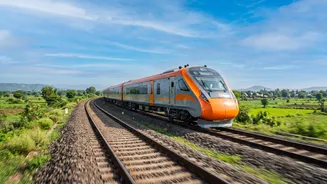
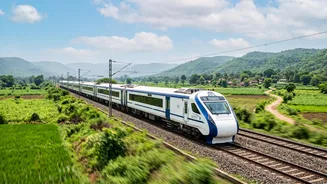
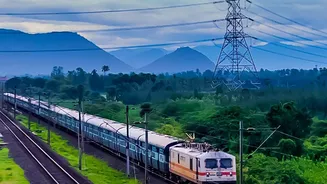
Indian Railways has decided to regularise a special service into the new 15095/15096 Gorakhpur-Delhi Amrit Bharat Express, which begins its regular run on August 27, 2026. Unlike the premium, all-AC Vande Bharat trains, the Amrit Bharat Express is designed to be an affordable, high-speed option for the common passenger. These trains primarily feature non-AC sleeper and unreserved general coaches, but with significant modern upgrades. They use push-pull technology with locomotives at both ends, which allows for faster acceleration and smoother journeys. The coaches are the modern LHB type, known for better safety and comfort, and include amenities like CCTV, bio-vacuum toilets, charging points, and better seating arrangements.
Schedule, Stops, and Travel Time
The new service will operate on a weekly basis. Train number 15095 will depart from Gorakhpur Junction every Thursday at 10:45 PM, arriving at Delhi Junction the next day at 12:50 PM. In the return direction, train number 15096 will leave Delhi Junction every Friday at 2:10 PM, reaching Gorakhpur at 6:30 AM the following morning. The journey covers approximately 780 kilometres in about 14 to 16 hours. The train will make eight key intermediate stops, connecting several important towns in Uttar Pradesh directly to the national capital. The halts are at Khalilabad, Basti, Gonda, Burhwal, Sitapur, Bareilly, Moradabad, and Ghaziabad, providing crucial connectivity for passengers from these regions.
How It Compares to Other Options
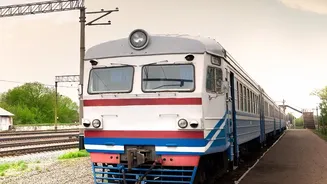
Currently, travellers on this route have a range of choices, each with its own trade-offs. The fastest trains, like the Humsafar Express, can complete the journey in under 12 hours but come at a premium, all-AC fare. Other popular daily trains like the Gorakhdham Express and Vaishali Express take around 12 to 13 hours. The new Amrit Bharat Express positions itself as a middle ground. While its journey time of around 14 hours is longer than the fastest options, it is expected to offer a significant improvement in comfort and speed over older, conventional passenger trains, and at a more affordable, non-AC price point. Its schedule, particularly the overnight journey from Delhi to Gorakhpur, is also convenient for passengers looking to save a day's travel.
The Bigger Picture for Purvanchal
The launch of the Gorakhpur-Delhi Amrit Bharat Express is part of a broader strategy by Indian Railways to modernise its fleet and improve services on high-density routes. The focus on affordable, yet modern, non-AC travel with Amrit Bharat trains directly addresses the needs of a large segment of the population in regions like Purvanchal. By improving connectivity, the new service is expected to not only ease the immediate travel burden but also provide a boost to the local economy. For the millions who rely on the railway, this new train is more than just another option; it represents a step towards faster, more comfortable, and more dignified travel on one of India’s most vital lifelines.