

The New Reigning Champion
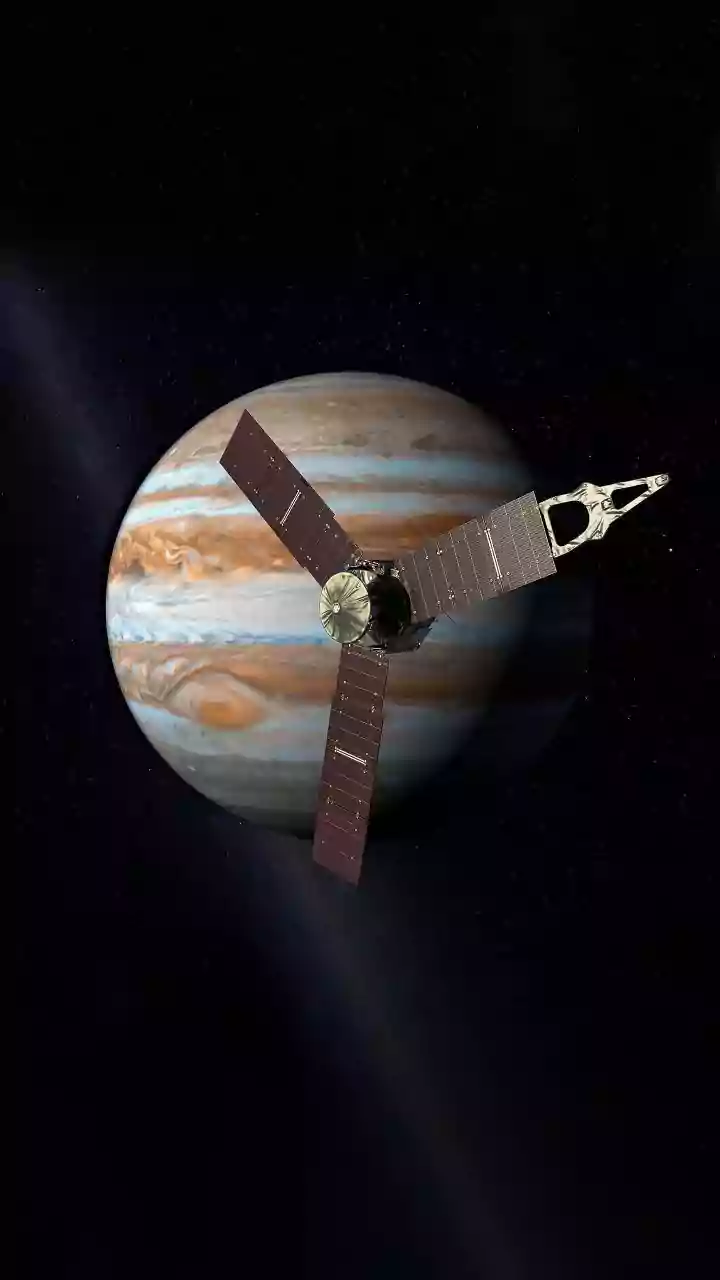
The cosmic rivalry between Jupiter and Saturn for the most satellites has been a back-and-forth affair for decades. As telescope technology improves, astronomers find ever smaller and more distant objects orbiting the gas giants. While Jupiter held the title
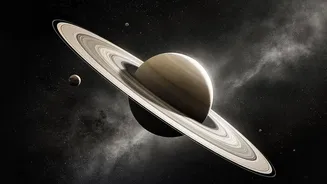
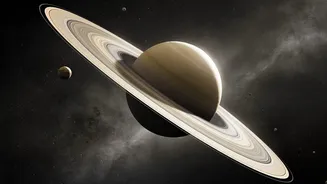
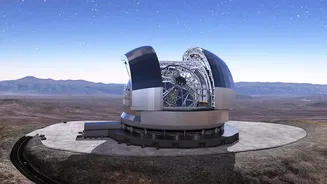
for a time, a flurry of recent discoveries has decisively tipped the scales. In March 2025, a whopping 128 new moons were confirmed around Saturn, followed by another 11 in March 2026. This brought its total to 293, far surpassing Jupiter's count, which stood at 101 as of early 2026. These discoveries didn't happen overnight; they were the result of painstaking observation campaigns using powerful instruments like the Canada-France-Hawaii Telescope, which repeatedly scanned the sky around Saturn from 2019 to 2021 to spot these faint objects.
Two Kinds of Moons
The secret to Saturn's immense moon collection lies in understanding that not all moons are created equal. They fall into two main categories: regular and irregular. Regular moons, like Earth's Moon, are thought to have formed from the same disk of gas and dust as their parent planet. They tend to have neat, circular orbits that are close to the planet's equatorial plane and move in the same direction as the planet's rotation (a prograde orbit). Saturn has several of these, including the giant Titan and the icy Enceladus. But the vast majority of its moons—over 260 of them—are 'irregulars'. These are cosmic rebels with distant, highly elliptical, and inclined orbits. Many even orbit backward, in what's known as a retrograde motion.
The Great Gravitational Heist
So where did all these irregular moons come from? The leading theory is that they are not native to Saturn but are cosmic wanderers that were captured by the planet's immense gravity. Think of them as asteroids or small celestial bodies from the early solar system that strayed too close. Saturn’s massive gravitational field acted like a giant net, snagging these objects and pulling them into orbit. This process, known as gravitational capture, explains their strange, looping paths; they are cosmic outsiders that never quite integrated into the orderly system of the inner, regular moons. The huge number of recent discoveries consists almost entirely of these small, captured bodies, some only a few kilometers in diameter.
A Museum of the Early Solar System
These tiny, irregular moons are more than just numbers on a scoreboard. Scientists see them as pristine relics from the formation of our solar system, billions of years ago. Because they were captured, their composition offers a snapshot of the chemical and physical conditions of the primordial solar system, far from the heat and activity of the inner planets. Studying their orbits and groupings can also reveal details about ancient collisions that may have shattered larger parent bodies into the fragments we see today. In this sense, Saturn's vast collection of irregular moons serves as a distributed museum, preserving clues about how planets and their systems came to be.
The Search Is Far From Over
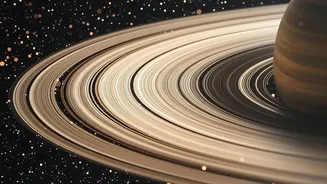
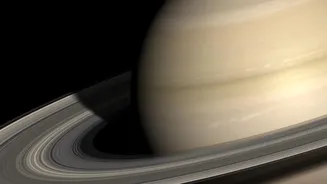
While 293 is the current official count, it is by no means the final number. Astronomers are confident that there are many more, even smaller moons orbiting Saturn, waiting to be found. Each new generation of telescopes and survey techniques reveals another layer of the Saturnian system. Some scientists even speculate that Saturn's iconic rings are the result of a relatively recent cosmic event where a larger moon was torn apart by the planet's gravity. Some of the planet's smaller, inner moons, like Pan and Atlas, appear to have formed from the ring material itself, showcasing a dynamic and ongoing cycle of destruction and creation. This constant state of discovery means the moon race between Saturn and Jupiter is likely to continue for the foreseeable future, with each planet potentially reclaiming the title as our view of the cosmos becomes sharper.