






Revolutionising Healthcare Access
India's healthcare system faces immense challenges, including a strained doctor-to-patient ratio and limited access to diagnostics in rural areas. AI is emerging as a powerful equaliser. Startups like Qure.ai and Vyuhaa Med Data are at the forefront of
this change. Qure.ai, founded by Prashant Warier, uses artificial intelligence to interpret medical images like X-rays and CT scans, providing quick and affordable diagnostic support. This can be life-saving in areas without access to specialist radiologists. Similarly, Vyuhaa Med Data is leveraging AI for digital pathology solutions, making early cancer detection faster and more accessible. Their CerviAI platform, supported by the Indian Council of Medical Research (ICMR), is specifically designed for large-scale cervical cancer screening, a critical need in the country. These companies aren't just building tech; they're creating lifelines.
Sowing the Seeds of a Smarter Agricultural Sector
Agriculture remains the backbone of the Indian economy, supporting nearly half of the workforce. However, it's a sector plagued by climate unpredictability, low productivity, and post-harvest losses. Here too, AI is bringing about a quiet revolution. Startups like CropIn and Fasal are providing farmers with data-driven insights that were previously unimaginable. By using AI to analyse data from satellites, drones, and on-ground sensors, these platforms offer hyper-local weather forecasts and real-time advice on everything from irrigation to pest control. This 'precision agriculture' approach helps farmers increase yields, reduce the use of water and pesticides, and ultimately improve their income. It's about shifting from farming based on tradition to farming based on intelligence, ensuring a more resilient and profitable agricultural future for millions.
Building a More Inclusive Financial System
For a large portion of India's population, access to formal credit and financial services remains a challenge. Traditional lending models often exclude those without a formal credit history. AI-driven fintech companies are changing this by developing new ways to assess creditworthiness. They analyse alternative data points to build more inclusive financial products. Furthermore, companies are leveraging AI to bridge the language gap. Sarvam AI, for example, is building large language models focused on the diversity of Indian languages. By creating voice-first AI that works on basic feature phones, they are ensuring that the digital revolution includes the 1.4 billion people who may not be part of the English-speaking internet. This focus on foundational access is a hallmark of the Indian AI story.
The Foundation for a Trillion-Dollar Digital Economy
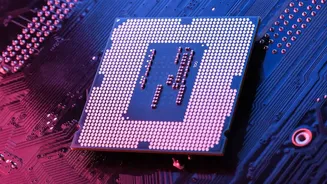
The work of these application-focused startups is being built on an increasingly robust foundation. India’s public digital infrastructure, including Aadhaar and UPI, has created a unique environment where building scalable solutions is faster and cheaper. Companies are now creating the next layer of this foundation. Neysa, backed by major investors, is building the GPU cloud infrastructure that will power India's AI ambitions, while Agrani Labs is designing AI chips in India. This full-stack approach—from foundational models and hardware to industry-specific applications—signals a new maturity in the ecosystem. The government’s IndiaAI Mission is also providing support, aiming to create a vibrant ecosystem for both research and commercialisation. It’s a recognition that for India to thrive, it can't just be a consumer of AI; it must be a builder.