

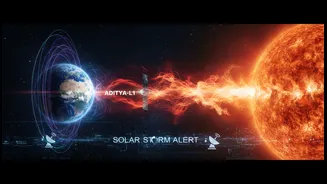


The Sun's Turbulent Temper
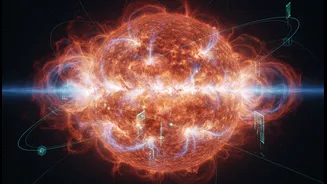
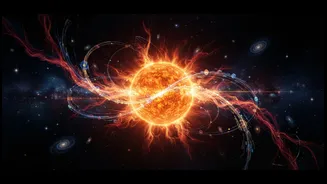
Space weather refers to the changing conditions in space driven by the Sun's activity. Think of it like terrestrial weather, but instead of wind and rain, it involves a stream of charged particles, radiation, and magnetic fields. The main culprits are
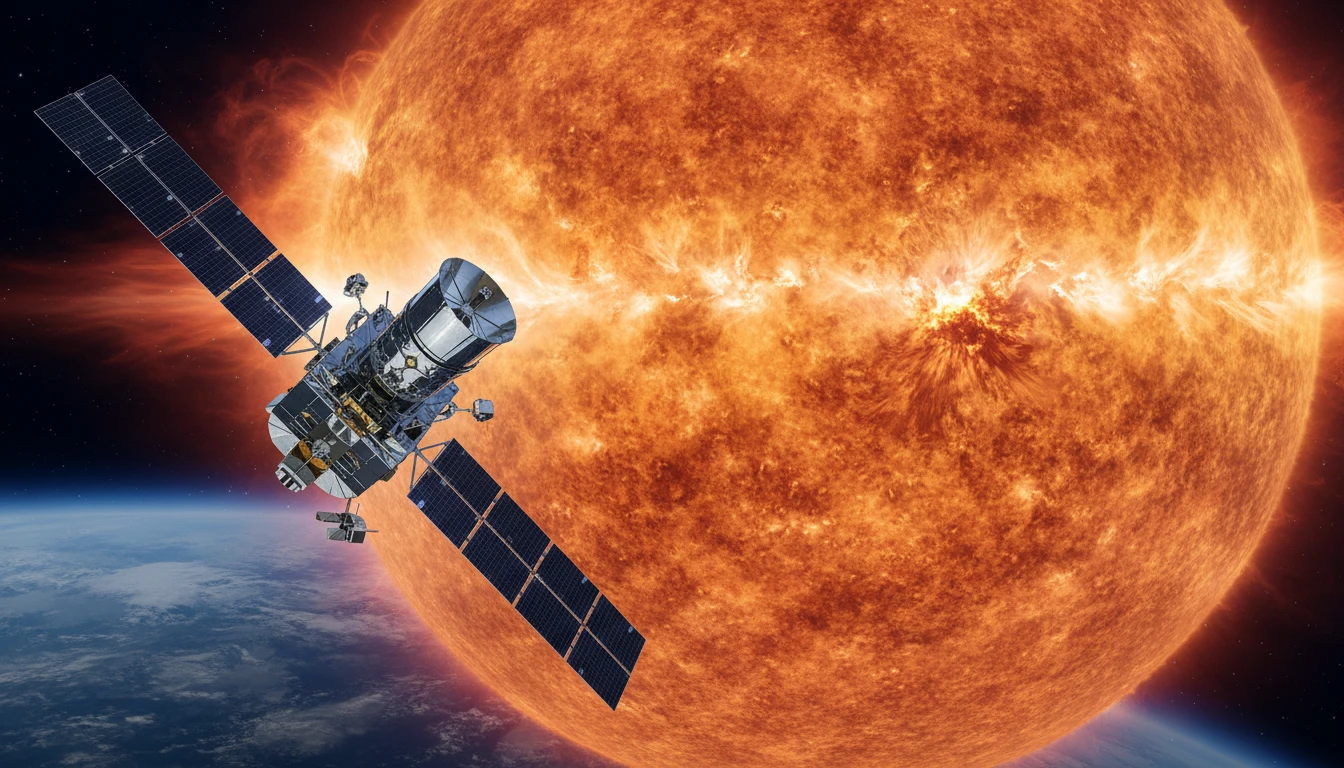
solar flares, which are intense bursts of radiation, and Coronal Mass Ejections (CMEs), which are giant clouds of solar plasma and magnetic fields hurled into space. While a flare's radiation reaches Earth in just eight minutes, a CME is a slower but more powerful storm, taking one to three days to arrive. When these phenomena are directed at Earth, they can interact with our planet’s magnetic field and atmosphere, creating spectacular auroras but also posing significant technological risks.
A Threat to Our Digital Spine
In our hyper-connected world, the risks of space weather are immense. These solar outbursts can damage the sensitive electronics of satellites, which are crucial for communication, weather forecasting, and navigation. For India, this means our growing reliance on the indigenous NavIC navigation system, as well as satellites for broadcasting and defence, is vulnerable. Strong solar events can also cause errors in GPS signals, affecting everything from aviation to precision farming. Down on the ground, the danger is just as real. Geomagnetic storms, caused by CMEs, can induce powerful electrical currents in power grids and pipelines, potentially causing widespread blackouts and accelerating corrosion. Essentially, the digital infrastructure that forms the backbone of modern India is at the mercy of the Sun's whims.
Aditya-L1: India’s Watchful Guardian
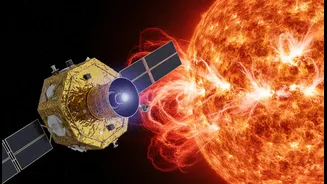
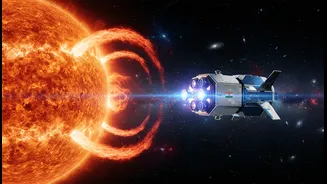
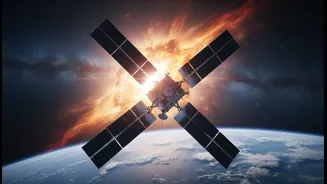
To protect its assets and ambitions, India has sent a sentinel to watch the Sun. The Aditya-L1 mission, ISRO's first dedicated solar observatory, is the nation's eye on space weather. Positioned 1.5 million kilometres from Earth at a unique vantage point called Lagrange Point 1 (L1), the spacecraft has an uninterrupted view of the Sun. Aditya-L1 is equipped with seven sophisticated instruments. Four of these payloads observe the Sun's atmosphere—the photosphere, chromosphere, and the outermost corona—to study the origin of solar storms. The other three payloads measure particles and magnetic fields in the local environment, effectively 'tasting' the solar wind as it flows past. This comprehensive data is critical for understanding and forecasting solar events.
Building a National Shield
Aditya-L1 is the star player, but it is part of a much larger team. India is building a comprehensive national capability to monitor and mitigate the effects of space weather. ISRO coordinates the Indian Network for Space Weather Impact Monitoring (INSWIM), a network of ground-based observatories that track the impact of solar events on our atmosphere and magnetic field. This ground data, combined with Aditya-L1's observations from space, provides a more complete picture. The goal is to develop robust forecasting models that can provide early warnings, giving satellite operators, power grid managers, and airlines crucial time to take protective measures. This systemic approach shows a commitment to not just launching missions, but using that science to build national resilience.
Securing Our Future in the Stars
Looking ahead, India's ability to predict space weather is foundational to its larger space-tech ambitions. The Gaganyaan mission, which aims to send Indian astronauts into orbit, places human safety at the forefront. Protecting astronauts from harmful solar radiation is a non-negotiable prerequisite. Furthermore, as India plans to build its own space station, the Bharatiya Antariksh Station (BAS), and potentially undertake deeper space missions, understanding the space environment becomes even more critical. By investing in solar science now, India is not just protecting its current technological assets; it is paving the way for a secure and sustainable presence in space, ensuring its place as a leading space-faring nation for decades to come.