
Losing a limb sounds like a catastrophe, but for some sea stars, it's a clever survival tactic. This isn't science fiction; it's one of the natural world's most stunning feats of biological engineering: the ability to regrow an entire arm.
An Escape Artist's Secret
When a predator
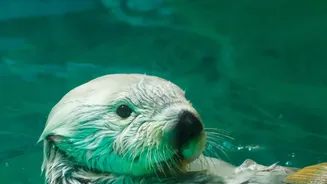
like a crab, sea otter, or gull grabs onto a sea star's arm, the star doesn't always fight a losing battle. Instead, it can perform an incredible vanishing act through a process called autotomy, where it deliberately detaches the captured limb. The abandoned, often still-wriggling arm can serve as a distraction, allowing the rest of the sea star to make a slow but steady getaway. This act of self-amputation is a high-stakes defensive move, sacrificing a part to save the whole. It's a strategy used by other animals, like lizards that drop their tails, but the sea star's follow-up act is even more impressive.
The Blueprint for a New Arm
Regrowing an arm is a slow and complex process that can take months, or even up to a year or more. It begins almost immediately after the arm is lost. The wound seals itself off to prevent fluid loss and infection. Then, specialised cells, including some that act like versatile stem cells, migrate to the injury site. These cells are remarkable because they are 'dedifferentiated', meaning they can revert to a more basic state and then develop into all the different types of tissue needed for a new limb—skin, muscle, and even parts of the nervous system. The sea star essentially carries the blueprint for its body in its remaining cells, ready to rebuild when needed.
Not All Stars Are Created Equal
While many of the roughly 2,000 sea star species can regrow a lost arm, the ability varies greatly. For most, regeneration is only possible if the main body, particularly the central disc, remains largely intact. This disc houses crucial parts of the digestive and nervous systems, acting as the command centre for regrowth. A severed arm without a piece of this disc will typically die. However, a few species, like those from the Linckia genus, possess an almost mythical ability: they can regrow an entire new body from a single severed arm, even if it contains just a tiny fragment of the disc, or in some rare cases, none at all. This tiny, regenerating arm, known as a 'comet', survives on stored nutrients until it can grow a new mouth and disc.
The High Cost of Regeneration
This 'superpower' comes with significant costs. Growing a new limb is an enormous drain on the sea star's energy reserves. During the long regeneration period, the animal is at a disadvantage. With fewer arms, its movement is hampered, and its ability to hunt for prey like clams and mussels is reduced. This can divert energy away from other vital functions like growth and reproduction. The animal is also more vulnerable to predators and environmental stress during this time. Regeneration is a powerful tool for survival, but it's a slow, resource-intensive marathon, not an instant fix.
A Fragile Power
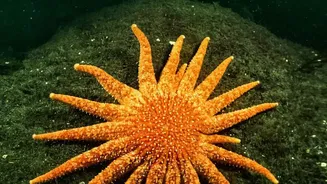
Despite this incredible regenerative talent, sea star populations are not invincible. Since 2013, a devastating outbreak of Sea Star Wasting Disease has wiped out millions along North America's Pacific coast, affecting over 20 species. The disease causes the animals to develop lesions, lose arms, and eventually 'melt' into a pile of white goo, a process where their own regenerative systems seem to fail. The sunflower sea star, which can have up to 24 arms, was hit particularly hard, with its population declining by over 90%. This has had cascading effects on coastal ecosystems, as the loss of this keystone predator has allowed sea urchin populations to explode, devouring kelp forests.