







The Rise of the 10-Minute Delivery
What started as a novel convenience has become a baseline expectation for millions in India's metros. Quick commerce, or q-commerce, has moved from a venture-funded experiment to a core part of the retail landscape. Unlike traditional e-commerce that
optimizes for a wide selection delivered in days, quick commerce is built entirely around speed, promising a narrow range of a few thousand popular items at your doorstep in roughly 10 to 20 minutes. This model, pioneered by platforms like Zepto, Blinkit, and Swiggy Instamart, did not just speed up deliveries; it completely rebuilt the supply chain to function on a hyperlocal level, turning convenience into a powerful competitive advantage.
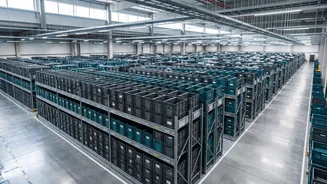
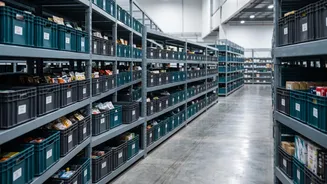
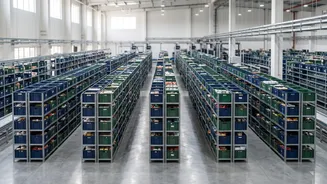
Inside the 'Dark Store' Engine
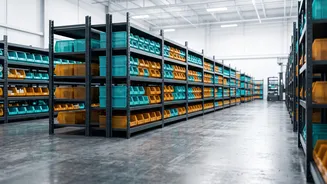
The backbone of this entire operation is the 'dark store'. These are not retail locations for customers to visit. Instead, they are small, strategically located warehouses or micro-fulfilment centres, typically 3,000 to 8,000 square feet, packed with high-demand products. Each dark store serves a tight radius of just two to three kilometres. This proximity is the key to sub-10-minute delivery times. Inside, the layout is meticulously optimized for speed. Pickers can collect items for an order in just a couple of minutes, after which it's packed and dispatched almost immediately. These stores hold just enough inventory for a few hours or days, requiring a constant, highly efficient replenishment cycle from larger 'mother warehouses' located on the city's periphery.
Bengaluru: The Undisputed Q-Commerce Capital
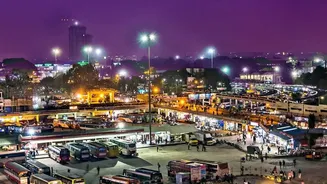
While quick commerce is a national phenomenon, Bengaluru has emerged as its undisputed capital, boasting more dark stores than any other Indian city. As of mid-2026, the city was home to over 629 dark stores, representing more than 11% of the national total. Several factors make Bengaluru the perfect breeding ground. The city's high concentration of young, tech-savvy, dual-income households creates immense demand. Furthermore, its residential landscape, defined by dense apartment complexes, makes last-mile delivery incredibly efficient. A single delivery partner can serve dozens of orders within one complex without battling the city's notorious traffic. For quick commerce operators, competing with Bengaluru's traffic is futile; the winning strategy is to be so close to the customer that traffic becomes irrelevant.
The AI and Technology Backbone
The illusion of effortless speed is powered by a sophisticated technology stack. Artificial intelligence is the central nervous system of the entire operation. AI-powered algorithms handle everything from demand forecasting to inventory management and route optimization. These systems analyze historical sales data, weather patterns, local events, and even the time of day to predict what customers in a specific neighbourhood will want to buy, often with over 90% accuracy. This ensures the right products are stocked in the right dark store, minimizing both stockouts and waste. When an order is placed, software instantly assigns it to the nearest rider and calculates the most efficient route, factoring in real-time traffic data to ensure the delivery promise is met.
Reshaping Real Estate and Urban Spaces
The rapid expansion of dark stores is having a significant impact on urban real estate. Properties that were once considered undesirable—like godowns on side roads or ground-floor spaces without prime retail frontage—are now valuable assets. Landlords in major cities are reportedly earning 30-40% higher returns by leasing to quick-commerce companies compared to traditional retailers. This has driven up rental demand for such spaces by as much as 40% in recent years, fundamentally changing the commercial property landscape. However, this boom has also introduced friction, with some residential areas pushing back against the constant traffic of delivery partners and replenishment trucks.
The Human Element and Its Challenges
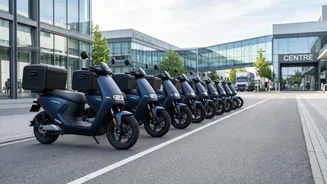
The final, and most critical, link in the chain is the network of delivery partners. While companies state they don't enforce a strict 10-minute countdown, the pressure for speed is immense. Navigating congested city streets to meet tight deadlines has led to concerns over rider safety, with reports of reckless driving and an increase in accidents. In response to protests and government intervention, many platforms have moved away from explicitly marketing a '10-minute' promise. Yet, the operational model still prioritizes speed, creating a high-pressure environment for the gig workers who are the face of the industry.