



What Happened on the Madrid-Seville Line?
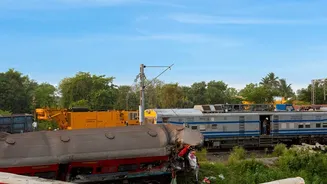
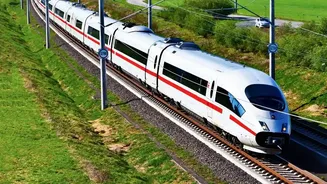
On Wednesday morning, a state-owned Renfe AVE train travelling from Madrid to Seville collided with the rear of a stationary train run by private operator Iryo. The crash occurred near Urda, in the province of Toledo, after the signalling system on the line
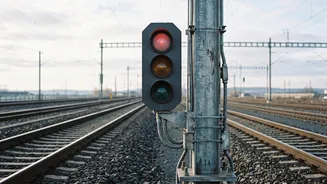
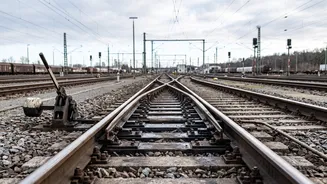
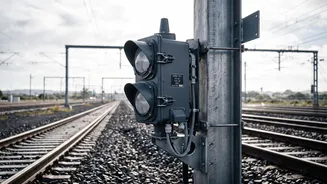
failed, bringing both trains to a halt. According to preliminary reports, a control centre operator gave the Renfe train clearance to proceed at normal speed, despite the other train being stopped on the same track ahead. The collision was devastating, resulting in dozens of fatalities and numerous injuries, marking Spain's second major fatal rail accident in 2026.
A System Built on Safety
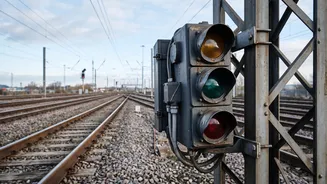
Spain's high-speed network, known as AVE, has long been a benchmark for safety and efficiency, making this accident particularly jarring. The network relies on a mix of sophisticated automatic train protection (ATP) systems. The primary one on the Madrid-Seville line is LZB, a German-designed system that continuously monitors train speed and can apply brakes automatically. When this primary system fails, operations switch to a backup, ASFA, which relies more on track-side signals and driver action. A more modern standard, the European Rail Traffic Management System (ERTMS), is being rolled out across Europe to create a single, interoperable safety standard, but its implementation on this older line has been pending.
The Human and Technical Divide
Investigators are now focused on a critical question: was this a failure of technology, or a catastrophic human error? The initial evidence points towards the latter. When the automated LZB system failed, responsibility for ensuring safety reverted to human controllers. The decision to authorize the Renfe train to proceed at high speed, rather than with extreme caution under a manual protocol, is at the heart of the investigation. However, rail unions have argued that systemic issues, including understaffing and pressure on controllers, create conditions where such errors become more likely. This highlights a fundamental challenge in highly automated systems: the transition from automatic to manual control is often the point of greatest vulnerability.
A History of Complex Failures
While rare, severe train accidents are almost never the result of a single failure. Studies of past incidents show they often involve a combination of technical glitches, organizational deficiencies, and human factors. In Spain's 2013 Santiago de Compostela disaster, a high_speed train derailed because the driver entered a sharp curve at more than double the speed limit. A key factor was that the most advanced automatic braking system (ERTMS) was not active on that specific section of track, leaving only the less sophisticated ASFA system, which failed to prevent the speeding. The parallels to the recent Toledo crash, where a primary system failed and a subsequent human decision led to disaster, are striking.
Implications for a High_Speed World
For nations like India that are heavily investing in building out their own high_speed rail networks, the incident in Spain serves as a crucial case study. It underscores that even the most advanced technology is not foolproof. The safety of a network depends not only on the primary automated systems but also on the robustness of its backup procedures and the training and support provided to human operators who must take control when things go wrong. The promise of high_speed rail is immense, but ensuring its safety requires a relentless focus on the entire system—the technology, the infrastructure, and the people who run it.