
Pootharekulu from Andhra Pradesh
Often called 'paper sweet', Pootharekulu is a delicacy from Atreyapuram in Andhra Pradesh. It is as much a work of art as it is a dessert. The name literally translates to 'coated sheet' in Telugu. It's made from a unique, paper-thin sheet of rice starch,
which is then layered with ghee, powdered sugar or jaggery, and often studded with finely chopped nuts. The process of making the paper-thin layer is a skill passed down through generations. The result is a sweet that is incredibly light, flaky, and melts in your mouth, offering a unique texture that’s unlike any other mithai. Its delicate nature makes it a sophisticated and memorable choice for a festive thali.
Chhena Poda from Odisha
Known as Odisha's answer to cheesecake, Chhena Poda means 'burnt cheese' in Odia. This unique dessert originated in the Nayagarh district and is said to have been a happy accident. It is made from well-kneaded homemade chhena (fresh cottage cheese), sugar, and semolina, sometimes enhanced with cardamom and nuts. The mixture is traditionally wrapped in Sal leaves and baked for several hours until the top layer caramelises into a beautiful, slightly burnt crust, while the inside remains soft and moist. This gives it a smoky flavour that perfectly balances the sweetness. It is a favourite offering to Lord Jagannath and a true icon of Odia cuisine.
Patoli from Maharashtra and Goa
Patoli, or Patoleo, is a fragrant, steamed sweet popular along the Konkan coast, especially in Maharashtra and Goa. This delicacy is made by spreading a paste of rice flour onto fresh turmeric leaves. A sweet filling of grated coconut and jaggery, scented with cardamom, is placed in the centre. The leaf is then folded and steamed. The magic of Patoli lies in the aroma infused by the turmeric leaf during steaming, which gives it a distinct, earthy, and floral fragrance. It's a soft, healthy, and naturally sweet treat that is often made during the monsoons and for festivals like Ganesh Chaturthi and Nag Panchami.
Bebinca from Goa
Hailed as the 'Queen of Goan Desserts', Bebinca is a rich, multi-layered cake with Indo-Portuguese origins. Making it is a labour of love, as each layer is individually cooked. The batter is simple, consisting of flour, egg yolk, coconut milk, sugar, and ghee, with a hint of nutmeg. Traditionally, a Bebinca can have anywhere from 7 to 16 layers. The slow process of adding one layer at a time and baking it results in a dense, pudding-like cake with a beautiful striped appearance. It's a popular sweet during Christmas but is a decadent and impressive addition to any celebration.
Dehrori from Chhattisgarh
Dehrori is a traditional sweet from Chhattisgarh, often described as a 'rice gulab jamun'. It’s made from a batter of rice flour and curd which is left to ferment, often overnight. This fermentation gives it a light, fluffy texture and a subtle tangy flavour. Small dumplings of this batter are then deep-fried until golden and crisp, before being soaked in a sugar or jaggery syrup. The slight sourness from the fermented batter beautifully contrasts with the sweetness of the syrup, creating a complex and delightful flavour profile that sets it apart from a standard gulab jamun.
Sel Roti from Sikkim
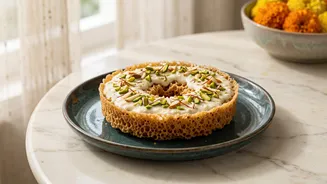
A staple in Sikkim and among Nepali communities, Sel Roti is a unique ring-shaped, mildly sweet bread made from rice flour. It's a cross between a doughnut and a crispy bread. The batter is prepared with rice flour, sugar, ghee, and spices like cardamom and cloves, and then deep-fried into its characteristic circular shape. Crispy on the outside and slightly chewy on the inside, Sel Roti is an essential part of festivals like Tihar and Dashain. It keeps well for several days and is perfect for gifting or sharing during festive family gatherings.