




A Panoramic Window to the Cosmos
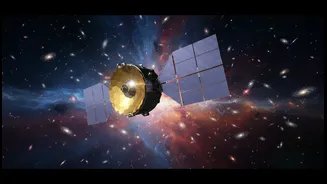
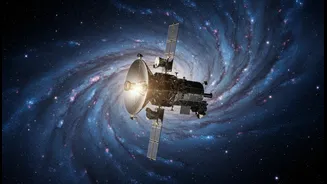
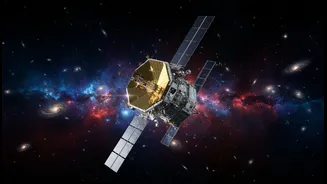
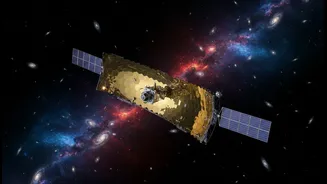
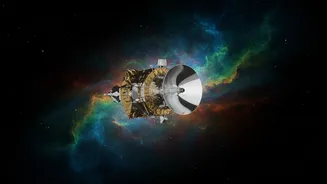
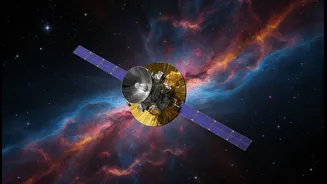
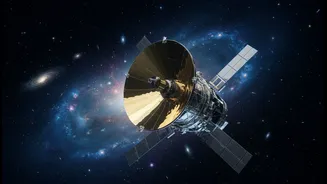
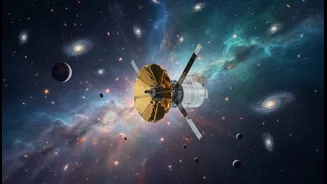
Imagine being able to take a picture of an entire neighbourhood with the same stunning detail that previously only captured a single house. That’s the leap forward promised by NASA's Nancy Grace Roman Space Telescope. While it has a primary mirror the same size
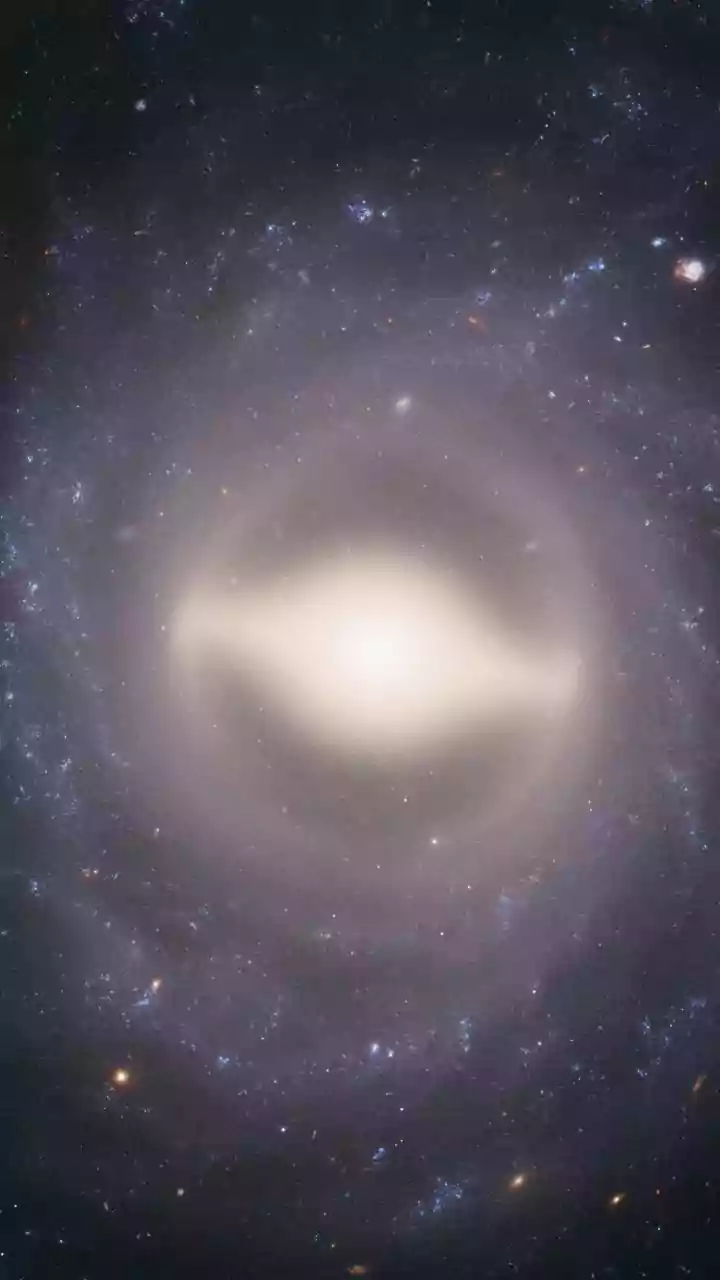
as the Hubble Space Telescope—2.4 meters in diameter—its power lies in its immense field of view. Its Wide Field Instrument (WFI), a 300-megapixel infrared camera, can capture an area of the sky more than 100 times larger than Hubble's infrared camera in a single shot. This means that where Hubble might take hundreds of individual photos to create a mosaic of a nearby galaxy, Roman could achieve a similar result in just two. This efficiency will allow it to survey the sky up to 1,000 times faster than Hubble, creating vast cosmic maps that would otherwise be impractical to assemble. The mission is not just about speed, but about a new way of seeing the universe, trading Hubble's deep stare at singular targets for a sweeping, panoramic vista that will capture billions of objects.
Solving the Universe's Biggest Mysteries
The Roman Telescope’s primary mission is designed to tackle two of the most profound questions in modern astronomy: dark energy and exoplanets. Scientists know the universe's expansion is accelerating, but they don't know what force, dubbed dark energy, is driving it. Roman will map the distribution of billions of galaxies across cosmic time and track distant stellar explosions to measure the expansion history of the universe with incredible precision. This data will help scientists determine if dark energy is a constant force or if it has changed over billions of years. In parallel, Roman is expected to be a prolific planet-hunting machine. While previous missions have confirmed several thousand exoplanets, Roman is projected to find an estimated 100,000 new worlds. It will use multiple techniques, including a method called gravitational microlensing, which is sensitive enough to find planets as small as Mars and those in orbits more like the planets in our own solar system. This massive planetary census will provide a statistical foundation for understanding how common solar systems like ours are across the galaxy.
The Launch is Just the Beginning
Here's where it becomes crucial to separate the launch from the scientific payoff. The Nancy Grace Roman Space Telescope is scheduled to launch aboard a SpaceX Falcon Heavy rocket on August 30, 2026. However, liftoff is not the start of the science mission. After its launch from Kennedy Space Center, the telescope will travel for about three months to its operational orbit, a stable point nearly 1.5 million kilometres from Earth known as the Sun-Earth L2 Lagrange point. Once there, it will undergo a commissioning period of approximately 90 days. During this phase, engineers and scientists will meticulously test and calibrate the spacecraft and its complex instruments to ensure everything is working perfectly. This means the first scientifically useful data isn't expected until early 2027. Patience is a key component of deep-space exploration; the journey from the launch pad to generating groundbreaking maps of the cosmos is a marathon, not a sprint.
A New Era of Big Data Astronomy
Roman is not a replacement for Hubble or the James Webb Space Telescope (JWST) but a powerful complement. While Webb excels at detailed, deep studies of specific targets, Roman will act as a scout, identifying the most interesting phenomena across huge patches of sky for other telescopes to investigate further. In addition to its primary goals, Roman will also study supermassive black holes, star-forming nurseries, and objects in our own solar system. The mission will also test a new technology called a coronagraph, an instrument designed to block the overwhelming glare from a star to directly image the faint planets orbiting it. This is a critical technology demonstrator for future missions aiming to find habitable, Earth-like worlds. Over its five-year primary mission, Roman is expected to generate an astronomical amount of data—roughly 20,000 terabytes—creating a rich archive that will fuel discoveries for decades to come.