



A Frozen Time Capsule Beyond Neptune
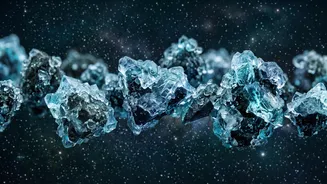
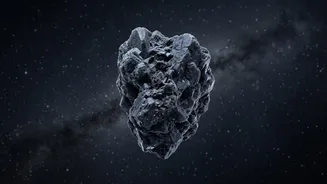
Think of the Kuiper Belt as the solar system's attic. It's a vast, icy donut of countless frozen bodies orbiting the Sun far beyond Neptune. This region is a relic, a preserved collection of leftovers from when the planets formed some 4.6 billion years
ago. While the inner solar system was a chaotic construction site where rocks and ice smashed together to build planets like Earth, the Kuiper Belt remained largely undisturbed. Its inhabitants, known as Kuiper Belt Objects (KBOs), are like frozen time capsules. They are made of the same primordial material that eventually formed the planets, but they never got the chance to grow. By studying this region, scientists can get a glimpse into the raw ingredients and conditions that defined our solar system in its infancy.
NASA's Cosmic Dust Detective
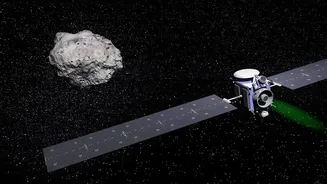
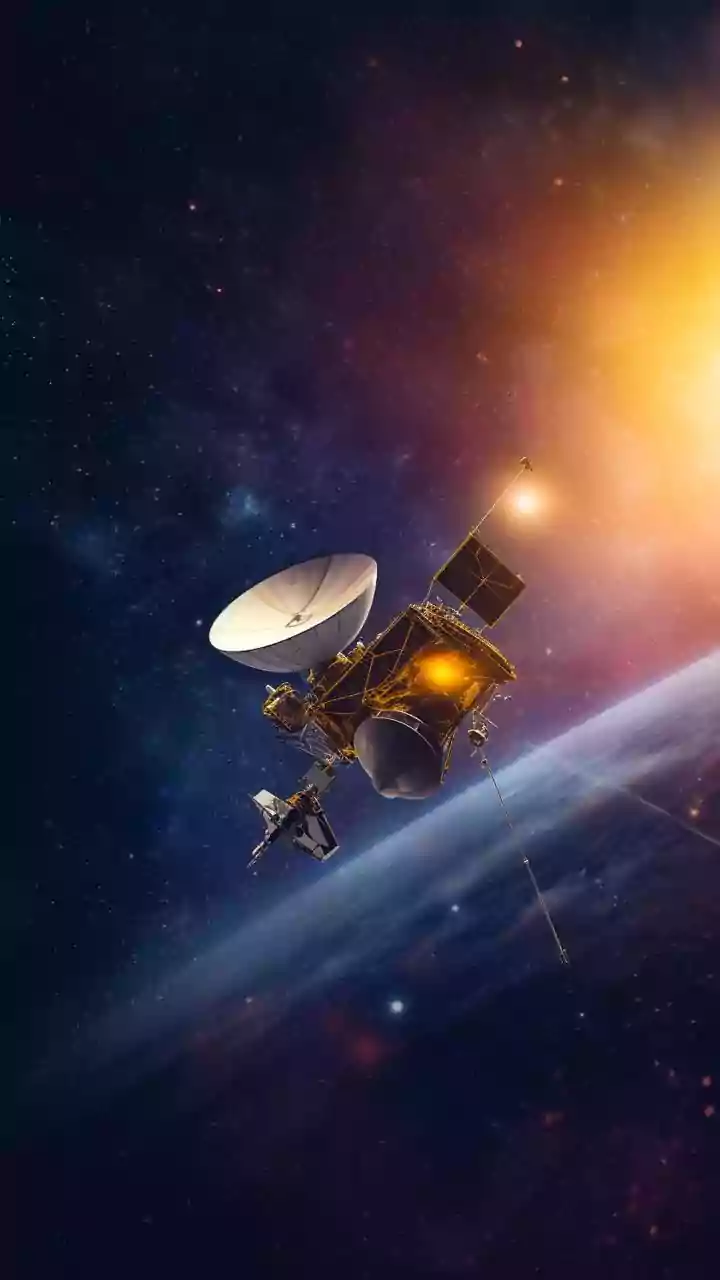
The detective on this cold case is NASA's New Horizons spacecraft. After its historic flyby of Pluto in 2015, the probe continued its journey deeper into the Kuiper Belt. Onboard is a special instrument called the Venetia Burney Student Dust Counter (SDC), designed to detect tiny dust particles. As New Horizons travels, it's essentially flying through a very sparse fog of this cosmic dust. The SDC's purpose is simple but profound: to count the impacts of these dust grains. Every 'ping' it registers tells scientists something about the environment it's moving through. The dust itself is the product of collisions. When small KBOs bump into each other or are bombarded by micrometeoroids, they kick up clouds of fine particles that then drift through space.
Finding More Dust Than Expected
This is where the story gets exciting. For years, scientists had models predicting how much dust New Horizons should encounter as it travelled farther from the Sun. Based on our known population of KBOs and the assumed rate of collisions, they expected the dust count to decrease the deeper it went. Instead, the SDC found the opposite. The dust levels were significantly higher than any model had anticipated. This surprising result suggests that our understanding of the Kuiper Belt is incomplete. The extra dust has to be coming from somewhere. It implies the region is far more active, or contains far more material, than we previously realised. This has sent scientists back to the drawing board to figure out the source of this mysterious excess grit.
Rewinding the Planetary Clock
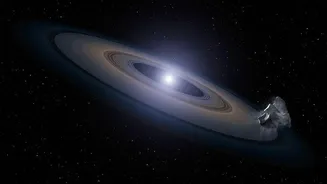
So, why does extra dust at the edge of the solar system matter? Because it provides a living model for our own origins. The early solar system was an incredibly dusty place. It began as a massive, rotating disk of gas and dust around the young Sun, known as the solar nebula. The process of planet formation was essentially a story of dust turning into worlds. The findings from New Horizons give us a direct measurement of a dust-producing environment. By studying the density and distribution of dust in the Kuiper Belt today, we can refine our theories about the conditions within that primordial disk. The higher-than-expected dust levels may mean the early solar system was even dustier than we thought, which would have implications for how quickly planets could form.
From Tiny Grains to Giant Planets
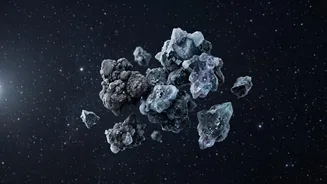
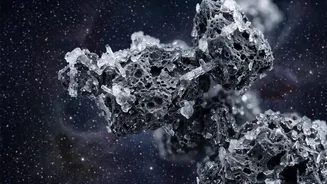
The journey from dust to a planet like Earth is a process called accretion. It starts with microscopic dust grains sticking together, perhaps due to static electricity. Over millennia, these clumps grow into centimetre-sized pebbles, then metre-sized boulders, and eventually kilometre-wide 'planetesimals'—the basic building blocks of planets. These planetesimals then collide and merge, gradually clearing out their orbits and growing into the planets we know today. The Kuiper Belt data helps us test these models. The amount of dust tells us about the underlying population of colliding objects that create it. A dustier belt might mean a greater population of smaller, unseen KBOs, providing more raw material for collisions and giving us a better analogue for the busy, chaotic environment that gave rise to our world.