



What Are Perovskite Solar Panels?
Imagine a solar cell that can be 'printed' like a newspaper, using far less energy and cheaper materials than traditional silicon panels. That's the core idea behind perovskite solar cells. Named after their unique crystal structure, perovskites are a class
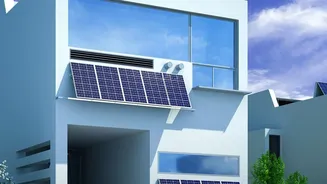
of materials that are exceptionally good at absorbing sunlight and converting it into electricity. Unlike conventional silicon panels, which require highly purified, rigid wafers manufactured in energy-intensive furnaces, perovskite materials can be turned into a liquid 'ink'. This ink can then be coated onto surfaces, opening the door to flexible, lightweight, and even semi-transparent solar panels that could one day be integrated into windows, vehicles, and building facades. The technology often involves stacking a thin layer of perovskite on top of a traditional silicon cell, creating what's known as a 'tandem' cell that captures more of the sun's energy.
The Double Win: Higher Efficiency, Lower Cost
The excitement around perovskites boils down to two key advantages. First, they are incredibly efficient. In laboratory settings, perovskite-silicon tandem cells have achieved efficiencies of over 34%, shattering the theoretical limit of what silicon-only cells can achieve on their own. This means a perovskite panel can generate significantly more electricity from the same amount of roof space. Second, they are potentially much cheaper to produce. The raw materials are more abundant and the manufacturing process is less complex, potentially cutting the cost of a solar panel by a significant margin. While current manufacturing costs are still higher than silicon due to new processes, the long-term potential for cost reduction is enormous, creating a powerful combination of higher performance at a lower price point.
The Challenge: Making Them Last
If perovskites are so revolutionary, why aren't they on every rooftop in India? The primary hurdle has been durability. Early versions of perovskite cells were notoriously unstable, degrading quickly when exposed to moisture, oxygen, and heat—all abundant in the Indian climate. A solar panel that only lasts a couple of years is not a viable alternative to silicon panels, which typically come with 25-year warranties. However, researchers are making rapid progress. Through advanced encapsulation techniques and new chemical formulations, scientists are developing more robust cells that can withstand harsh conditions for much longer. While the 25-year benchmark is still the goal, the latest prototypes are showing dramatically improved longevity, moving the technology from a lab curiosity to a commercially viable contender.
The 'Make in India' Opportunity
Perovskite technology aligns perfectly with India's national goals of energy independence and 'Make in India'. Recently, Indian manufacturer Rayzon Solar signed a major deal with US-based Caelux to produce 5 GW of perovskite-silicon modules in Gujarat, aiming for commercial volumes by 2028. This partnership plans to create high-efficiency hybrid modules, positioning India at the forefront of next-generation solar manufacturing. Furthermore, Indian research institutions like IITs and IISc are actively contributing to global perovskite development. As manufacturing scales up, this technology could not only power Indian homes and industries more affordably but also create a new high-tech manufacturing sector, reducing reliance on imported energy and components.
When Can You Expect Them?
While the technology is advancing quickly, mass-market availability for residential rooftops in India is still a few years away. Initial commercial production has begun globally, but these are mostly for premium or niche projects. Experts suggest widespread availability for homeowners will likely begin after 2027, once supply chains mature and long-term performance in real-world conditions is proven. The first applications in India might be in specialized areas like building-integrated photovoltaics (BIPV) or portable power solutions for rural areas before they become a standard option for home installation. However, with major Indian companies now entering the production race, the wait may not be long.