




Embracing yoga doesn't require a mat or extreme flexibility. Chair yoga makes the practice accessible to everyone, enhancing mobility and reducing stiffness right from your seat. A cornerstone of this practice is the Chair Forward Bend.
Understanding the Chair Forward Bend
The Chair Forward
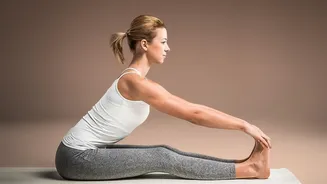
Bend, an adaptation of the traditional Seated Forward Bend (Paschimottanasana), is a foundational pose that offers a gentle yet effective stretch for the entire back of the body. Many people struggle with forward folds due to tightness in the lower back and hamstrings, often a result of prolonged sitting. By using a chair, you provide your body with support that makes the pose more accessible and helps release tension in the back, neck, and shoulders. This modification allows you to focus on the quality of the stretch, promoting flexibility without the strain of a floor-based practice. It's an excellent way to counteract the hip tightness that develops from sitting and can help maintain mobility in your joints.
A Step-by-Step Guide to the Pose
Performing the Chair Forward Bend correctly is key to reaping its benefits. Follow these simple steps for a safe and effective stretch. Start by sitting toward the front edge of a sturdy, stable chair, preferably one without wheels. Place your feet flat on the floor, about hip-width apart, with your knees directly over your ankles. Sit up tall, lengthening your spine. Place your hands on your knees. Inhale deeply, and as you exhale, begin to hinge forward from your hips, not your waist. It's crucial to lead with your chest and keep your back as straight as possible for as long as you can. Allow your hands to slide down your legs toward your ankles. Let your torso rest between your inner thighs and relax your head and neck completely. You can rest your hands on the floor, your shins, or keep them on your knees, depending on your flexibility. Hold the pose for several deep breaths before slowly rolling back up to a seated position on an inhalation.
The Flexibility Benefits and Beyond
The primary benefit of the Chair Forward Bend is increased flexibility throughout the posterior chain—the muscles along the entire back of your body. This includes your hamstrings, glutes, calves, and the muscles along your spine. Regular practice can help keep the spine elastic and the joints mobile. By gently stretching these often-tight areas, the pose helps to alleviate lower back pain and stiffness. Beyond flexibility, this forward fold has a calming effect on the nervous system. As you fold forward, the gentle inversion brings blood flow to the head, which can help relieve stress and anxiety. The pose also gently massages the abdominal organs, which can aid digestion and increase peristalsis.
Avoiding Common Pitfalls
To get the most out of your practice and prevent injury, be mindful of common mistakes. The most frequent error is rounding the spine too early instead of hinging from the hips. This puts strain on the lower back rather than stretching the hamstrings. To avoid this, focus on leading with your chest and lengthening your spine as you fold. Another mistake is forcing the stretch or trying to touch your toes at all costs. Yoga is not about achieving a perfect shape but about what you feel. Bending your knees is perfectly acceptable and even recommended, as it allows for a better pelvic tilt and protects your lower back. Also, remember to let your head and neck relax completely; cranking your neck to look forward creates unnecessary tension.
Integrating the Bend Into Your Practice
The headline's guidance to pay attention to the bend 'throughout practice' invites a deeper, more mindful approach. This doesn't mean holding the pose for your entire session, but rather using its principles and variations consistently. Begin your chair yoga routine with a gentle version of the forward bend to warm up the spine and hamstrings. You can also practice variations, such as a Wide-Legged Seated Forward Bend on the chair to target the inner thighs. Between other poses, returning to a brief, gentle forward fold can help release any tension that has built up. Use it as a moment to check in with your breath and body. Conclude your practice with a longer hold in the Chair Forward Bend, allowing your body to sink deeper into the stretch as it is now warmer and more pliable.