






The Invisible Hazard Below
The air you breathe in an underground metro station is fundamentally different from the air outside. While it might offer a respite from the heat, it contains a unique and concentrated mix of pollutants. A significant component is particulate matter (PM2.5),
tiny particles less than 2.5 micrometres in diameter that can penetrate deep into the lungs and even enter the bloodstream. Studies in metro systems globally show these particles are often metal-rich, originating from the friction of train wheels on rails, brake pads grinding against wheels, and the wear of electrical contacts. One study noted that in subways, these particles are largely iron-based, a direct result of the abrasion of rails and wheels. This 'railway dust' is constantly generated and gets churned up every time a train arrives or departs, creating spikes in pollutant concentrations on platforms.
A Daily Dose of Health Risks
Daily exposure to this unique form of pollution is a serious public health concern. Research links repeated exposure to subway air with adverse health outcomes. A study on Chennai's metro system, led by IIT Madras, found that particulate matter levels in underground stations were five to nine times higher than inside the coaches themselves, and that a significant portion of this was the dangerous PM2.5 fraction. Chronic exposure to PM2.5 is associated with a range of respiratory and cardiovascular problems. Studies have demonstrated that even short-term exposure can lead to inflammation and reduced lung function in healthy adults. A risk assessment for Chennai commuters indicated that long-term daily travel for up to eight years could lead to carcinogenic risks, highlighting the cumulative danger faced by millions of daily riders and transit workers.
The Engineering Challenge
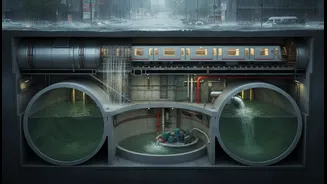
Cleaning the air in a vast, semi-enclosed system like a metro network is a formidable engineering challenge. Unlike a simple room, underground stations and tunnels are subject to complex air dynamics. The 'piston effect'—where trains push air through tunnels—can circulate dust rather than remove it. Many existing ventilation systems were designed primarily for temperature control and emergency smoke extraction, not for filtering microscopic particulate matter. Furthermore, the sources of pollution are constant and internal; every train that brakes and accelerates generates fresh particles. A study on the Chennai metro attributed poor air quality to a combination of factors including passenger crowding, infiltration from outdoor traffic, and air-conditioning systems that are less effective at filtering finer particles.
Innovations in Ventilation and Design
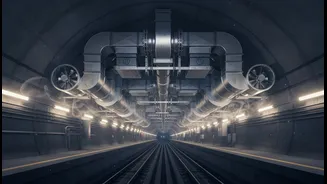
This is where "better engineering" becomes critical. Modern solutions go beyond simple ventilation, incorporating a multi-pronged approach. Advanced filtration systems, including those capable of capturing fine and ultrafine particles, are a key step. Some systems use electrostatic precipitators or high-efficiency particulate air (HEPA) filters. Another strategy involves 'smart' ventilation systems that can adjust airflow based on real-time data, such as train schedules and passenger density. Engineering firms are developing complete solutions that include high-efficiency fans and durable ducting systems designed for tunnels. Some research even suggests that using water sprayers in tunnels could significantly reduce particulate concentrations by increasing humidity. The design of new train cars is also a factor; modern trains that rely more on regenerative braking (which converts energy back into electricity) instead of friction brakes can dramatically reduce the generation of brake dust.
A Blueprint for Indian Cities
As India continues to expand its urban metro networks at a rapid pace, there is a golden opportunity to integrate these advanced engineering principles from the ground up. Cities like Delhi, Mumbai, Bengaluru, and Chennai are already heavily reliant on their metro systems, with daily ridership in the millions. Ensuring the health of these commuters means making air quality a primary consideration in the design phase of new lines and stations, not an afterthought. A study focusing on the Chennai metro highlighted that underground stations see the highest accumulation of pollutants due to their enclosed nature. This calls for a shift in priorities, where investment in sophisticated ventilation, air purification technologies, and low-emission train components is seen as an essential public health expenditure, not a luxury. By focusing on engineering solutions, India can build not just efficient, but also healthy, public transportation arteries for its growing cities.