







Good Vibrations, Bad Bugs
Before you imagine urban farmers blasting music at their kale, it’s important to understand this isn't about playing tunes for plants. The field, known as bioacoustics, involves using specific, targeted sound frequencies and substrate-borne vibrations
to influence insect behavior. Think of it less like a concert and more like a highly specific alarm system. Many insects communicate, navigate, find mates, and locate food using vibrations sent through the air or the surfaces they live on, like plant stems and leaves. This technology aims to hijack that communication system for a farm's benefit, creating an environment that is confusing, disruptive, or seemingly dangerous to pests.
The Science of Scaring Pests
So how exactly does a sound wave stop a bug from eating a tomato plant? There are a few different strategies being explored. One of the most promising is mating disruption. Researchers have found that by broadcasting a 'disturbance noise'—a vibrational signal that masks the specific calls insects use to find each other—they can dramatically reduce mating frequency. One study on a leafhopper pest in grapevines showed this method could nearly eliminate mating in a vineyard. Another approach mimics the sounds of natural predators. Some moths, for instance, have evolved to recognize the ultrasonic echolocation calls of bats and will take evasive action. Scientists are developing emitters that replicate these sounds to create a permanent 'no-fly zone' over a field for certain moth species. A third method is simply creating an irritating environment. Studies have shown that applying specific non-contact vibrations using ultrasonic waves can physically disperse pests like whiteflies and aphids from plant leaves and even reduce the number of eggs they lay.
From the Lab to the Lettuce Patch
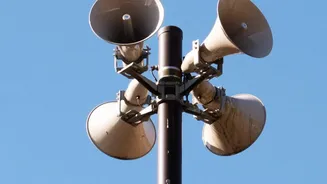
While much of this sounds like science fiction, researchers and a few pioneering tech companies are working to make it a reality for farmers. In practice, this can look like small electronic devices, or shakers, attached to plant support wires or poles within a greenhouse or field. These devices transmit precise vibrations through the trellis system and into the plants themselves, creating a network of pest-deterring signals. For flying insects, omni-directional speakers can broadcast specific ultrasonic pulses. However, it’s important to note that this is an emerging technology, not yet a common sight on most urban farms, which currently rely more on integrated pest management (IPM) strategies like row covers and beneficial insects. The commercially available ultrasonic repellers you see in hardware stores have been largely debunked by scientists for long-term effectiveness, as pests can quickly get used to the noise. The key difference is the use of highly specific, biologically relevant frequencies rather than a generic, constant tone.
The Sound of a Chemical-Free Future?
The potential benefits of acoustic pest control are enormous, especially for organic urban farms. It offers a solution that is completely residue-free, safe for humans and ecosystems, and highly targeted. Unlike broad-spectrum pesticides, a vibrational signal designed for one specific leafhopper is unlikely to harm beneficial insects like bees and other pollinators. But there are still hurdles. The technology can be expensive, the effective range of signals can be limited, and background noise or environmental conditions can interfere with its performance. Researchers are still working to build large databases of insect sounds to identify the most effective frequencies for different pests. Despite the challenges, bioacoustics represents a fascinating frontier in the push for more sustainable, high-tech agriculture that works with nature, not against it.