





Beyond More Reps: The Principle of Progression
The secret to getting stronger—whether it’s your biceps or your core—is a concept called progressive overload. In simple terms, it means that to build muscle and strength, you must consistently make your muscles work harder than they're used to. If you only
ever do a 60-second plank or 20 crunches, your body quickly adapts and stops changing. Progress isn't just about adding more and more repetitions, which can often lead to poor form and diminishing returns. Instead, a smarter approach involves manipulating a few key variables to increase the challenge in a controlled and effective way. By understanding how to use time, load, and leverage, you can continuously stimulate your core muscles, break through plateaus, and build the kind of functional strength that supports everything you do, from lifting groceries to hitting a personal best in the gym.
The Power of the Ticking Clock: Progressing with Time
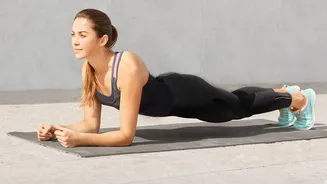
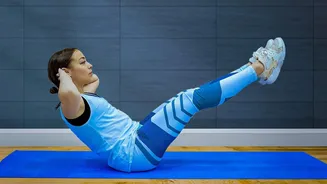
One of the simplest yet most effective ways to make any core exercise more challenging is by increasing its time under tension (TUT). This refers to the total duration your muscles are strained during a set. Instead of rushing through your reps, you deliberately slow things down. For an exercise like a plank or hollow body hold, this is straightforward: just hold it for longer. Start with a time you can manage with perfect form, and gradually add 5-10 seconds each week. For dynamic exercises like leg raises or crunches, you can apply TUT by slowing down the movement itself. Try taking three seconds to lower your legs in a leg raise (the eccentric phase) and one second to lift them (the concentric phase). This slow, controlled movement eliminates momentum and forces your abdominal muscles to do all the work, increasing the intensity without a single piece of extra equipment.
Adding Weight to Your Work: Progressing with Load
Once you've mastered an exercise with your own bodyweight, adding external resistance, or load, is the next logical step. This is a direct application of the progressive overload principle. For your core, this can be done in several ways. You can hold a dumbbell or weight plate against your chest during a sit-up or Russian twist. You could have a partner carefully place a weight plate on your back during a plank, or you could use a weighted vest. Cable machines offer a fantastic way to add resistance to movements like crunches and wood chops. The key is to start light and add weight gradually. Increasing the load from a 5kg dumbbell to a 6kg one is a manageable 20% jump, whereas going from a 5kg plate to a 10kg plate is a 100% increase that could compromise your form. By adding load, you challenge your core to become not just more enduring, but truly stronger.
Mastering Your Body's Leverage: Progressing with Biomechanics
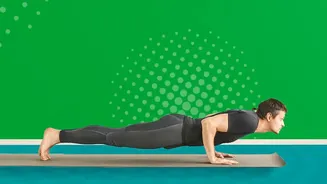
Leverage might sound like a complex physics term, but it’s a simple concept in fitness: the further a weight is from the point of rotation (the fulcrum), the harder it is to move. In core training, your limbs are the weights and your torso is the fulcrum. By changing your body position, you can dramatically increase the difficulty of an exercise without adding any external load. Think about progressing from a plank on your knees to a plank on your toes; you’ve lengthened the lever, making your core work harder to stabilize. The same principle applies when you move from a bent-knee leg raise to a straight-leg hanging leg raise. With straight legs, the lever arm is longer, placing a much greater demand on your lower abs. Advancing an ab rollout from your knees to your feet is another perfect example. Mastering leverage allows you to create an incredibly challenging workout using just your own body.