





The Mechanical Ritual
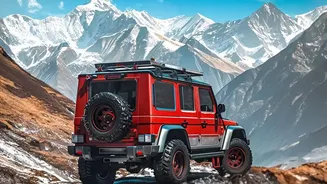
Before embarking on the 479-kilometre journey, every seasoned traveller knows the drill. Your vehicle, whether a rugged SUV or a trusty motorcycle, needs a thorough inspection. Key checks include ensuring the engine is in top condition, testing the brakes
for the steep descents, and examining tyre treads for the treacherous patches. Mechanics will advise checking coolant levels, battery health, and ensuring you have a good suspension. Many travellers carry spare fuel cans, as petrol pumps are scarce, with a notorious 350-plus kilometre gap between Tandi and Karu. This pre-trip mechanical check-up is considered non-negotiable, a fundamental part of ensuring you and your vehicle can handle one of the world's most challenging roads.
The Unseen Challenge: Your Body at Altitude
While your vehicle's engine needs air and fuel to perform, your body's engine runs on oxygen. The Manali-Leh highway crosses several passes above 4,000 meters (13,000 feet), including the formidable Taglang La at over 17,500 feet. At these elevations, the air pressure is lower, meaning with every breath, you take in less oxygen. This lack of oxygen can lead to Acute Mountain Sickness (AMS), a condition that feels like a severe hangover and can strike anyone, regardless of their fitness level. The common misconception is that driving slowly provides natural acclimatisation, but the route forces a rapid ascent over multiple high passes, often exhausting the body before it has a chance to adapt.
Symptoms You Can't Ignore
Ignoring your vehicle’s warning lights can leave you stranded. Ignoring your body's warning signs at high altitude can be far more dangerous. The initial symptoms of AMS are subtle and often mistaken for simple travel fatigue: a persistent headache, nausea, dizziness, loss of appetite, and difficulty sleeping. Pushing through these symptoms is a gamble. If left unaddressed, mild AMS can progress to life-threatening conditions like High-Altitude Pulmonary Edema (HAPE), where fluid fills the lungs, or High-Altitude Cerebral Edema (HACE), which involves swelling of the brain. The only reliable cure for severe AMS is to descend to a lower altitude immediately.
The Golden Rules of Acclimatisation
Just as there are rules for vehicle maintenance, there are golden rules for acclimatisation. The most crucial is gradual ascent. Don't rush the journey. A recommended itinerary involves taking at least three days, with an overnight stop at a moderate altitude like Jispa or Keylong (around 3,200 meters). This allows your body to start adjusting before you tackle the higher passes. Staying hydrated by drinking 3-4 litres of water daily is vital, while avoiding alcohol and smoking is equally important, as they can interfere with acclimatisation. Eating light meals and getting adequate rest gives your body the best chance to adapt to the thin air. For some, consulting a doctor about preventative medication like Diamox may be advisable.
Your Body vs. Your Vehicle: A Final Check
A vehicle breakdown on the Manali-Leh highway is a serious inconvenience. You might be stranded for hours, waiting for help in a remote, cold desert. However, a breakdown of the human body due to severe AMS is a medical emergency in a region with limited facilities and no mobile network coverage for long stretches. You can replace a car part or get a tow, but the consequences of HAPE or HACE can be permanent or even fatal. The health of your vehicle is pointless if the driver isn't well enough to operate it safely. Fatigue and dizziness from AMS can impair judgment and reaction time, increasing the risk of accidents on the treacherous roads.