

The Slow Descent of an Icon
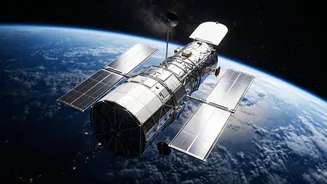
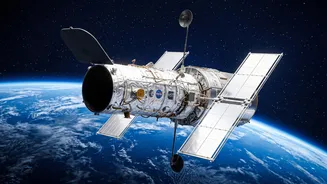
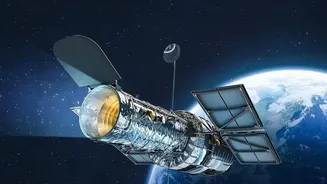
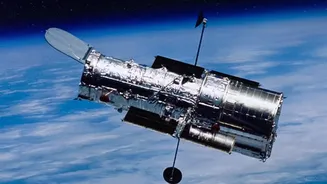
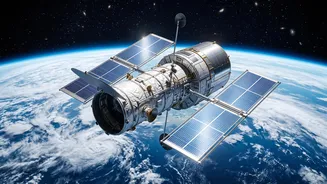
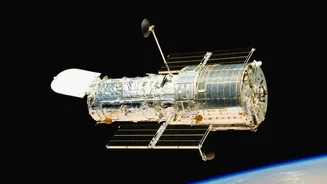
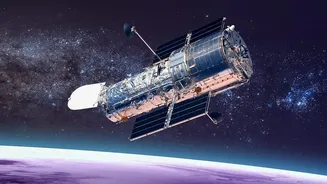
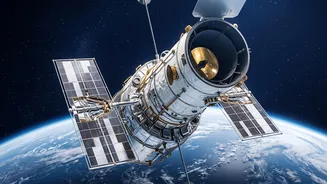
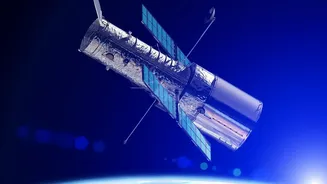
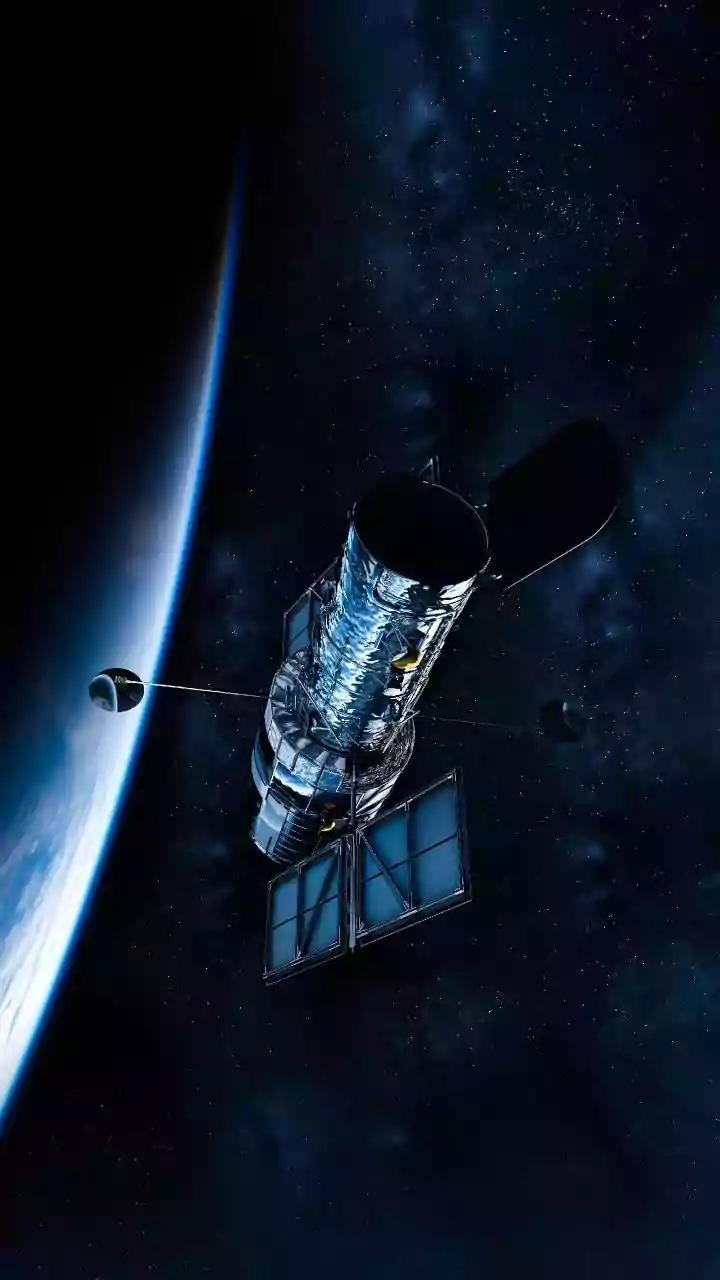
Like all satellites in low Earth orbit, the Hubble Space Telescope is subject to atmospheric drag. Even hundreds of kilometers up, the wisps of Earth's atmosphere create a tiny amount of friction, gradually slowing the telescope and causing its orbit to decay.
Since its last boost during a space shuttle mission in 2002, Hubble's altitude has dropped from about 583 kilometers to under 480 kilometers. It has no propulsion system of its own to counteract this slow but inevitable descent. According to NASA's latest projections, there's a 50% chance the 13-ton observatory could make an uncontrolled re-entry into the atmosphere by December 2033. To prevent this, the agency is now looking for a solution.
A Legacy of Hands-On Service
Hubble was famously designed to be serviced in space by astronauts. Between 1993 and 2009, five Space Shuttle crews flew daring missions to rendezvous with the telescope, performing critical repairs, installing new instruments, and periodically reboosting its orbit. These missions are why Hubble has remained a premier scientific tool for decades, long past its original lifespan. The final shuttle servicing mission in 2009 left the telescope in peak condition but did not raise its orbit. With the retirement of the Space Shuttle fleet in 2011, NASA lost its only method for visiting its prized observatory. For years, the question of Hubble's eventual fate was left open, but as its orbit continues to decay, the need for a new plan has become urgent.
A New Call to the Private Sector
In a significant shift in strategy, NASA has formally turned to the commercial space industry for help. On October 29, 2026, the agency issued a 'Request for Information' (RFI), asking private companies to submit ideas for a potential mission to save Hubble. The deadline for responses is November 30, 2026. This RFI is not a contract; it is a market study to see what is technically and financially feasible. NASA is asking for concepts covering three main options: boosting Hubble to a higher, more stable orbit; servicing it with new technology; or guiding it to a safe, controlled deorbit over an unpopulated stretch of ocean. Any potential reboost mission would need to happen by 2032 to be effective.
The Contenders and the Challenges
The request for proposals is open to any company with a viable idea. A previous, unfunded study conducted in 2022 with SpaceX and the Polaris Program explored using a Dragon spacecraft for a reboost mission, but NASA did not pursue it at the time. That study, along with another RFI in 2022 that drew eight responses, laid the groundwork for this new, broader call. Companies like Astroscale and Momentus have previously submitted robotic concepts. Any mission would be immensely challenging. The chosen provider would be responsible for the launch, the spacecraft, and mission operations, including a potential crew. The primary challenge is to rendezvous with and capture the delicate, aging telescope without causing any damage, then perform a precise maneuver to push it into a higher orbit. A recent failed attempt to rescue the smaller Swift observatory highlights the significant risks involved in such robotic servicing missions.
Why Bother Saving Hubble?
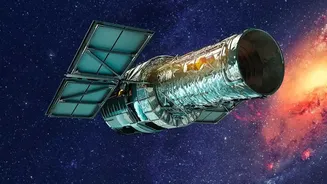
Even with the spectacular success of the James Webb Space Telescope (JWST), Hubble remains a vital scientific asset. The two telescopes are complementary, not replacements. JWST is designed to see the universe primarily in infrared light, while Hubble excels at visible and ultraviolet observations. This unique capability allows astronomers to study everything from exoplanet atmospheres to the expansion rate of the universe. Scientists still request seven times more observing time on Hubble than is available each year, demonstrating its continued high demand. Pushing Hubble to an altitude of 600 kilometers could extend its life by another 15 to 25 years, promising decades more of groundbreaking science and iconic imagery. As an icon of human curiosity, its loss would be felt not just by scientists, but by the public worldwide.