




Choosing a new mattress can feel overwhelming, but understanding its core can simplify the decision. The spring system is the engine of an innerspring mattress, defining its support, durability, and feel. Let's decode the types.
The Basics of Innerspring Coils
At the heart of every traditional
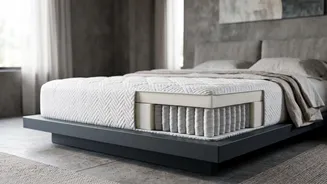
spring mattress is a network of steel coils, also called an innerspring unit. This core provides the foundational support that keeps your spine aligned and prevents you from sinking too deeply. Two key terms to know are coil gauge and coil count. Coil gauge refers to the thickness of the wire, with a lower number indicating a thicker, firmer wire and a higher number indicating a thinner, more flexible one. Coil count is simply the total number of springs in the mattress. While a higher count can mean more targeted support, the type of coil is often more important than the quantity.
Bonnell Coils: The Traditional Choice
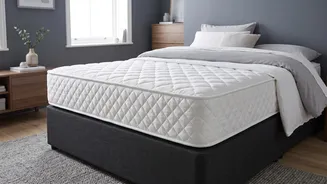
Bonnell coils are the oldest and most common type of spring, first adapted from buggy seats in the 19th century. They have an hourglass shape and are interconnected by a mesh of helical wires. This creates a single, unified spring system. The main advantage of Bonnell coils is affordability, making them a staple in budget-friendly mattresses. They provide a firm, bouncy feel. However, because all the coils move as one unit, they are known for high motion transfer, meaning you'll feel your partner's movements. They are best suited for guest rooms, children's beds, or individuals on a tight budget.
Offset Coils: A Quieter, Contouring Upgrade
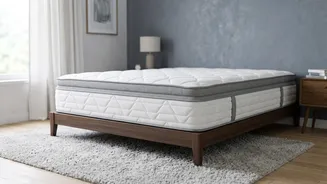
Offset coils are a refinement of the Bonnell design. They also have an hourglass shape, but the top and bottom of the coil are squared-off, creating a hinge-like effect when connected to other coils. This small change allows each coil to flex more independently under pressure. The result is a mattress that conforms better to the body's contours and reduces motion transfer compared to Bonnell coils. They are also generally quieter. This makes them a solid choice for those seeking better performance than a basic innerspring without the higher cost of pocketed coils, and they're often found in mid- to high-end mattresses.
Continuous Coils: The Durability Kings
As the name suggests, a continuous coil system is made from a single, long piece of wire that is formed into rows of coils. These rows are linked together, creating a very firm and durable support structure. The interconnected design provides stability and even support. The main downside is similar to Bonnell coils: they tend to transfer motion across the surface of the bed. Because of their stiffness, they don't conform to the body as well as other types. These mattresses are a good option for those who prioritize longevity and a firm feel.
Pocketed Coils: The Modern Standard
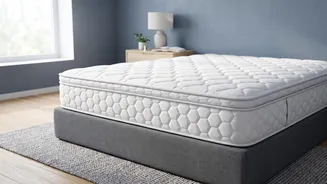
Pocketed coils, also known as Marshall coils, are considered the most advanced innerspring design. Each coil is individually wrapped in its own fabric pocket. Because the springs are not directly connected, they can move independently of one another. This provides two major benefits: superior motion isolation and excellent body contouring. A mattress with pocketed coils will significantly reduce partner disturbance and provide targeted support that adapts to your body's curves, relieving pressure points. They are an ideal choice for couples, side sleepers, and anyone who is easily disturbed by movement during the night. While they are typically more expensive, their performance makes them the standard in most modern hybrid and premium innerspring mattresses.